Right. Get the kettle on. You’re going to need tea for this one.
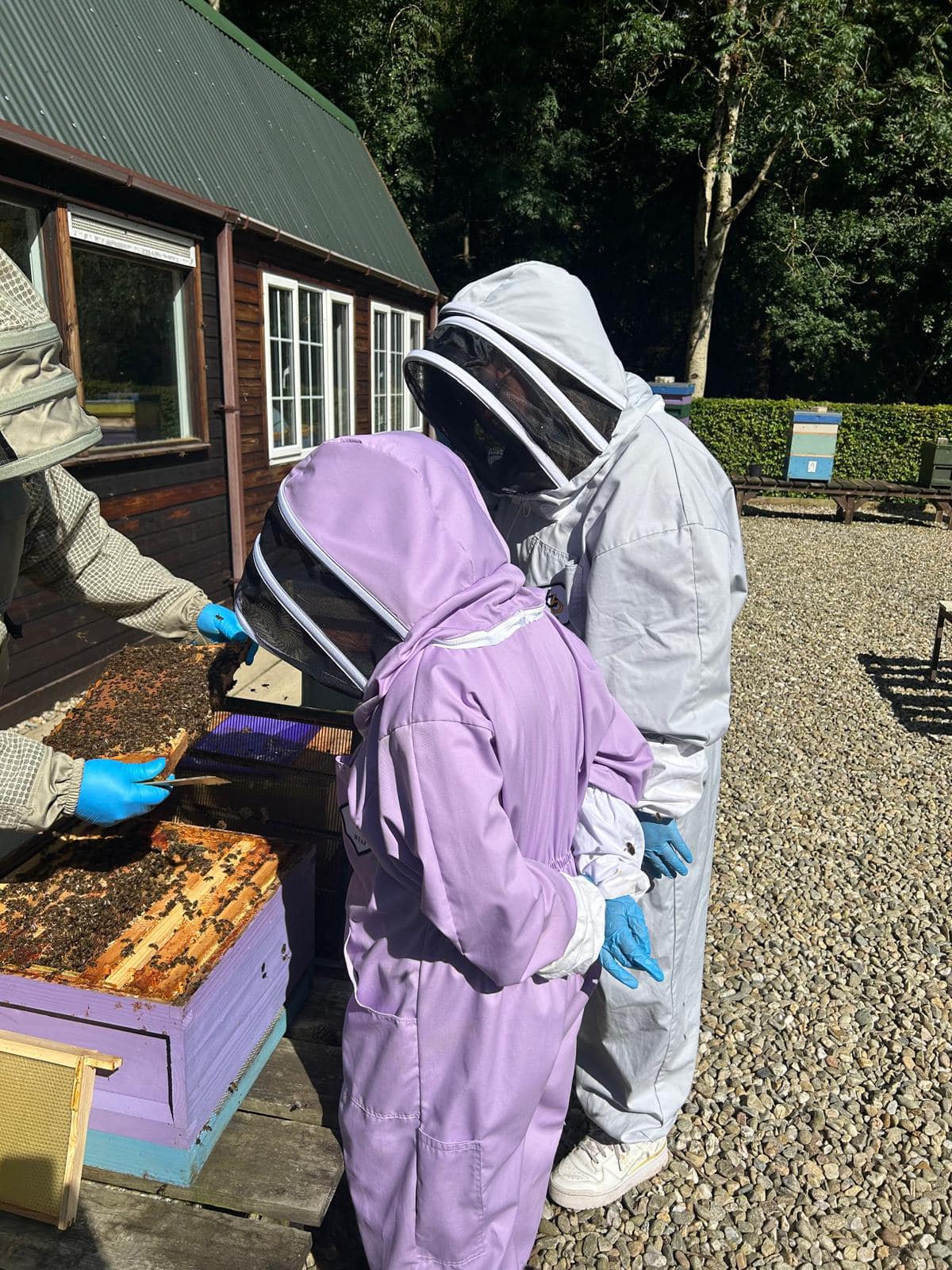
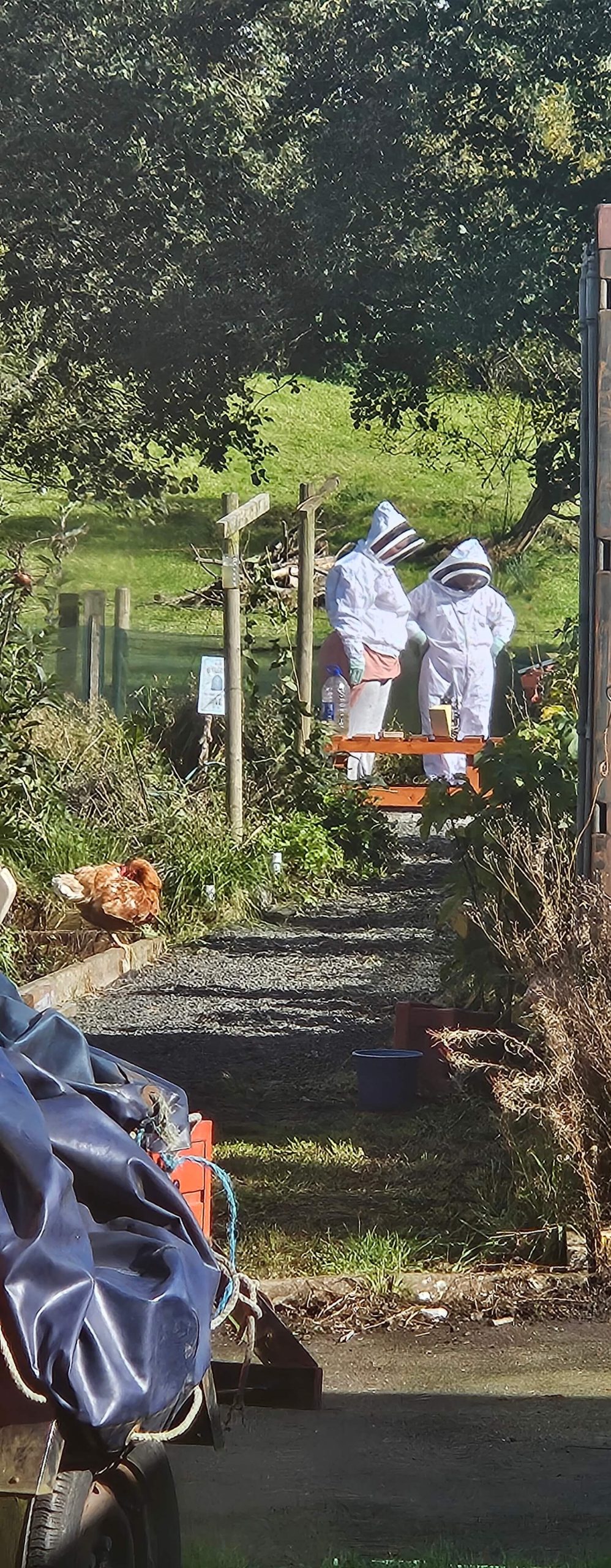
So there we were, having a lovely summer learning to keep bees at our mentor’s apiary. The confidence was building. Sophia was getting faster with the frames. I’d stopped flinching every time a bee flew near my veil. Everything was going swimmingly.
And then our mentor rang.
“So… your queen has absconded.”
I’m sorry, she’s done what?
What “Absconded” Means (For Those as Clueless as We Were)
For anyone who hasn’t encountered this particular beekeeping joy yet, “absconded” is the polite way of saying “your queen has packed her bags, taken a load of bees with her, and left.” Just… gone. Walked out. No forwarding address.
It’s basically the bee equivalent of coming home to find a note on the kitchen table that says “it’s not you, it’s me” except it probably is you, and also she’s taken half the furniture.
Queens can abscond for various reasons. Maybe the hive conditions weren’t right. Maybe something disturbed them. Maybe she just fancied a change of scenery. Whatever the reason, we were now standing there (well, standing in our kitchen sixty miles away having a mild crisis) with a queenless colony.
For a brand new beekeeper? This is terrifying. Your queen is the heart of the colony. Without her, there are no new eggs, no new brood, no next generation of bees. A queenless colony is a colony on a countdown.
Why We Didn’t Completely Fall Apart
This. This is why you have a mentor.
If we’d been managing this hive on our own, I genuinely don’t know what we would have done. Probably panicked. Definitely cried. Possibly googled “queen absconded” at 11pm and gone down a rabbit hole of beekeeping forums that would have made everything worse.
But we weren’t on our own. Our mentor was there, and she knew exactly what to do.
The colony still had young larvae. And here’s the remarkable thing about honey bees: if they lose their queen but they still have larvae young enough, they can raise a new one. The worker bees will select certain larvae, feed them differently (royal jelly, the fancy stuff), and those larvae will develop into queen cells. The colony can save itself.
Our mentor took control of the situation. She assessed what was happening, checked the colony, and confirmed that the bees were already doing what bees do. They were building queen cells. The colony was responding. They were making themselves a new queen.
All we had to do was wait. And try not to check every five minutes. (We checked every five minutes. Well, we rang our mentor every five minutes, which is basically the same thing.)
The Waiting Game
There’s a specific kind of anxiety that comes with waiting for a new queen to emerge, go on her mating flight, and start laying. It takes weeks. And during those weeks, you can’t really do anything except trust the bees and trust the process and drink a lot of tea.
Sophia handled it better than I did. She was very philosophical about the whole thing. “The bees know what they’re doing, Mum. They’ve been doing this for millions of years.” Which is very wise for an eleven year old and also very annoying when you’re trying to have a good worry about it.
Our mentor kept us updated. The queen cells were developing. Everything looked on track. The colony was calm. The bees were doing their thing.
And then, finally, the news we’d been waiting for. There was a new queen. She’d emerged, she’d gone on her mating flight (which is a whole other nerve wracking experience, because she has to fly out, mate with drones in midair, and fly back without being eaten by a bird), and she’d started laying.
We had a queen again.
I may have cried a little bit. Bee Girl may have done a small victory dance in the kitchen. The dog may have been confused again.
Coming Home
By autumn, our colony was settled with their new queen, and it was time to bring them home. The summer of learning at the mentor’s apiary was over. From now on, this was our hive, at our house, in our care.
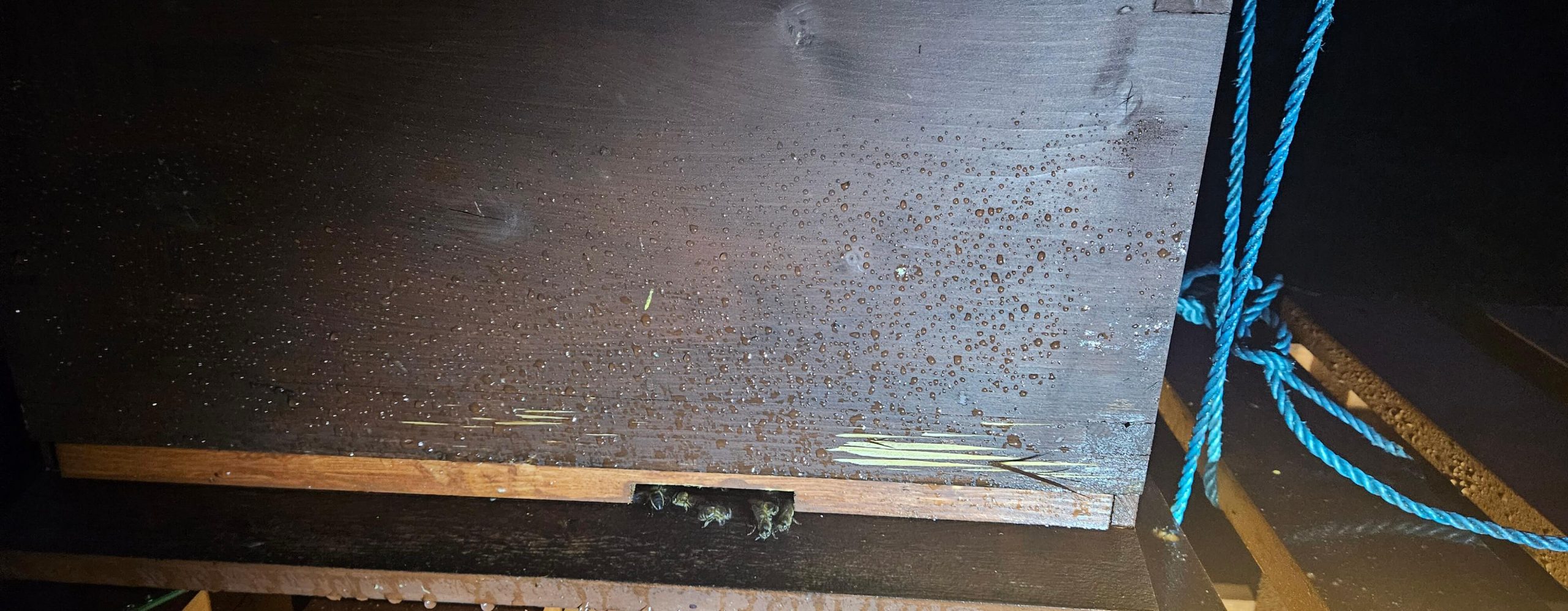
Except “from now on” actually meant “from next spring,” because by the time we got them home, the season was pretty much done. No more inspections. The bees were winding down for winter. All we needed to do was make sure they had enough food and leave them alone.
Which, honestly? After the summer we’d had? Leaving them alone felt both like a relief and a completely new source of anxiety. What if something went wrong over winter and we couldn’t see inside? What if they ran out of food? What if the queen absconded AGAIN?
Our mentor talked us through winter feeding. Hefting the hive (picking it up slightly to feel the weight, which tells you roughly how much food they have in there). What to look for. What not to worry about. She kept us right, same as she had all summer.
And then we waited. All through autumn. All through winter. Just us, in the garden, with a box of bees we couldn’t open, hoping everything was okay in there.
What We Learned From All of This
If we could go back and tell ourselves one thing at the start of this whole adventure, it would be this: things will go wrong, and that’s okay. That’s beekeeping. The queen absconding wasn’t a disaster. It wasn’t a sign that we were terrible beekeepers (though I was very ready to believe it was). It’s just something that happens. And the bees knew what to do about it.
What made the difference was having someone there who’d seen it before. Who could tell us to breathe. Who could show us that the bees were handling it. Who could stop us from making it worse by panicking and interfering.
If you’re a beginner and you’re reading this thinking “I could never cope with that,” I promise you: with the right support, you can. We did. And we are quite possibly the two most anxious beekeepers in Northern Ireland.
What Happens Next
As I write this, our bees are tucked up for winter. We’ve been feeding them. We’ve been hefting the hive. We’ve been watching the entrance on sunny days, holding our breath until we see those little bodies flying in and out.
Spring is coming. And when it does, we’ll open that hive for our first ever inspection at home, on our own, without our mentor standing next to us.
I’m not going to lie. I’m already nervous.
But we’ve also been to two beekeeping conferences since then, and we’ve learned things that have changed how we think about our bees, about varroa, about treatment, about everything. We have a whole year of monitoring and documenting planned. We have a hive to split. We have a queen to find and mark (she still doesn’t have her blue dot and honestly that woman is playing hide and seek with us at this point).
We have so much to tell you. And we’re going to tell you all of it.
The good bits. The scary bits. The bits where we get it spectacularly wrong.
That’s the whole point of Bee Happy Honey. Two beginners. Zero idea what we’re doing. Documenting everything so you don’t have to make the same mistakes we do.
Or so you can make them right alongside us. That works too.
The Good, The Bad, and The Sticky:
Good: The bees raised their own queen and she’s a champion. Nature is incredible. Our mentor is incredible. Bee Girl’s optimism is incredible.
Bad: That phone call. That one single phone call where we found out our queen had absconded. I aged about fifteen years in thirty seconds.
Sticky: Trying to explain to people at work why I was anxiously checking my phone every hour for updates on a bee. “Is the queen out yet?” is not a sentence most people expect to hear in an office.
Mum
Bee Happy Honey
Northern Ireland
P.S. Bee Girl wants everyone to know that our queen is “a homegrown local girl and we’re very proud of her.” She has also named her. I’ve been told that naming your queen is “not really a thing beekeepers do.” Bee Girl does not care.
P.P.S. We still haven’t managed to actually find this queen in the hive to mark her. She is either very small, very fast, or actively avoiding us. Spring goals: find queen, apply blue dot, try not to drop her. Simple. (It won’t be simple.)
P.P.P.S. To our mentor, if you’re reading this: thank you. Genuinely. We wouldn’t be here without you. (And by “here” I mean “still keeping bees” rather than “hiding in the house pretending we never started this.”)