A Bee Happy Honey Deep Dive
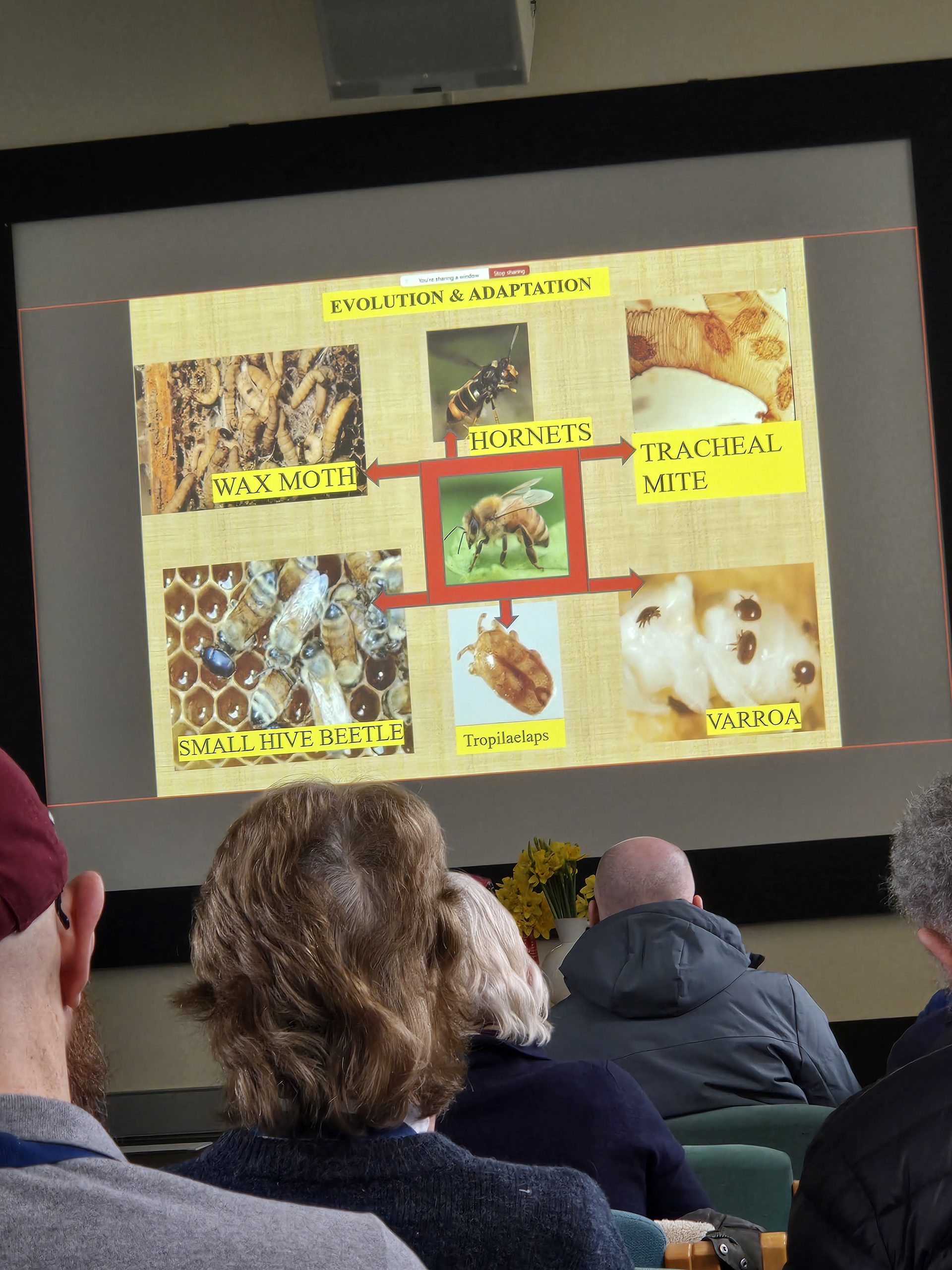
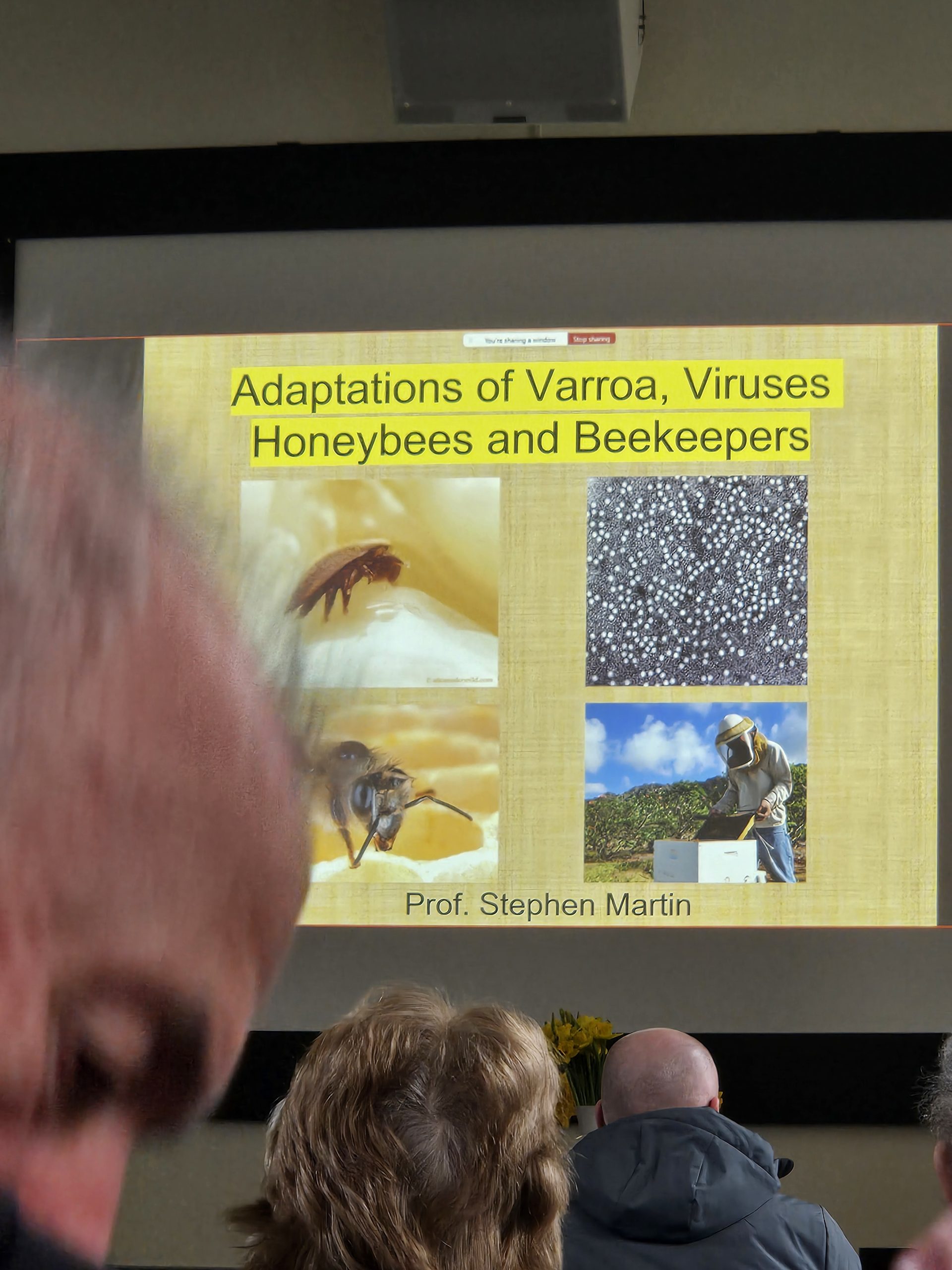
Okay, so Mum here. I recently sat through a lecture by Professor Stephen Martin about varroa mites, viruses, and how bees adapt to both. And friends? My brain is officially melted. In the best possible way.
I walked in expecting the usual doom and gloom about colony collapse and dying bees. What I got instead was a masterclass in how incredibly, brilliantly, almost annoyingly clever both bees AND varroa mites are. It’s like watching a really sophisticated chess match, except the pieces are microscopic and smell-based and have been playing for millions of years.
So grab your honey toast and settle in, because we’re about to go deep into the world of chemical warfare, evolutionary arms races, and why your bees might not actually need as much help as you think they do.
First Things First: Bees Aren’t Actually Dying Out
I know, I know. This contradicts pretty much every headline you’ve ever read. But here’s what Professor Martin showed us: globally, honeybee colony numbers have gone from 15 million in the 1960s to over 100 million today. Read that again. We’ve got MORE bees now than we did 60 years ago.
“But what about colony collapse disorder?” I hear you asking. Here’s the thing: that’s primarily a North American problem. And because North America shouts louder than everyone else (sorry, but it’s true), we all think it’s a global crisis. In Europe, colony numbers are holding steady. In Africa and Asia, they’re growing.
Does this mean we don’t have problems? No. Does it mean we should ignore bee health? Absolutely not. But it DOES mean we need to stop assuming bees are helpless victims who can’t survive without us constantly intervening. Because spoiler alert: they’ve been around for 40 million years. We’ve been keeping them commercially for maybe 200. They’re doing just fine, thanks.
Bees Have Survived Just Fine Without Us (And Might Prefer It That Way)
Here’s a humbling thought: bees evolved around 40 million years ago. They’ve dealt with predators, parasites, diseases, ice ages, continental shifts, and approximately everything nature could throw at them. All without a single beekeeper in a white suit showing up with strips of chemicals.
Humans? We’ve been heavily managing bees for maybe 200 years. In evolutionary terms, we’re basically that person who showed up to a party uninvited, rearranged all the furniture, and started telling everyone how to have a good time.
Professor Martin made this point brilliantly: we create problems, then we think we have to solve those problems, often making things worse. Bees, left to their own devices, have some pretty remarkable survival mechanisms. Maybe – just maybe – we should trust them a bit more.
The Invisible Mite: How Varroa Became a Master of Disguise
Right, so here’s where things get REALLY fascinating. And slightly terrifying. But mostly fascinating.
You know how we can see varroa mites? Those reddish-brown parasites crawling around on bees? Well, here’s the kicker: the bees can’t actually see them. Not because they have bad eyesight, but because varroa mites are basically chemical ninjas.
Bees don’t identify things the way we do. We use visual recognition – you know your mate Dave because you recognize his face. Bees use chemical recognition – they know their sisters because they all smell the same. It’s like if everyone in your house had the same perfume, and anyone wearing different perfume was immediately suspicious.
Varroa mites have evolved to chemically mimic bees. Perfectly. When researchers analyzed the chemical ‘barcode’ of varroa mites living on bees, they found it was IDENTICAL to the bees they were living on. The mites basically smell exactly like bees to other bees. It’s the perfect disguise.
This is why bees can have varroa mites crawling all over them and not react. To them, it’s just another bee. There’s no enemy to fight because they can’t detect an enemy. Sneaky, right?
The Most Mind-Blowing Thing: Mites Can Change Their Smell in 3 Hours
Okay, so if that wasn’t impressive enough, get this: varroa mites can switch their chemical disguise in THREE HOURS.
Think about this. A mite is on a forager bee. That bee has a specific chemical profile. Then the mite moves to a nurse bee, which has a completely different chemical profile (because nurse bees smell different from forager bees). Within 20 minutes, the mite starts changing its chemistry. Within an hour, it’s well on its way. Within three hours, it’s completely adapted to smell like the new bee.
The researchers have NO IDEA how they do this. It’s like if you walked into a party wearing red and then somehow, magically, your clothes turned blue to match everyone else. Except chemically. And in three hours.
This is evolution at its finest, folks. These mites are SUPREMELY adapted to survive on bees. Which makes you wonder: if they’re this good at hiding, how do any bees survive at all?
How Bees Fight Back: Enter the Specialist Detectives
Spoiler: bees aren’t just sitting there letting mites win. Evolution works both ways, remember? While mites were getting better at hiding, bees were getting better at finding.
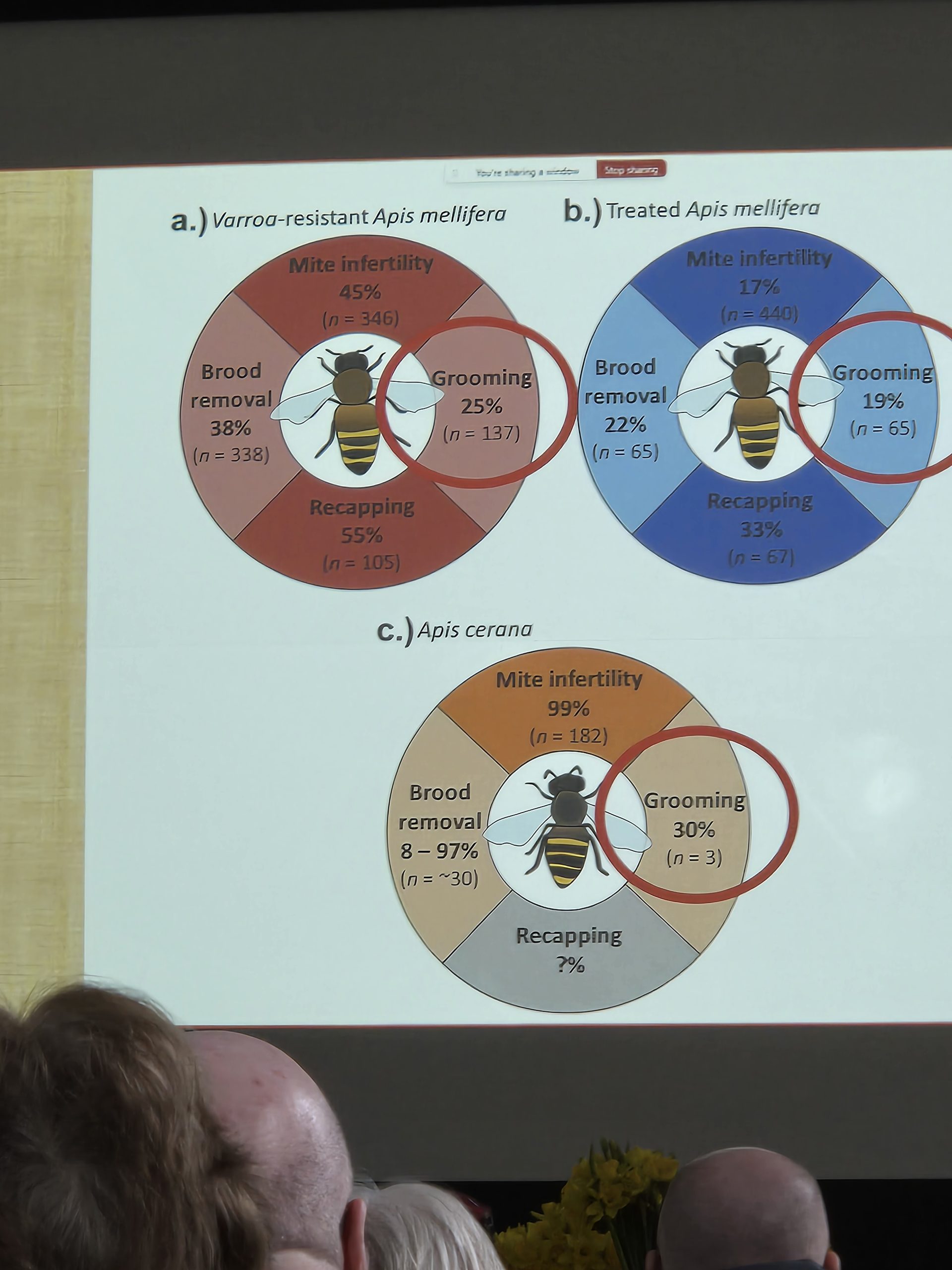
Here’s where it gets clever. In every colony, there’s a cohort of bees – usually between 15-20 days old – who are INCREDIBLY sensitive to smells. These bees have higher levels of sensory proteins in their antennae. They’re basically the bloodhounds of the bee world.
These specialist bees use something called ‘spying’ – they can detect the chemical compounds that the mite DOESN’T know it’s broadcasting. See, while the mite is busy mimicking the bee’s main chemical signature, it’s also producing other compounds it needs to survive. And these specialist detective bees can smell those compounds.
It’s like if a spy was wearing a perfect disguise but forgot to hide their distinctive cologne. The mite thinks it’s invisible, but the bees know it’s there.
This is what we call VSH – Varroa Sensitive Hygiene. These bees can detect which cells have mites in them, uncap those cells, and remove the infected pupae. Problem solved. Well, mostly.
Plot Twist: It’s Not Really About the Mites
Right, so here’s where I had to actually stop taking notes and just… absorb. Because it turns out the real villain in this story isn’t varroa mites at all. It’s the viruses they carry.
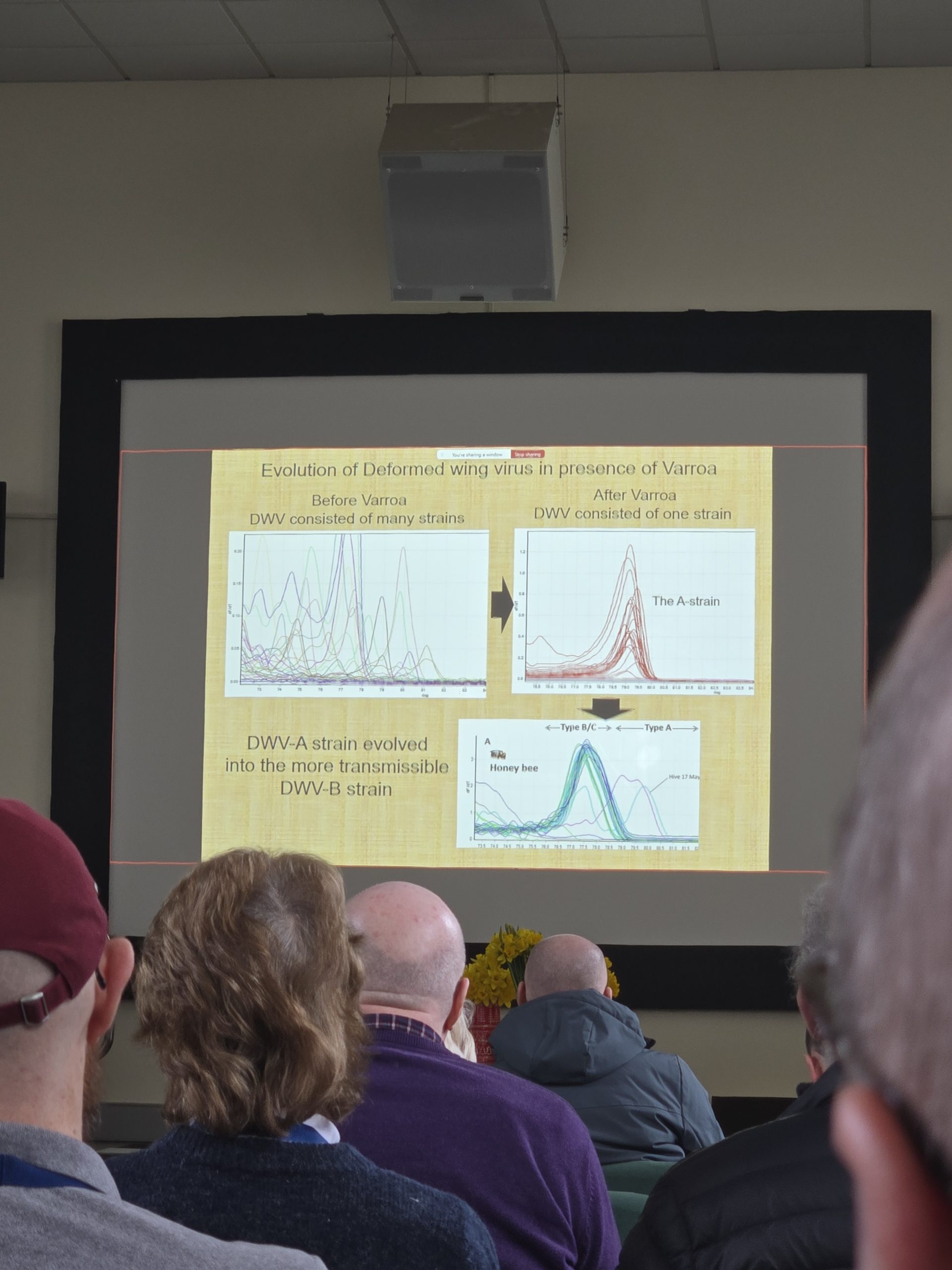
Before varroa arrived, bees had loads of different virus strains. Lots of diversity, relatively low levels of each one. Then varroa showed up and became a really efficient viral transmission vector (fancy way of saying: mites spread viruses really well).
What happened next is evolution in fast-forward. One particular strain of Deformed Wing Virus – the A strain – was really good at being transmitted through the varroa reproductive cycle. So it basically wiped out all the other strains and became dominant. Like that one COVID variant that took over from all the others.
Then the A strain evolved into the B strain, which was even better at using varroa mites as its personal Uber service. And now we’ve got a recombinant strain that’s part A and part B and MORE pathogenic than either parent. Evolution doesn’t stop, folks.
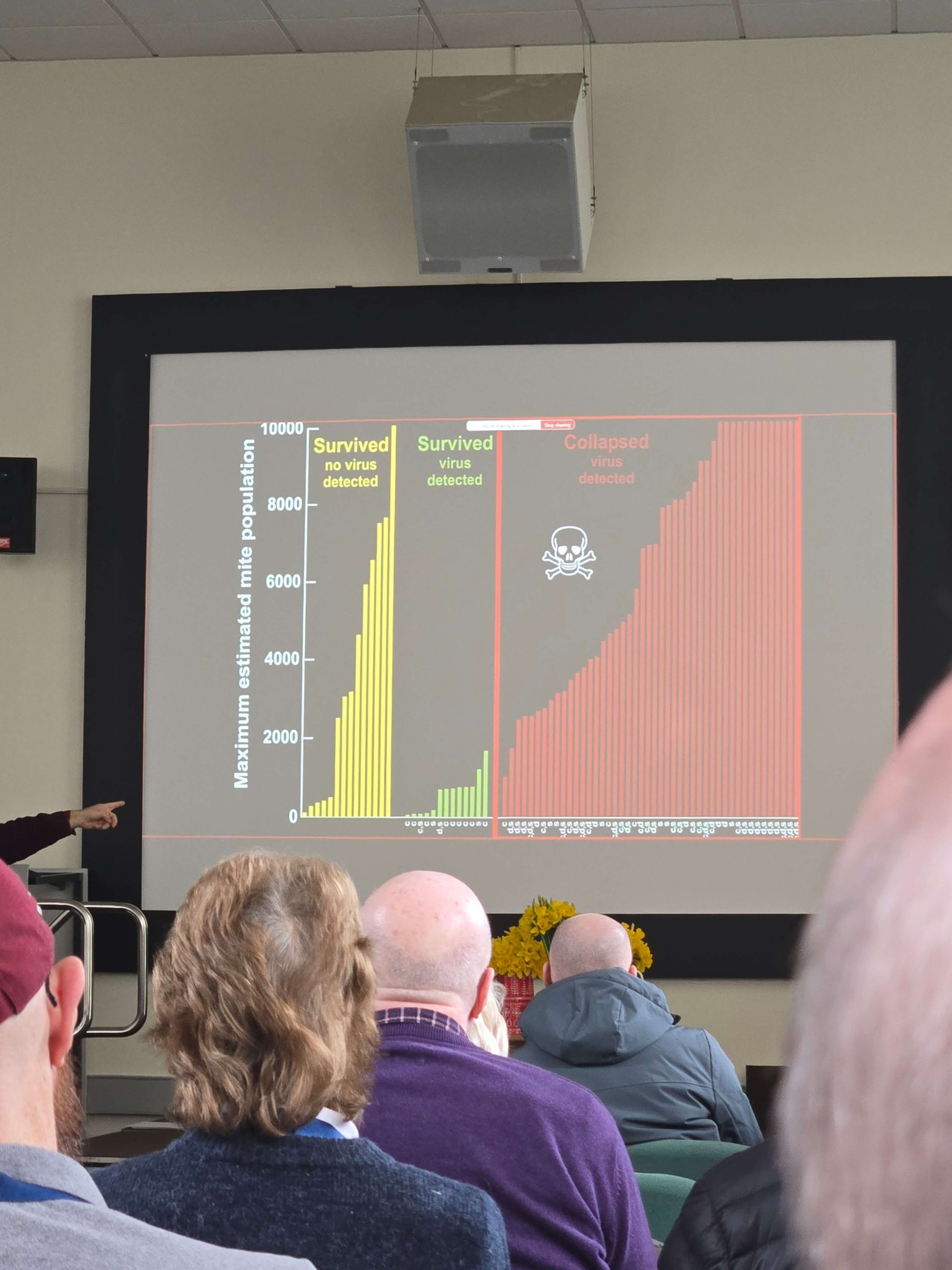
The point is: colonies often die from viral load, not from mite numbers. You can have 4,000 mites in a colony and it survives fine if there’s no virus. But if the virus is present, even lower mite numbers can be lethal. This completely changes how we think about varroa management.
Hygienic Behavior: The Swiss Army Knife of Bee Defense
So bees have this amazing behavior called hygienic behavior. It’s not new – it evolved millions of years ago to deal with diseases like American foulbrood and chalkbrood. Bees detect diseased brood, uncap it, and toss it out of the hive. Job done.
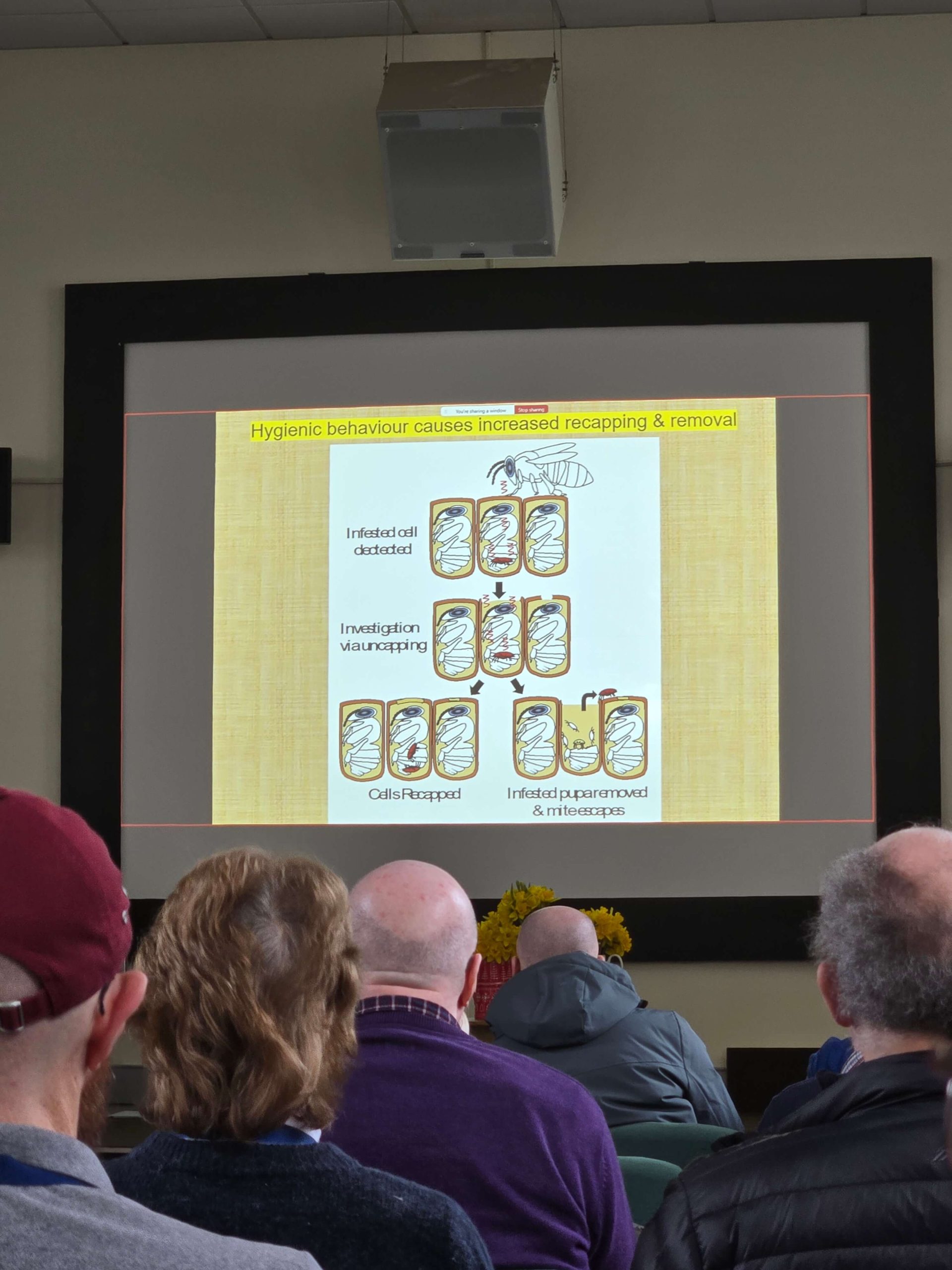
What’s brilliant is that some bee populations have co-opted this same behavior to deal with varroa. Same mechanism, new target. It’s like using a hammer that was designed for nails to also crack walnuts. Versatile!
The genetics are complicated – it’s not just one or two genes, it’s multiple genes expressed at different levels in different cohorts of bees. But the important bit is: this behavior is heritable. You can breed for it. It gets passed down through generations.
And here’s where we beekeepers come in. Or rather, where we need to step BACK…
Why Chemical Treatments Might Be Making Things Worse
Okay, deep breath. This is the part that made me question everything I thought I knew about beekeeping.
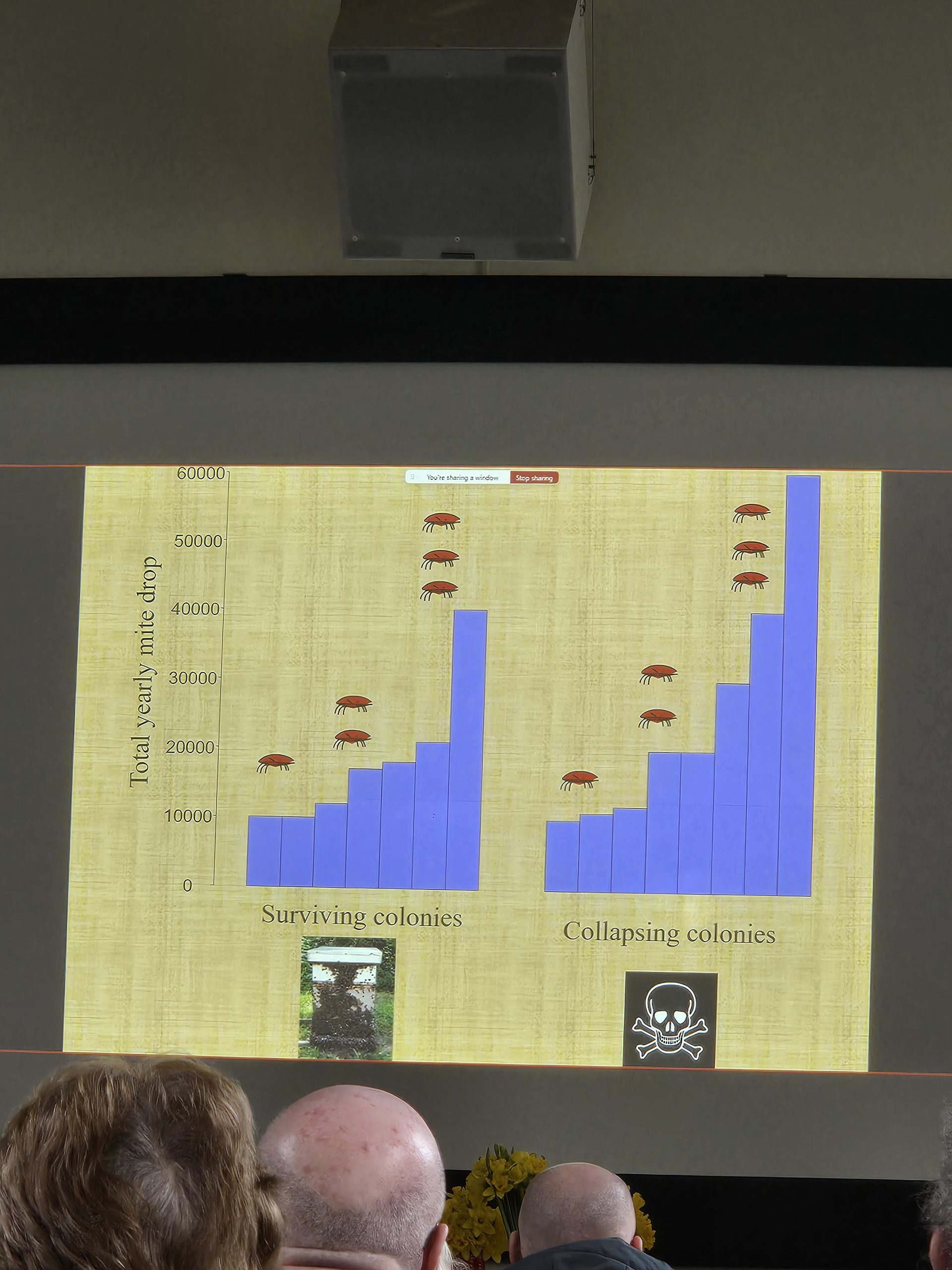
In nature, bees that can handle varroa survive and pass on their genes. Bees that can’t… don’t. That’s natural selection. Over time, the population gets better at handling varroa because only the resistant genes get passed on.
But when we treat ALL the colonies with chemicals, the susceptible ones survive too. There’s no selection pressure. In fact, because these resistance behaviors are ‘expensive’ – they take energy, they require complex genetics – bees that DON’T have them actually have an advantage when treatments are used. They can use that energy for other things.
Result? Over time, treated populations get WEAKER. We create colonies that literally cannot survive without our intervention. We’ve locked ourselves into a treatment cycle where we can never stop treating because we’ve bred bees that depend on it.
It’s like if you carried your child everywhere and never let them walk. Eventually, their leg muscles would atrophy. That’s what we’re doing to bees with continuous chemical treatments.
The Good News: It’s Already Working in Wales and Ireland
Right, so after all that doom and gloom, here’s the hopeful bit that made my heart sing.
In North Wales, Professor Martin and his team have been running a treatment-free experiment for over 15 years. When they started in 2010, basically everyone was treating for varroa because that’s what you do, right?
They got a small group of beekeepers – the risk-takers, the brave ones – to stop treating. And monitor. Just watch what happens.
By 2024, 70% of beekeepers in that area don’t treat anymore. SEVENTY PERCENT. Because their bees have adapted. They’ve developed resistance. And once a few beekeepers succeeded, others followed. It’s like a snowball effect.
And guess what? The same thing is happening here in Ireland. Small communities of beekeepers are trying this, finding it works, and telling their neighbors. It’s spreading. Not because anyone’s forcing it, but because it actually works.
The key is: small communities. Islands. Isolated areas. Places where you can let natural selection work without constant reinvasion from susceptible colonies.
How to Actually Make This Work (Without Killing All Your Bees)
Look, I’m not going to tell you to stop treating tomorrow. That would be reckless. But here’s what the research is showing works:
- Start with monitoring. You can’t make informed decisions without data. Know your mite levels.
- If you’re in an area where most beekeepers are treating, be very careful about going treatment-free. The reinvasion pressure will be massive and your resistant bees might struggle.
- If you’re in a small, isolated community – or on an island (hello, Ireland!) – you’re in a better position to try this.
- Talk to other local beekeepers. If several of you try this together, it works much better than going it alone.
- Be prepared for some losses during the transition period. It took about 6 years in South Africa. Nature’s timescale is longer than we’d like.
- Accept that you might lose colonies. But the ones that survive will be STRONG. And they’ll pass on that strength.
It’s not easy. Change never is. But it might be the best long-term strategy for sustainable beekeeping.
Why This Is So Hard (It’s Not the Bees, It’s Us)
Professor Martin made a brilliant point: the hardest part of this whole thing isn’t getting the bees to adapt. It’s getting BEEKEEPERS to adapt.
Because change is scary. If you’ve been treating your bees for 20 years and they’ve survived, why would you stop? What if they all die? What if you’re the one who gets it wrong?
There are two stable cycles you can be in: the treatment cycle (treat, mites die, treat again, mites die, forever) or the resistance cycle (monitor, let natural selection work, stronger bees, less intervention). Both are self-reinforcing. Both are stable. Moving from one to the other is the hard part.
But here’s the thing: humans are basically sheep. We follow the crowd. If everyone’s treating, we treat. If everyone stops treating and it works, we stop too. It’s about reaching that tipping point where enough people have succeeded that it becomes the new normal.
What This Means for Bee Happy Honey
Right, so after all that, you’re probably wondering: what are WE going to do with our colony?
Honest answer? We’re still figuring it out. We’re complete beginners, remember. We have zero idea what we’re doing.
But what we ARE going to do is:
- Monitor carefully. We’re already doing this with our alcohol washes and mite counts.
- Learn as much as we can about hygienic behavior and VSH. Knowledge is power.
- Talk to experienced beekeepers in Northern Ireland who’ve tried treatment-free approaches.
- Make informed decisions based on what our specific colony needs, not what the calendar says.
- Be honest about our mistakes and what we learn – that’s literally the whole point of this blog.
We’re not advocating for everyone to stop treating immediately. That would be irresponsible. But we ARE saying: maybe it’s worth questioning the automatic treatment cycle. Maybe our bees are stronger than we think.
The Bigger Picture
Here’s what struck me most about Professor Martin’s lecture: the absolute, stunning cleverness of nature.
Varroa mites that can change their smell in three hours. Bees with specialist detectives who can smell what shouldn’t be there. Viruses that evolve in real-time. An arms race that’s been going on for millions of years and will continue long after we’re gone.
And us? We’re just… watching. Learning. Trying not to mess it up too badly.
Maybe the best thing we can do for bees isn’t to save them. Maybe it’s to trust them. To give them the space and time to do what they’ve been doing for 40 million years: adapt, survive, and thrive.
That doesn’t mean we abandon them. It means we become better observers. Better partners. Less intervention, more understanding.
The Good, the Bad, and the Sticky
The Good:
Bees are incredible. Evolution is incredible. Natural resistance is possible and it’s already working in multiple places around the world.
The Bad:
Change is hard. The transition period can involve losses. There’s no quick fix or easy answer.
The Sticky:
We’re stuck between two stable systems – the treatment cycle and the resistance cycle. Getting from one to the other requires courage, patience, and community. But it might just be worth it.
So that’s what we learned from one mind-melting lecture about varroa mites. Who knew parasites could be so fascinating?
As always, we’re just two people with approximately 50,000 bees trying to figure this all out. We’ll keep you posted on what we decide and how it goes. Because if we’re going to make mistakes, we might as well make them publicly and help other people learn from them, right?
Until next time, bee brave (but also bee informed).
Mum & Bee Girl
Bee Happy Honey