Right, so full disclosure before we go any further: this is our first year keeping bees. Our FIRST year. We got them in spring, we’ve been learning as we go (with approximately zero idea what we’re doing), and we’re currently in our first winter praying we haven’t killed them all — and nervously second-guessing our bold decision to try chemical-free beekeeping.
So when we tell you we skipped the January varroa treatment… yeah. We might have just made a massive mistake. We honestly won’t know for months whether our bees survive the winter, let alone whether we made the right choice.
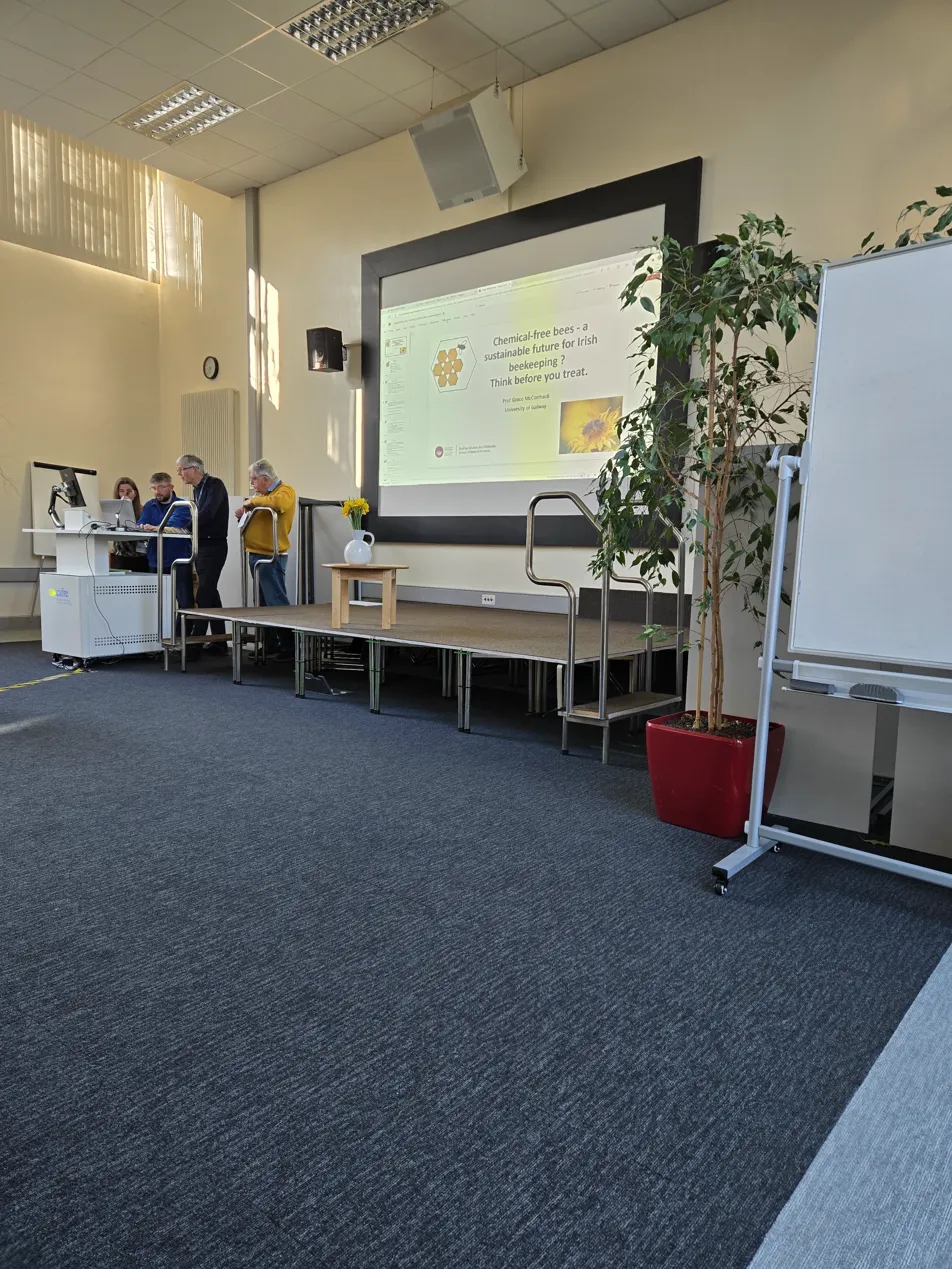
But we went to a FIBKA conference and heard Professor Grace McCormack talk about chemical-free beekeeping, and suddenly our anxious decision-making didn’t seem quite so reckless. Or maybe it’s still reckless and we just feel temporarily better about it. Time will tell!
So grab a cup of tea (with honey, if our bees make it through winter), and let us share what we learned—and the somewhat terrifying choice we made.
What We Actually Did (And Why We’re Nervous)
Here’s our situation: we’re first-year beekeepers. The club recommended a varroa treatment, so we did it—because honestly, what do we know? Then they said to do another dose in January.
But by January, a few things had happened:
- We checked our mite count and it wasn’t high
- Our colony looked strong going into winter with good big numbers
- Another beekeeper at our apiary said he didn’t like that treatment—thought it had killed a few of his hives
- We only have one hive, so if we mess this up, we’ve lost everything
So we… didn’t do the January treatment. We just didn’t. And we’ve been second-guessing ourselves ever since.
Did we make the right choice? Ask us in spring. Maybe our bees will come roaring out of winter and we’ll look like geniuses. Or maybe we’ll be starting from scratch with a new colony and a hard lesson learned. We genuinely don’t know yet.
This is the reality of first-year beekeeping: you make choices based on limited information, advice from different people who sometimes contradict each other, and a whole lot of crossed fingers.
What Professor McCormack Said (And Why We Feel Slightly Less Panicky)
So here we are, first-year beekeepers who just made a decision that might be brilliant or disastrous, sitting in a conference listening to Professor Grace McCormack from the University of Galway talk about treatment-free beekeeping. (Read our full FIBKA 2026 conference writeup too.)
Her core message? “Think before you treat.”
Don’t treat automatically just because the calendar says so. Check your mite levels. Assess actual need. Make informed decisions based on what you can observe, not just what everyone else is doing.
Which is… kind of what we did? We checked our count. We looked at our colony strength. We listened to experienced beekeepers with different perspectives. We made a choice.
Whether it was the RIGHT choice—that’s a different question entirely. We’re still on a massive learning curve here. But at least it wasn’t a completely random decision. That’s something, right?
The Science Behind Chemical-Free Beekeeping (That Made Us Feel Temporarily Better)
Here’s what Professor McCormack explained that made our panicky decision seem slightly less insane:
Bees have been dealing with diseases and pests for millions of years. They have this whole system called “social immunity” where the colony works together to stay healthy. They can detect problems in cells—through smell, movement, even heat differences—and remove compromised brood before it becomes a bigger issue.
This behaviour (called “hygienic behaviour” because scientists love fancy terms) originally evolved to deal with diseases like foulbrood. But some bee populations figured out how to use it against varroa mites too.
Here’s the bit that made us sit up: when we automatically treat—even when mite counts are low—we remove the evolutionary pressure that helps bees develop these natural defences. We’re essentially breeding weaker bees that can’t survive without constant intervention.
So maybe—MAYBE—by checking our count, seeing it was low, and choosing not to treat, we’re giving our bees a chance to handle things themselves. Building their natural resilience instead of making them dependent on chemicals.
Or maybe we’re just trying to rationalise a decision we made because we were scared of the treatment side effects and didn’t know what we were doing.
Like we said: ask us in spring.
Apparently We’re Not the Only Ones
Here’s what genuinely surprised us: Professor McCormack hasn’t treated her bees since she started keeping them around 2013. One of her colonies has been going strong for over SEVEN years without any chemical treatments.
And she’s not alone. The research team surveyed Irish beekeepers and found that more than 20% aren’t treating for varroa. One in five! Some intentionally, some accidentally, some through what we’ll call “strategic neglect,” but still—there’s a whole cohort of untreated bees surviving out there.
They’ve also tracked wild colonies living in trees and buildings across Ireland, surviving for over five years with nobody treating them, nobody even checking on them.
So it IS possible for Irish bees to survive without treatment. The question is whether OUR bees are among them.
The Irish Study That Gave Us Hope
Professor McCormack is running a three-year pilot study through the National Apiculture Programme with ten experienced beekeepers across Ireland trying treatment-free beekeeping.
Year one results (preliminary, not final, don’t make life decisions based on this):
- Treatment-free colonies had slightly LOWER varroa counts than treated ones
- Honey yields were good (one colony made 56 kilograms!)
- Deformed wing virus was very rare
- No connection between varroa levels and honey production
Of course, these are EXPERIENCED beekeepers. They know what they’re looking at. They can tell when something’s going wrong. We’re over here like “is that normal? Should there be that many bees on the landing board? Why is that one flying in circles?”
So the fact that it’s working for experienced beekeepers doesn’t necessarily mean it’ll work for us. But it does mean it’s possible. And that’s better than nothing.
Why We’re Sharing This (Even Though We Might Fail Spectacularly)
Here’s the thing: we could have kept quiet about skipping that January treatment. Waited to see if the bees survived. If they did, THEN we could have written about our “successful chemical-free beekeeping approach.” If they didn’t, nobody would have to know about our questionable decision-making.
But that’s not what this blog is about. This is our mother-daughter beekeeping adventure, and we promised to share the good, the bad, and the sticky. So here we are, documenting our decisions in real-time, successes and failures and complete disasters included.
Maybe our bees will thrive and we’ll have learned something valuable about trusting observation over automatic intervention. Maybe they won’t make it and we’ll have learned an equally valuable (if heartbreaking) lesson about the limits of beginner knowledge.
Either way, we’re sharing the journey. Because maybe there are other first-year beekeepers out there getting conflicting advice, making nervous decisions, and wondering if they’re completely mucking everything up.
You’re not alone. We’re right there with you, crossing our fingers and hoping for the best.
Our Chemical-Free Beekeeping Plan (Besides Worrying)
We’re not just sitting here anxiously waiting for spring. We’re monitoring. Learning. Trying to be responsible about our decision even if we’re not sure it was the right one.
Our plan:
- Keep checking the hive entrance for activity (when it’s not freezing)
- Monitor mite drop when weather allows
- Take photos and notes to track what we’re seeing
- Use Dr. Coffey’s free diagnostic service in spring (if we have bees to test)
- Be ready to treat if counts get high after winter
- Document everything so we can learn from whatever happens
- Share it all here—successes, failures, and “oh god what have we done” moments
The Honest Truth
We don’t know if we made the right choice. We won’t know for months. Maybe longer.
What we DO know is that we didn’t make the decision lightly. We checked our mite count. We looked at our colony strength. We listened to different experienced beekeepers. We weighed the risks of treating versus not treating. We made what seemed like the best choice with the information we had.
That’s all any beekeeper can do, experienced or not.
Professor McCormack’s presentation didn’t tell us we made the right choice. It told us that checking before treating, assessing actual need, and making informed decisions matters. It told us that Irish bees CAN survive without constant chemical intervention. It told us that automatic treatment might be doing more harm than good in the long run.
But it didn’t guarantee our particular bees would make it through their first winter with their anxious first-year keepers who are making it up as they go along.
That’s on us to find out.
What Happens Next
We wait. We watch. We learn. And when spring comes, we’ll find out if our bees made it through.
If they do, we’ll share what we learned about our first winter, what signs we watched for, what worried us, what gave us hope. We’ll talk about whether we see evidence of the hygienic behaviours Professor McCormack described. We’ll check our spring mite counts and figure out next steps.
If they don’t… we’ll share that too. What we think went wrong. What we’d do differently. What we learned from the loss. Because that’s valuable information too, even if it’s heartbreaking.
Either way, we’ll be honest about it. That’s the whole point of this adventure.
Are you a first-year beekeeper making nervous decisions and hoping for the best? Have you been in this position before? We’d love to hear your stories—drop us a message in the comments below.
Bee You. Bee Kind. Bee Brave. (And Bee Patient While We Figure This Out.)
— Mum & Bee Girl
P.S. Check back in spring to find out if this was brilliance or disaster. We’ll be the ones either celebrating or starting from scratch with a new colony and a lot of humble pie.