
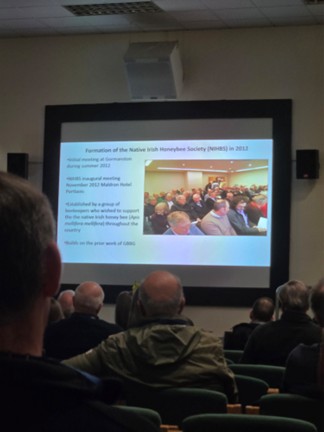
So last week, I went to this talk by Jonathan Getty from the Native Irish Honey Bee Society. We figured we’d sit in the back, nod along to words we didn’t understand, and maybe pick up one or two useful tips.
Instead? My brain is now completely full of queen rearing information and I have THOUGHTS.
Look, we’re still very much in the “trying not to accidentally kill our colony” phase of beekeeping. The idea of deliberately making more queens seems laughable when we can barely manage the one we have. But this talk was fascinating, and honestly, it made queen rearing seem way less terrifying than I thought.
Here’s everything we learned, translated into language that actual beginners can understand.
First: Why Should We Even Care About Queen Rearing?
Beekeeping in Ireland Has Been a Thing for Ages
Turns out beekeeping in Ireland goes back to the 7th century. There were actual laws about bees and swarms. My favourite: if your swarm lands on someone else’s property on a Sunday, you only get to keep half of it. Can you imagine?
“Sorry, Mrs. O’Connor, but it’s Sunday so I’m legally required to split this swarm with you.”
Wild.
The Problem Nobody Talks About: Imported Queens
Here’s something I had zero clue about before this talk: loads of beekeepers in the UK and Ireland just… buy queens online. From Greece. Or Slovenia. Or Italy.
At first I thought, “Well, that’s convenient!” But then Jonathan explained why this is actually a terrible idea.
First off: Disease Risk
When you import queens from abroad, you’re potentially bringing in all sorts of nasties we don’t have here yet. Things like Small Hive Beetle (which sounds adorable but is apparently a nightmare) or Tropilaelaps mites (which I can’t even pronounce).
And even diseases we already have? There are different variants. So you might import a queen that brings in a much nastier version of European Foulbrood than what’s already here. Brilliant.
In 2024 alone, over 2,000 colonies came through Northern Ireland under the NI Protocol. With basically no proper inspection. That’s… not great, is it?
Second: Our Bees Are Actually Special
This bit genuinely surprised me. Our native Irish honey bee (the fancy name is Apis mellifera mellifera, which Bee Girl can now say perfectly while I stumble over it) has been here for thousands of years.
Since the last ice age ended, these bees have been adapting to Irish weather. The rain. The wind. The general dampness of everything.
When you import a queen from sunny Greece and she mates with our local drones, you get hybrid bees. And these hybrids lose all those thousands of years of “knowing how to deal with Irish weather.”
Also? Hybrid bees can be ridiculously aggressive. Like, genuinely dangerous to work with. There’s actual research on this. You cross certain bee types and you end up with bees that are absolutely vicious.
So yeah. Importing queens from warm sunny places to keep in Northern Ireland makes about as much sense as… well, as two complete beginners thinking they can keep bees. Which is to say: questionable at best.
The Solution: Learn to Rear Your Own Queens
The Native Irish Honey Bee Society has this brilliant idea: instead of everyone importing dodgy queens from the internet, what if local beekeepers worked together in groups to produce their own queens?
Native bees. Locally adapted. No importing. No mysterious diseases.
Sounds great, right? That’s what the whole talk was about.
The Queen Rearing Groups Programme
So here’s what NIHBS has been doing since 2021. They set up queen rearing groups where local beekeepers get together, get some training, get a starter kit of equipment, and learn to produce their own queens.
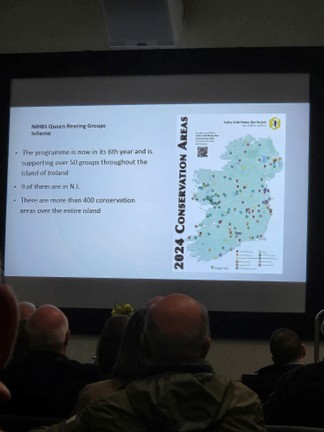
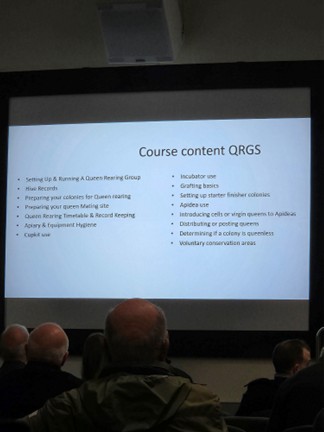
The numbers are actually mad: they started in 2021 with 15 groups, and now there are over 50 groups across all of Ireland — 9 of them right here in Northern Ireland — with over 700 beekeepers trained. Each group gets equipment worth around €500–600, and then eight weeks of training covering everything from “how do you even start” to “how do you distribute queens to other people.”
Why Work in Groups?
Jonathan made a really good point: if you’re just working on your own with your own bees, queen rearing is actually quite hard. You can’t control what your queens mate with, you can’t share equipment or knowledge, and you’re basically fumbling around in the dark.
But in a group? You can pool resources, learn from people who’ve already figured it out, control the drone population in your local area, and actually produce decent queens. Also, if you always make new colonies from the ones that swarmed, you’re accidentally breeding bees that swarm a lot. Working in a group helps you avoid that.
The Actual Process (Which Is Less Scary Than You’d Think)
The Basic Principle (Which Made My Brain Hurt Less Than Expected)
Ready for this? Queen rearing sounds complicated but the basic principle is really simple:
If you separate bees from their queen, the queenless bees will make a new queen if you give them young larvae.
That’s it. That’s the whole concept. Everything else is just details about how to do this efficiently and reliably.
I sat there thinking “Wait, that’s actually not that complicated?” And Jonathan was like “Yeah, it’s been oversold as this dark art but really it’s just understanding the process.”
Mind. Blown.
What You Actually Need
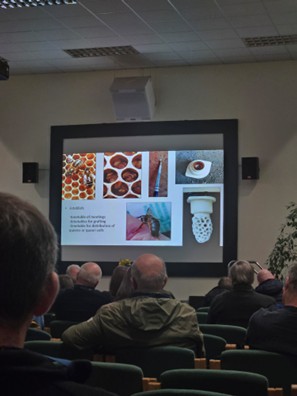
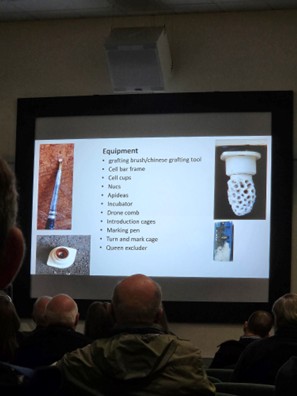
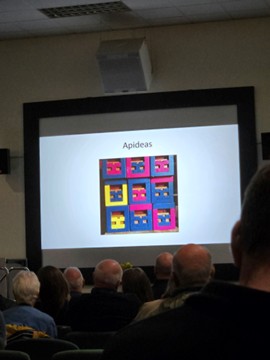
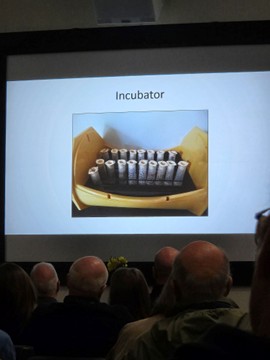
The good news: you don’t need to remortgage your house. The shopping list: a grafting tool (you know what this is? A 75p paintbrush — literally), cell bar frames, cell cups, Apideas (mini beehives for mating queens), an incubator (just a chicken egg incubator adjusted to the right temperature), and queen cages and marking pens for the finishing touches.
Jonathan showed us photos of some people who buy queen cages for 15p each online. Though he did warn that cheap stuff from dodgy websites often doesn’t quite fit properly, so you end up with queen cells falling out of holders and general chaos.
(I wrote down “don’t buy beekeeping stuff from AliExpress” in my notes. Bee Girl underlined it.)
The Timeline (This Is Where Bee Maths Comes In)
This is important and also made my head spin a bit. Normal bee development times: drones take 24 days from egg to flying around, workers 21 days, queens just 16 days. But when you’re grafting (moving a baby larva to create a queen), you’re not starting from an egg — you’re starting from a young larva. So from the day you graft to the day your queen emerges: 12 days.
This matters because if your group meets on Monday evenings, you graft on Monday, queens will emerge on Saturday, and if you want to collect ripe queen cells to give to other people, you need to get them on Friday. Get the timing wrong and your queens hatch early (disaster) or you’re trying to collect them too late (also disaster).
I have written “BEE MATHS IS CRITICAL” in capitals in my notebook. Bee Girl drew a calendar.
Grafting: Moving Tiny Babies Around
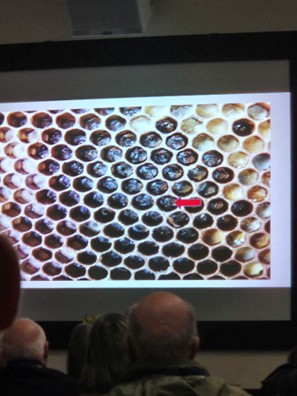
This is the bit that sounds hardest but is apparently just practice. What you’re doing: taking a very, very young worker larva (less than a day old) and moving it from a normal cell into a special queen cell cup.
Why it has to be tiny: worker larvae get fed for 5 days then capped and develop into workers; queen larvae get fed continuously with royal jelly and develop into queens. If you graft a 2-day-old larva instead of a 12-hour-old one, you’re taking away crucial feeding time. Result: smaller, weaker queen. What you’re looking for: the tiniest comma-shaped things you can see in the bottom of a cell. Basically invisible. Like a tiny grain of rice.
Bee Girl looked at the photos and said “They’re so cute!” I looked at the photos and thought “I will absolutely never be able to see something that small.” But apparently after some practice, it gets easier. People in the Belfast queen rearing group are perfectly happy to welcome complete beginners.
The Cloake Board Method (My New Favourite Term)
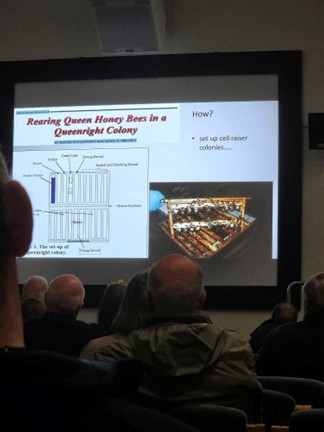
This is one of the most popular ways to do small-scale queen rearing. The setup: one colony, a special board that divides it into two sections — the bottom box has the queen and brood, the top box has queenless bees who will rear your queens. Every 5–6 days, you move frames of emerging brood from bottom to top.
The cycle: graft your tiny larvae on day 1, the cells get capped on day 5, queens emerge on day 12. Or, if you’re using an incubator, you take the capped cells out on day 5 — this speeds your cycle to 5 days, so you can produce more queens.
One beekeeper from the Mallusk group (just down the road from us!) produced 700 virgin queens in a single season using this method. Seven. Hundred. Queens. Meanwhile we’re over here just trying to remember to check our hive every week.
Working in a Group: The Practical Stuff
WhatsApp is your friend. The most successful groups apparently all use it — everyone gets the same information at the same time, you can share photos (“Does this look right?”), the mentor can check in remotely. The critical rule: everyone has to be in the group chat. You can’t have individual members ringing the group leader at all hours. That way lies madness.
Every group needs: an organiser (the person who herds everyone together), an external mentor (an experienced beekeeper who guides the group — doesn’t even have to be local, can be remote via WhatsApp), and members learning and helping. Typical group size: 4–6 people. Small enough to coordinate, big enough to share the work.
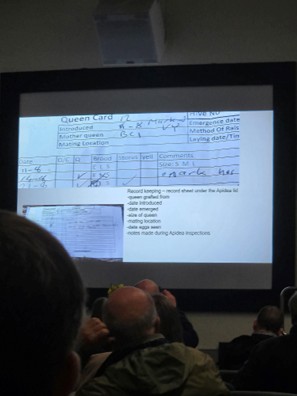
Record keeping — don’t skip this bit. This is where Bee Girl perked up because she loves making lists. Every single mini-hive needs a record sheet tracking queen ID number, mother queen’s ID, when she was introduced, when she emerged, when she started laying, and notes on behaviour and temper. Jonathan works with over 200 mini-hives and every single one has records. I asked Bee Girl if she wanted to be in charge of record keeping when we eventually (maybe) (possibly) (in several years) try this. She said yes immediately and pulled out a fresh notebook.
Conservation Areas: The Bigger Picture
NIHBS promotes these things called Voluntary Conservation Areas — regions where all the local beekeepers commit to keeping only native Irish honey bees. Map all the beekeepers in your area, get them on board, everyone commits to native bees only, control the drone population together. Natural barriers help — drones apparently won’t fly over large bodies of water, so a group near Lough Neagh benefits from the lough as a natural barrier.
These aren’t backed by law — they’re just agreements between beekeepers who care about preserving native bees. Which I think is quite lovely, actually. Just people working together because they give a damn.
The Weird Thing About Moving Bees
This came up in the Q&A and it’s genuinely fascinating. There’s a researcher called Ralph Büchler who discovered that when you move bees to a new location, they lose traits in the next generation. He bred bees that were really resistant to varroa mites, then moved them 200km away (still in Germany, similar climate). The next generation lost the resistance. Nobody really knows why — theories include different forage affecting genetics, environmental pressures, epigenetics, or just the stress of moving.
The point: local bees adapted to local conditions are best. Which makes importing bees from Greece to Northern Ireland seem even more ridiculous, doesn’t it?
What We’re Taking Away From This
Look, Bee Girl and I are nowhere near ready to start rearing queens. We still panic slightly when we open our hive. We still have to double-check which box is which. We definitely can’t spot a day-old larva yet.
But here’s what we learned: queen rearing isn’t actually magic, it’s just a process you can learn. You don’t need to be an expert — groups welcome beginners. It’s way more affordable than I thought. Working in a group makes it achievable. Our native Irish bees are actually special and worth protecting. And maybe, possibly, in a few years, we could try this.
For now, we’re sticking with our goal of “keep the colony alive” and “try not to get stung too much.” But it’s nice to know that when we’re ready, there’s a whole community of people doing this. Regular beekeepers, not experts. Just people who joined a group and learned.
The Belfast group apparently welcomes absolute beginners. They had one person who’d never even marked a queen before, and now they’re grafting larvae like it’s nothing. If they can do it, maybe eventually we can too.
(Bee Girl says “definitely.” I say “we’ll see.”)
If You Want to Learn More
Native Irish Honey Bee Society: www.nihbs.org. They run an 8-week online queen rearing course — all course materials go on their website for members. Resources Jonathan mentioned: the National Bee Unit has loads of free papers on queen rearing; “Rearing Queen Honey Bees in a Queenright Colony” by David Wilkinson and Mike Brown is a free 40-page guide; and check if there’s a local queen rearing group near you.
Our local association: Randalstown & District Beekeepers Association (where we did our Introduction to Bees course). They’re lovely and very patient with beginners who ask silly questions.
Final Thoughts
I think what I loved most about this talk was that it made queen rearing seem… achievable? Not now. Not this year. Probably not next year either. But someday.
Regular people in Belfast are doing this. They’re not professional beekeepers or scientists. They’re people like us who started with zero clue what they were doing, joined a group, and learned.
That’s kind of inspiring, isn’t it?
For now, we’re going to focus on keeping our colony alive through spring, not panicking during inspections, maybe eventually spotting our queen without help, and learning to mark her someday. And then maybe, when we’re feeling brave and slightly less clueless, we’ll think about joining a queen rearing group.
Bee Girl asked what color we’d mark our queen. I had to explain that beekeepers don’t just pick their favourite colour — there’s an actual international system so you can tell how old a queen is just by looking at her dot. White, yellow, red, green, or blue depending on the year she was born. Beekeepers remember it with “Will You Raise Good Bees?” Our queen (from 2025) should be marked blue. Should be. In theory. We haven’t actually found her yet to mark her. Every time we open the hive, we spend ages scanning frames and she’s apparently playing hide and seek. Very successfully.
Small steps, right?
Have you tried queen rearing? Are you part of a group? Or are you like us, still figuring out the basics? Let us know in the comments — we’d love to hear from other beginners!
UPDATE: We Might Actually Do This
So after writing this post and thinking about it more, I’m actually considering signing up for the NIHBS course.
Not because we’re ready to rear 700 queens. We’re absolutely not ready for that. But here’s the thing: if our colony does well this year (fingers crossed), it’s going to want to swarm. That’s just what healthy colonies do. And when that happens, we’ll need to know how to do splits to manage it — or we’ll lose half our bees.
And making splits means handling queens. Moving frames. Creating new colonies. Understanding timing. All the stuff this course teaches. Even if we never deliberately rear a queen, these are skills we’ll need. The queen rearing is just… the advanced version of what we’ll be doing anyway when our hive grows.
Plus, learning to actually handle bees confidently instead of panicking every time we open the hive? That seems worth eight Thursday evenings.
Bee Girl is very enthusiastic about this plan. She’s already got her notebook ready. I’m slightly terrified but also kind of excited. We’ll let you know if we’re brave enough to actually sign up.
(Who am I kidding. Bee Girl has already decided we’re doing it. I’m just along for the ride at this point.)
Mum
Bee Happy Honey, Northern Ireland
P.S. After the talk, Bee Girl announced she wants to “practice grafting on tiny things” and has been moving rice grains around with a paintbrush. I’ve created a monster. A very determined, very enthusiastic monster who now wants to raise 700 queens like the Mallusk beekeeper.
P.P.S. She also asked what color we’d mark our queens. I explained the international system — white, yellow, red, green, or blue. “Will You Raise Good Bees?” Our 2025 queen should be blue. Should be. Except we still haven’t actually found her in the hive to mark her. She’s apparently excellent at hide and seek. Maybe we should focus on “find the queen” before we move on to “rear 700 queens.” (Probably a good plan.)
🐝 Keep Reading
- The Bees Knew. (The Science Just Caught Up.)
- When a Real Bee Scientist Talks, We Take Notes
- Second Box Day
Related: Jack Silberrad on queen rearing for beginners and 8,000 years of the native Irish honey bee.