
A few weeks ago now, before any of this Apiguard business, something else happened that I never got round to telling you properly. Time to catch up.
The Colony That Was Supposed to Be Sorted
Regular readers might recognise this one. Back in Two Weeks Later I mentioned a colony still sitting in limbo, 001, no confirmed queen and a three week wait I was holding myself to. This is what happened to her.
This one had already given itself a queen the ordinary way. She was a virgin, doing what virgins do, biding her time until the weather and the drones and everything else lined up for her mating flight. We had every reason to think this was the boring, tidy version of requeening, the one where nothing dramatic happens and you just wait.
We went on holiday.
We came back, and she had not.
What a Missing Virgin Actually Looks Like
There was no string this time, no dramatic scene to describe, no absconding swarm hanging off a fence post. Just a colony that had been carrying on quietly with no queen at all while we were away, because a virgin queen out on a mating flight is a queen who might simply not come back. Weather, birds, bad luck, nobody ever really finds out which. She goes up, and sometimes she does not come down.
I did what I have learned to do by now, which is not panic immediately and instead go and check properly. I gave the colony two frames of open brood from elsewhere in the apiary, partly to keep them going and partly as a test. If they are genuinely queenless they will start drawing queen cells from that brood within a few days. If they already have a queen quietly getting on with things, they will not bother.
They bothered. Cells going up on both frames within days. Genuinely queenless, confirmed properly rather than guessed at.
Why I Did Not Just Wait
Normally at this point the plan writes itself. Let the bees raise their own queen from the cells, let her emerge, let her mate, off you go. It is the cheapest option and usually the best one.
Except it was already August, and a virgin queen needs settled, drone rich weather to mate successfully. Ask her to do that in County Antrim this late in the summer and the odds start working against you. Wait three or four weeks for a home grown queen who might not mate properly anyway, and you can end up with nothing at all going into winter, which is a much worse position than the one I was already in.
So I needed a mated queen. Now, not eventually.
Widening the Circle
Here is the useful bit, if you are ever standing where I was standing.
I went looking outside my usual bee circles, the ones I default to without really thinking about it, and found a mated queen through a different contact entirely. She cost twenty pounds, which if anything made me slightly suspicious, because twenty pounds does not usually buy you a mated, marked queen. What actually came with her was the bit I did not expect, a proper amount of hands on help and knowledge thrown in alongside her. Not just a queen in a box. An actual conversation, actual advice, an actual person I can now call again.
I am telling you this bit honestly because I think it matters more than the queen herself. I had gotten comfortable relying on one circle of contacts, the people I already knew, and this was the first time this year that circle was not quite enough on its own, fast enough, when I needed it to be. So I had to go and make a new one. That turned out to be a good thing, not just a stopgap. I now know someone else I can ring in a hurry, and that is worth more than twenty pounds.
She arrived already marked, in white, which after our own colour code confusion earlier this year with Clover was almost funny to watch done properly the first time. No debate, no checking the chart, just a small white dot already there.
Settling In
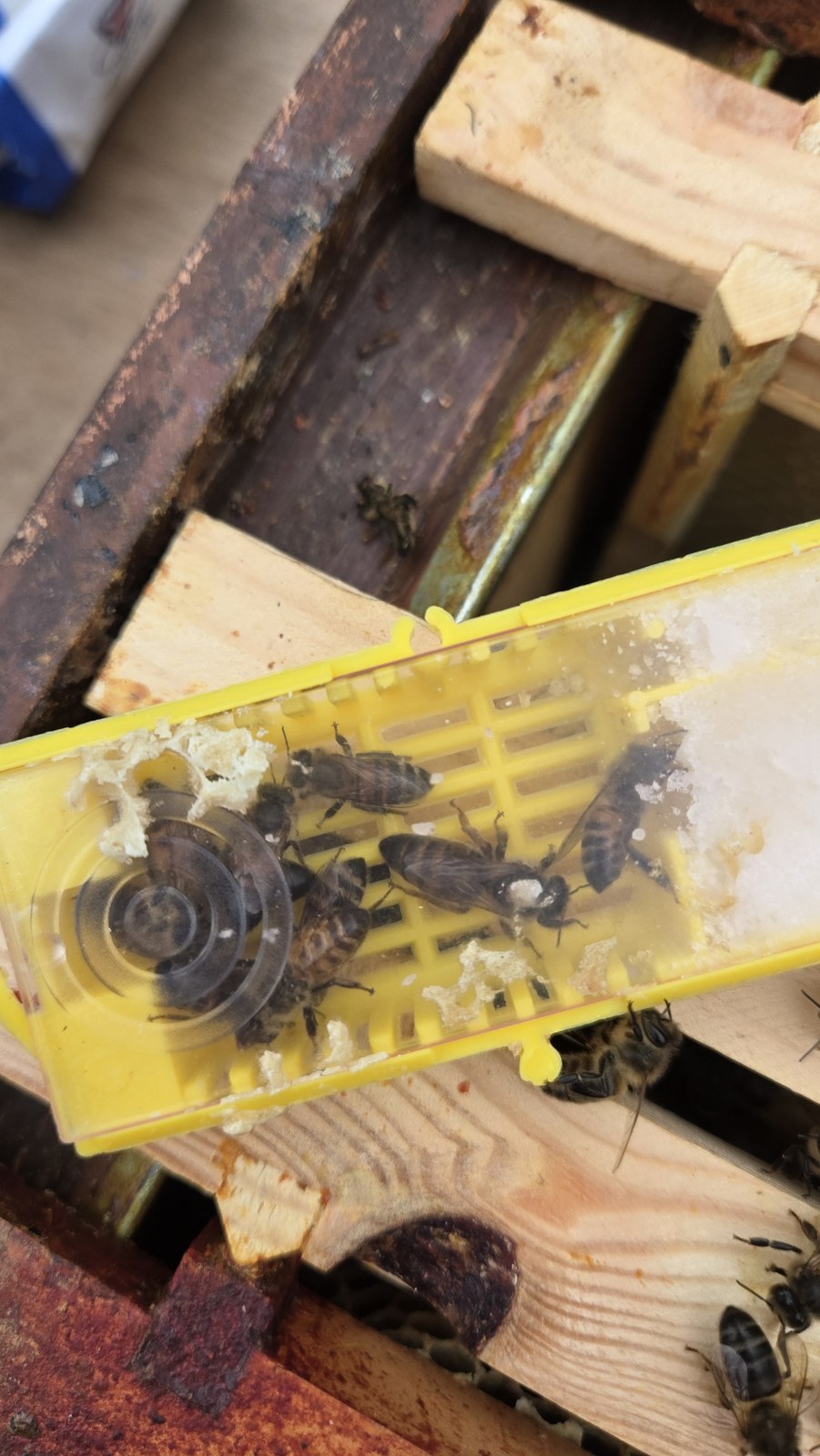
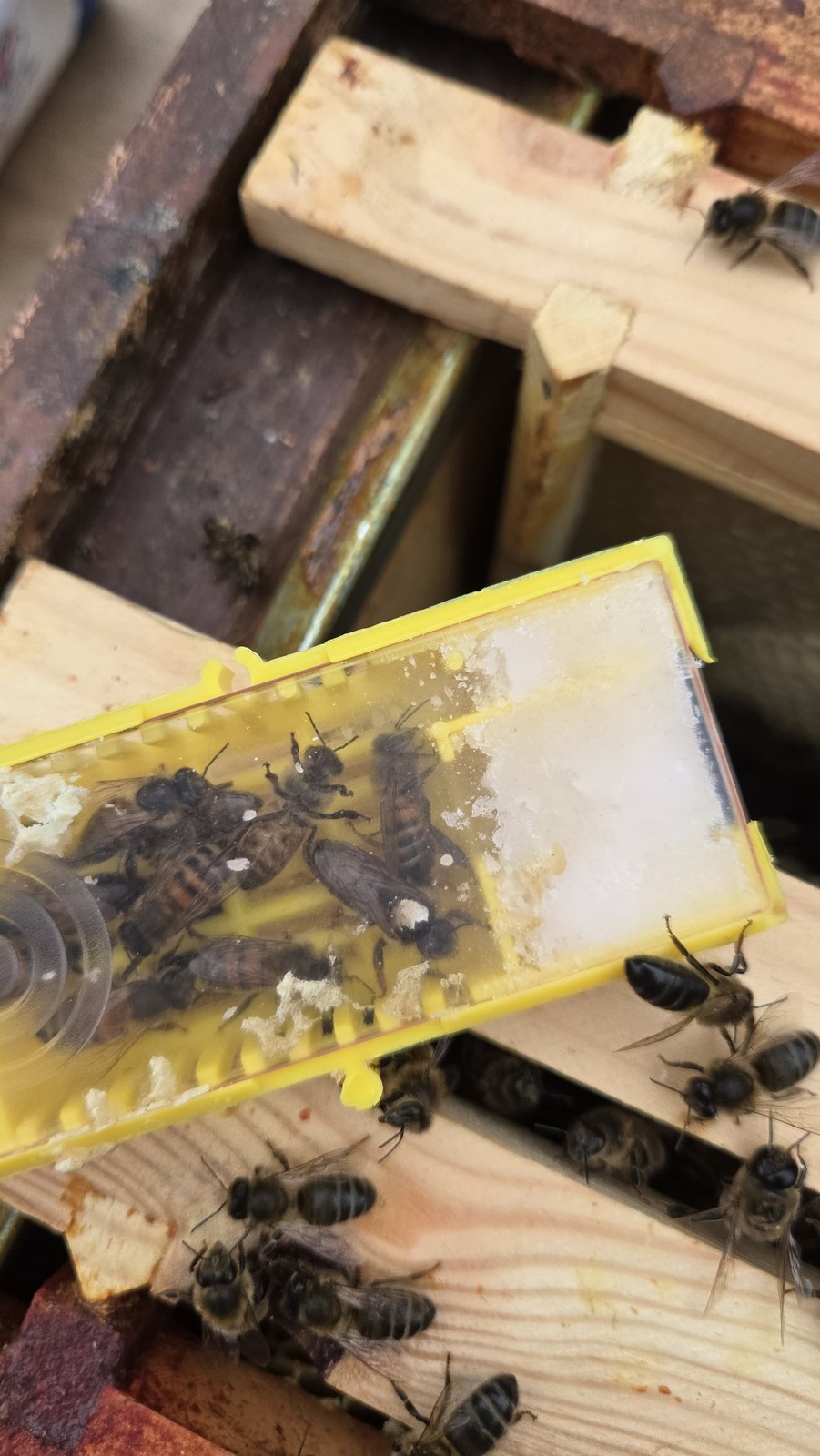
This colony had already started drawing queen cells from the two test frames I had given them, so introducing a caged queen and walking away was never going to be enough. I put her in and gave the bees a few days to get properly used to her scent through the cage. Then I snapped the fondant open myself to start a slow release, the kind where the bees still have to chew their own way through the last of it rather than her simply walking out. That gap bought me exactly what I needed. While she sat safely tucked behind that last bit of fondant, still protected, I went through the rest of the hive making sure there were no more queen cells left anywhere that could cause trouble once she was fully out. I was moving fast that day, and the cage did the babysitting so I did not have to choose between checking the hive properly and getting her introduced at all.
Then the Apiguard course started across the whole apiary, and I have not been back into this hive since to actually see how she is getting on. I do not know yet whether she has settled, started laying, or whether the colony has properly accepted her. What I do know is that on the visits before all this, the bees had a noticeably sharper edge to them than our other colonies, and I am genuinely not sure yet what to make of this queen. She may turn out excellent. She may turn out to be exactly what a fast, cheap, needs must decision sometimes gets you. Either way, she solved the actual problem in front of me at the time, which was a colony with no queen at all heading into autumn.
Hedging My Bets
Twenty pounds for a mated queen sounds like a bargain right up until you remember she came from someone I had never bought from before, going into a colony I could not fully vouch for either. So I did not just cross my fingers. The same day I bought her, I also bought an entire established colony, a full nuc rather than just a queen, headed by her own queen who was already mated, already laying, and already marked. Red, this time, which is either this year’s colour or last year’s depending which chart you believe, and at this point I have stopped trying to referee that argument.
What matters is she was a known, proven quantity on day one, while the twenty pound queen was still an unknown one in a cage. If 001’s new queen does not settle, I already have a queenright colony sitting in the apiary ready to take her place, or ready to absorb these bees the same way we saved the laying workers back in July. A queen who does not settle is a disappointment. She is not a disaster, not while there is a proven colony already paid for and sitting right there. And we are learning fast, hopefully.
Still to Do
She is owed a proper check, to see whether she is even laying yet, which I have not been able to do because the Apiguard course across the apiary got there first. That check waits until the treatment is finished, or possibly a peek before the second tray goes on if I cannot help myself, which given everything above feels fairly likely. I will tell you what we actually found rather than what I hoped we would find, because that seems to be the only honest way to run this blog at this point.
The Good, The Bad, and The Sticky
The Good: a genuinely queenless colony is queenright again, going into autumn rather than going into winter with nothing, and I have a new bee contact I did not have a month ago.
The Bad: another queen this year who simply did not come home, and no way of ever knowing why.
The Sticky: I still do not know if she has taken. I will not know until this Apiguard course is finished and I can get back in there properly. Waiting on an answer you cannot rush is its own kind of hard.
Mum & Bee Girl x