
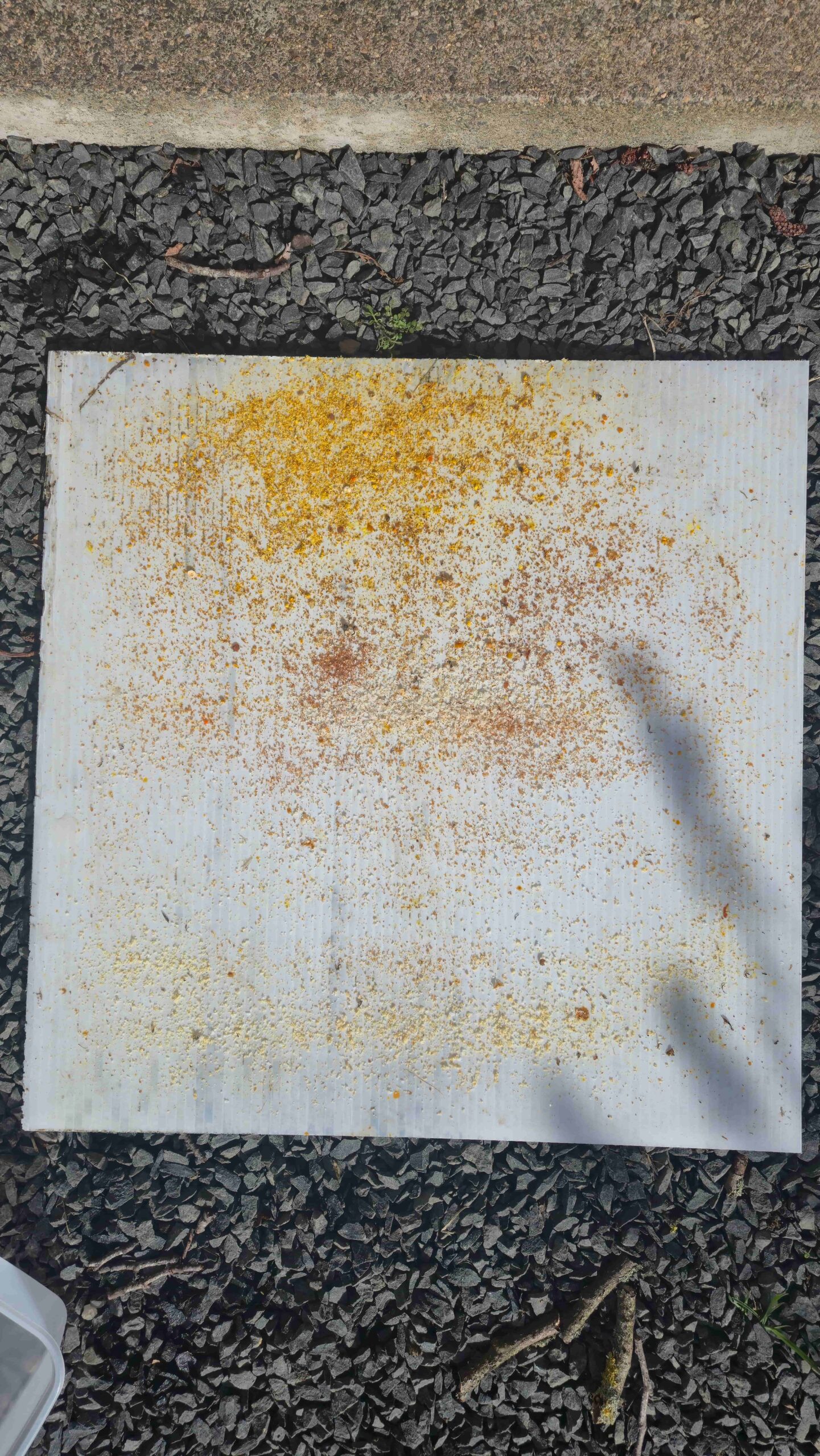
Or, why even the best-laid beekeeping plans can end up scattered across the apiary gravel.
There I was, feeling very pleased with myself. Seven days earlier I had slid the white correx board under the mesh floor of the hive, noted the date in my inspection sheet like a proper grown-up beekeeper, and patiently waited out the week. On the eighth morning, a rare sunny window appeared between showers, and I went out to collect the evidence.
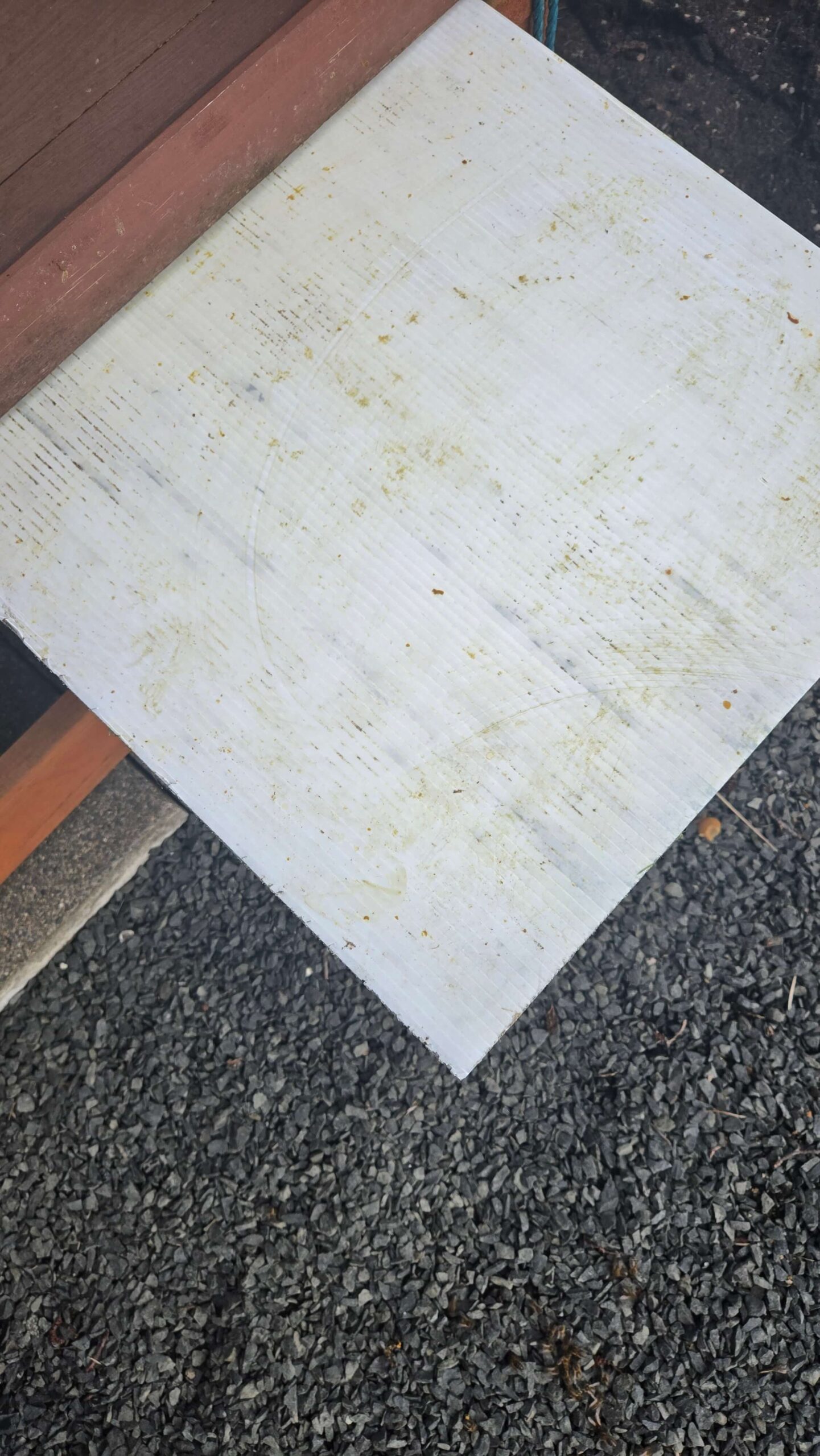
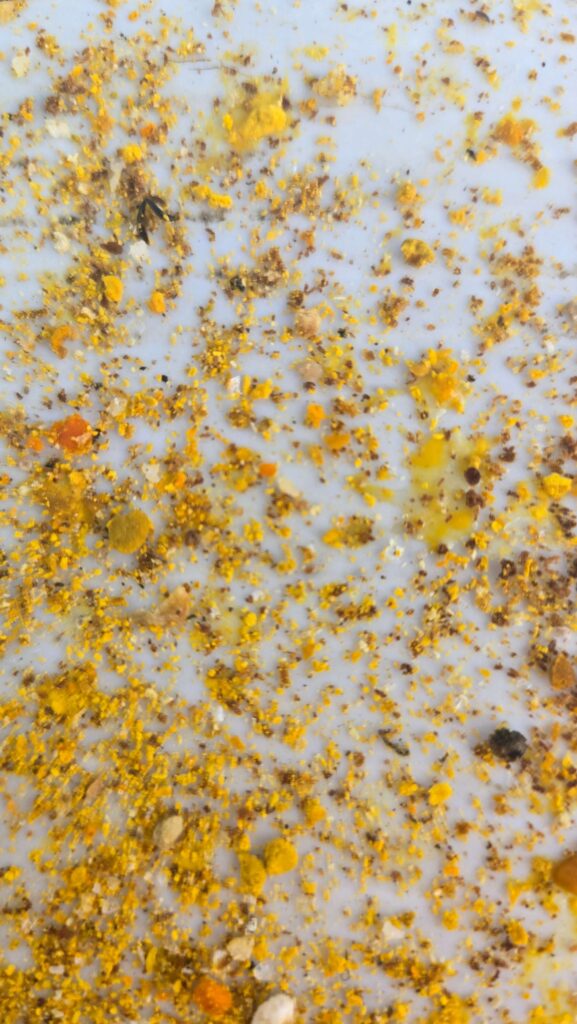
The board came out beautifully. A proper spring debris drop, covered in wax cappings (bees opening stores and brood emerging, always a good sign), and pollen in about five different colours (bright yellow, creamy pale, burnt orange, ochre, and a greenish one I still need to identify). Somewhere in amongst all of that, I needed to find and count the varroa mites.
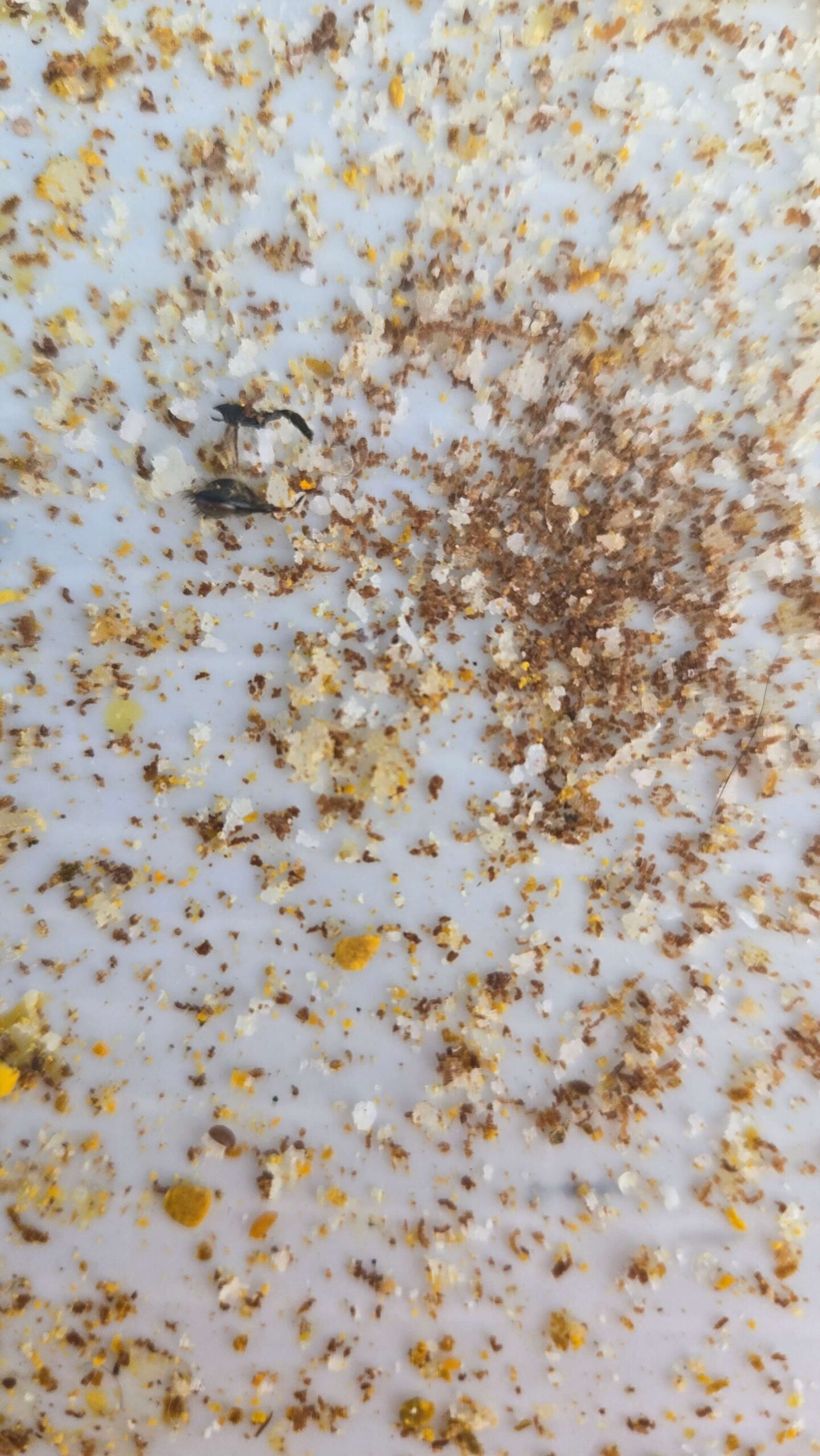
This is the bit of beekeeping no one glamorises. You scrape the debris into a container, spread it out, and hunt through it for tiny reddish-brown oval bodies about the size of a pinhead. Varroa look like flat sesame seeds, if sesame seeds had a grudge against your colony.
I scraped. I tipped the cappings into a lovely shallow dish. I crouched down to get the light right. And then the wind picked up.
You can probably guess what happened next.
The aftermath
One gust. One unsecured dish. One week’s worth of carefully collected debris redistributed across the gravel around the hive stand. I stood there for a moment doing that slow, silent beekeeper blink where you accept that the universe has humour and it is often at your expense.
I had counted five mites before the catastrophe. Five mites in seven days on the board is 0.71 mites per day, which sits firmly in the “low” category on the standard monitoring scale (under 1 per day is low, 1 to 5 is watch, 5 to 10 is concern, over 10 is action). So the colony is, by every sensible reading, in good shape going into spring.
And when I lifted the crown board to insert the super, I could see seven seams of bees filling the bottom box. They’re up in the top box too, poking around and exploring, but not drawing comb out yet. Seven seams. For a native black bee colony coming out of a long wet Antrim winter, that is a very good number. I stood there for a second grinning like an idiot before I remembered I was supposed to be working. Strong colony, mild mite load, plenty of stores, pollen coming in. You take the wins where you find them.
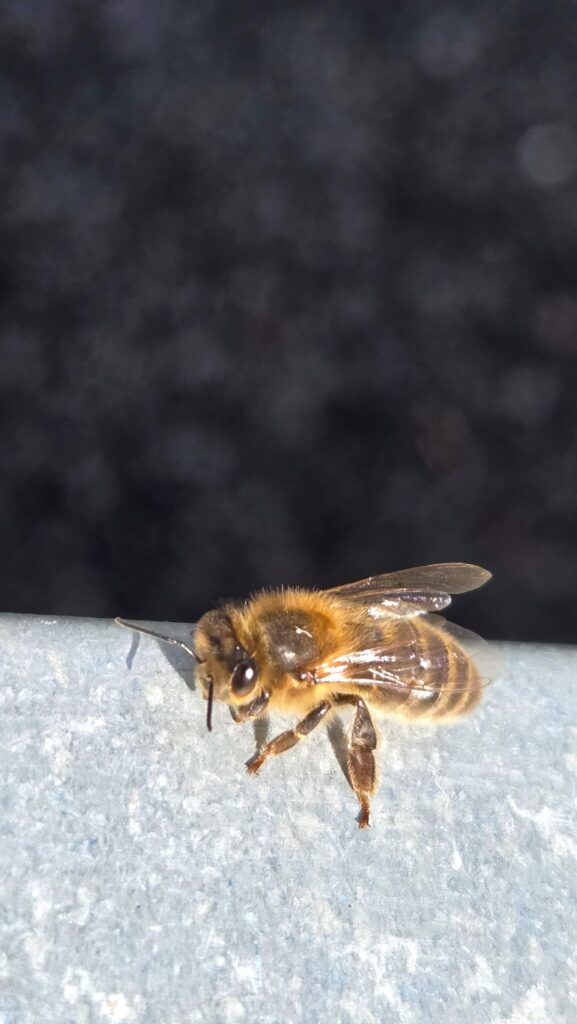
But I couldn’t finish the proper count. And that, honestly, bothered me more than it should have.
What I learned (besides the obvious)
The obvious lesson is in the title. Bring a lid. Bring a lid every time. Bring a lid even when the morning looks still. County Antrim weather does not care about your plans.
The less obvious lessons were more interesting.
Varroa are surprisingly hard to spot against a real debris field. In the tidy diagrams in beekeeping books, the mite sits alone on a white background looking helpfully distinct. In real life it is competing for your attention with pollen husks, propolis flecks, wax crumbs, leg segments, and the occasional mummified something-or-other. The reddish-brown colour is the giveaway, but only once you have trained your eye to filter out everything that is merely brown.
A light spray of liquid on the board before counting makes a genuine difference. The mites keep their colour. The pollen and wax go translucent. Suddenly the varroa stand out like full stops on a page. Plain water from a plant mister works well. If you want sharper contrast, surgical spirit from the chemist or methylated spirits from the hardware shop both do the job. I will confess I had to ask what isopropyl alcohol actually was before I found out I had surgical spirit in the bathroom cupboard all along.
And do not, I beg you, spritz your board with anything smelly while it is still near the hive. The bees will notice. Bees are extraordinarily sensitive to volatile chemicals, it is how they communicate with each other, and a sudden waft of alcohol fumes near the entrance will have the guard bees investigating what they assume is a threat. Take the board inside. Count it on the kitchen table. Have a cup of tea while you do it. This is also, it turns out, the solution to the wind problem.
A tip I picked up afterwards, and which will be in my toolkit from this day forward: a thin smear of vaseline on the board before you slide it under the hive. It catches the debris and holds it in place so nothing blows away during the week, and when you lift the board out everything stays exactly where it landed. That spatial information is useful too. You can see which seams the cluster is sitting in, where brood is emerging, which part of the hive is most active. Scraping it all into a dish loses that information entirely.
If you have more than one hive (or are planning to, like me) write the hive number in permanent marker on the corner of each board. Write the date you inserted it too. Ask me how I know this matters.
And the biggest lesson of all: one partial count is not a crisis. Varroa monitoring is about trends, not single numbers. Even a roughly accurate reading tells you whether you are in the safe zone, the watch zone, or the call-someone zone. I was firmly in the safe zone. The wind could have its fun.
Want to record your own inspections?
Bee Girl made a free printable record sheet with varroa thresholds, colony health checks, and the resistance signs Professor Grace McCormack taught us to look for. It is the exact sheet we fill in at every inspection. Print as many as you need.
For the beginners
If you are new to this and reading in a small panic because your own count went sideways, please hear me. These things happen to the best of us. The bees do not know your spreadsheet exists. The wind does not read your inspection sheet. What matters is that you are checking, you are looking, and you are learning what normal looks like for your own colony.
Next time, I will carry the board inside and count it on the kitchen table where the wind cannot reach it. I will smear a little vaseline on the board before the next week’s monitoring so the debris stays put. I will spray it lightly before I start counting. I will label each board with the hive number and the date, because future me will thank past me for that.
And when something goes sideways again (because it will, eventually), I will laugh about it, write it down, and move on.
The bees have bigger things to worry about. So do I.
The Good, The Bad, and The Sticky
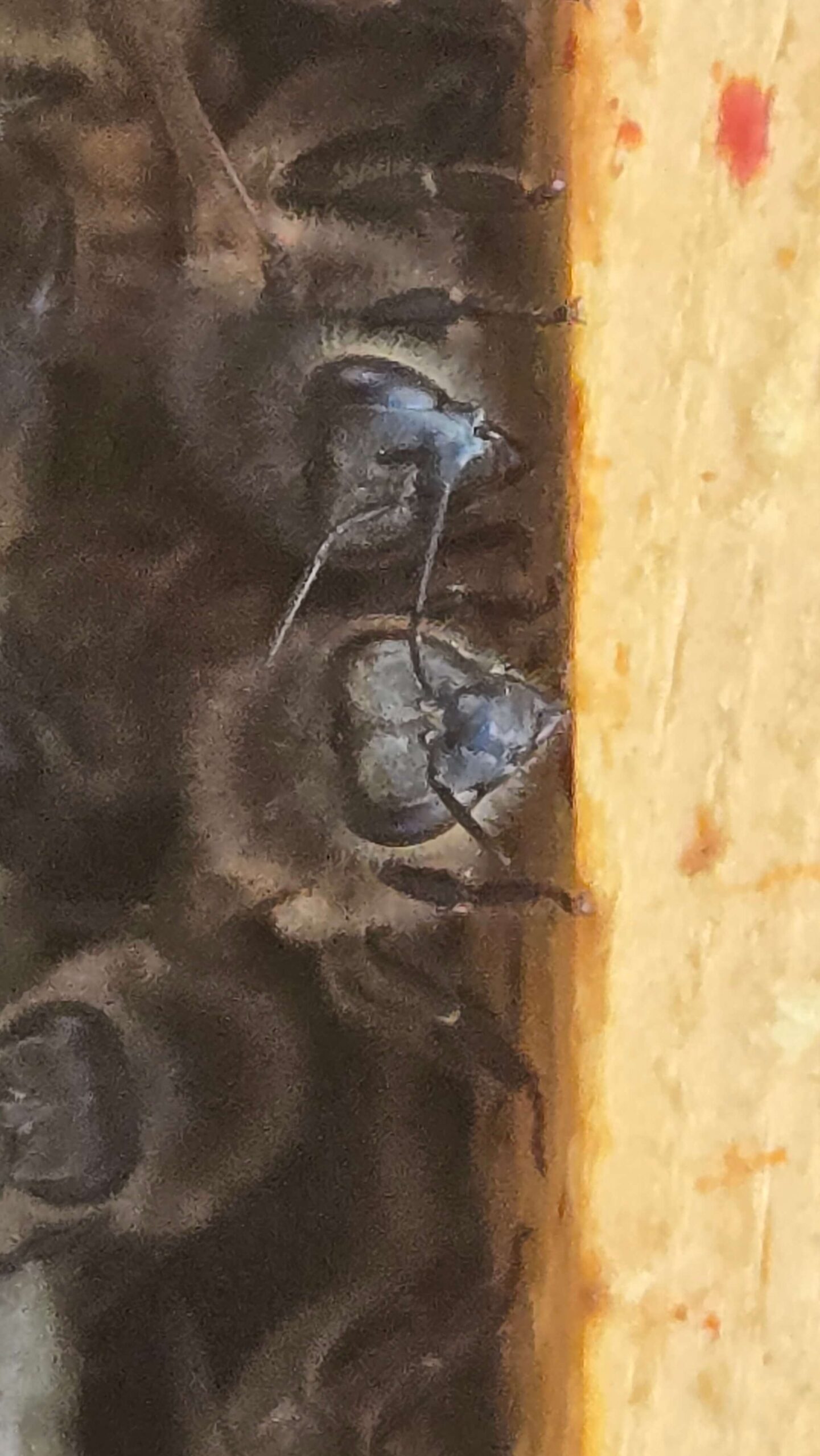
The Good — Seven seams of bees filling the bottom box after a long wet Antrim winter, with scouts already exploring upstairs. Five colours of pollen coming in. A mite drop that sits firmly in the “low” zone.
The Bad — One gust of wind, one unsecured dish, and a week’s worth of carefully collected debris redistributed across the gravel.
The Sticky — Vaseline on the board next time. Count on the kitchen table. Bring a lid.
Mum and Bee Girl x
Think Before You Treat — The Full Series
We are documenting our varroa monitoring decisions in real time, from our first mite count through to treatment choices and outcomes.