
A Buzzword Post
There is a specific kind of beekeeping day where the sky looks at you, then looks at your hive, and makes a decision on your behalf.
Today was that day.
The BBC had been threatening thundery showers since Wednesday. By Saturday lunchtime the air had gone heavy and the bees were flying like they had somewhere urgent to be, which, to be fair, they probably did. We looked at the forecast. We looked at each other. We looked at the hive.
“Quick one?” said Bee Girl.
Quick one.
Two questions, one inspection
We’d agreed before we even opened the hive. Two questions only. First: is she still there, still laying, still in charge? Second: are they moving up into the top box yet?
Everything else could wait for a better day. The bees didn’t need us rummaging around in their house in the ten minutes before a storm rolled in any more than we needed to be standing in a field holding a frame when the lightning started.
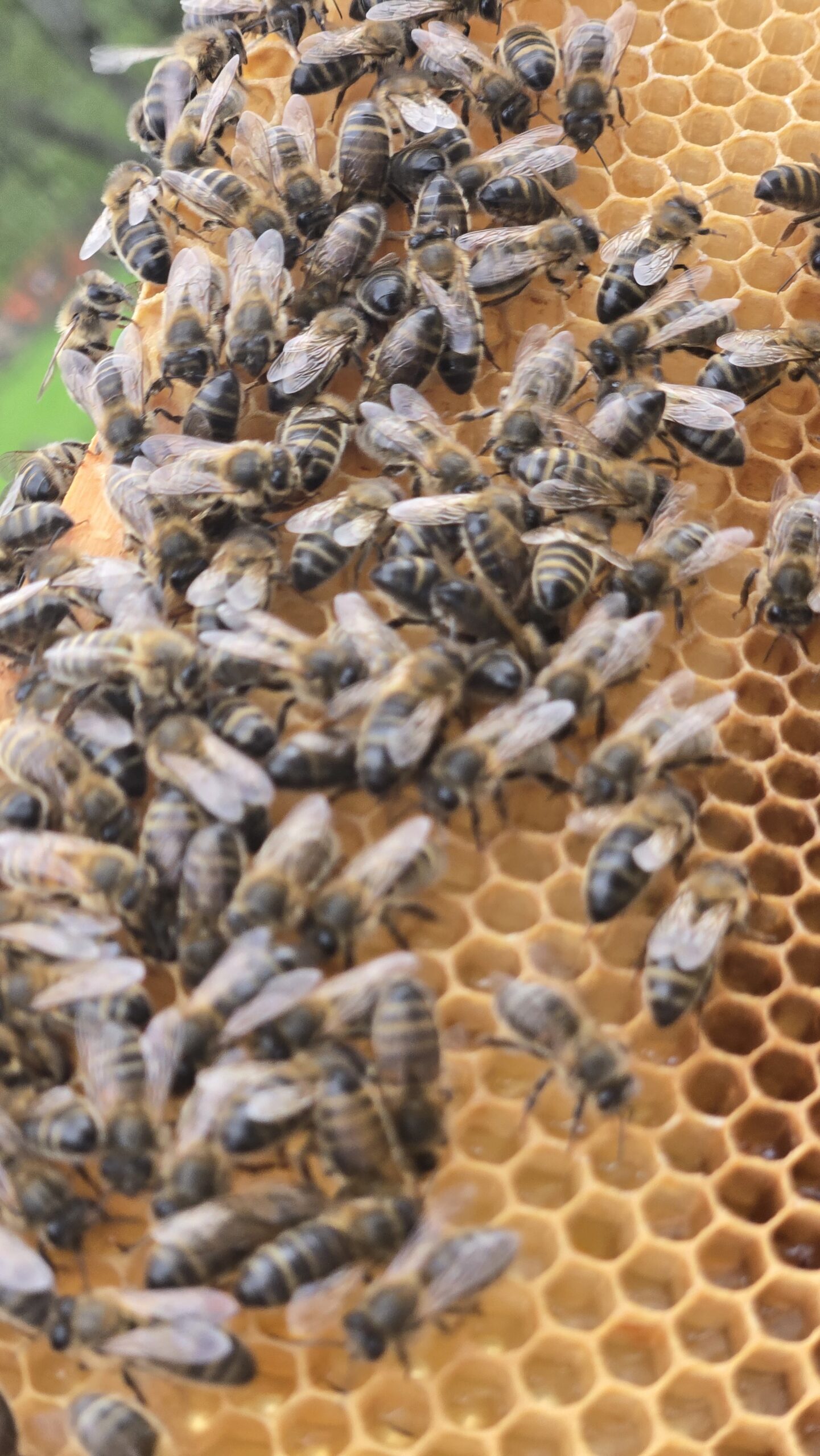
So we kept it short. We pulled three frames from the top box. The bees are drawing wax on them now — last inspection there was nothing, this time there’s fresh comb being pulled out white and clean. No brood up there yet, just honey stores and the beginnings of something. That’s fine. That’s exactly where we wanted them to be.
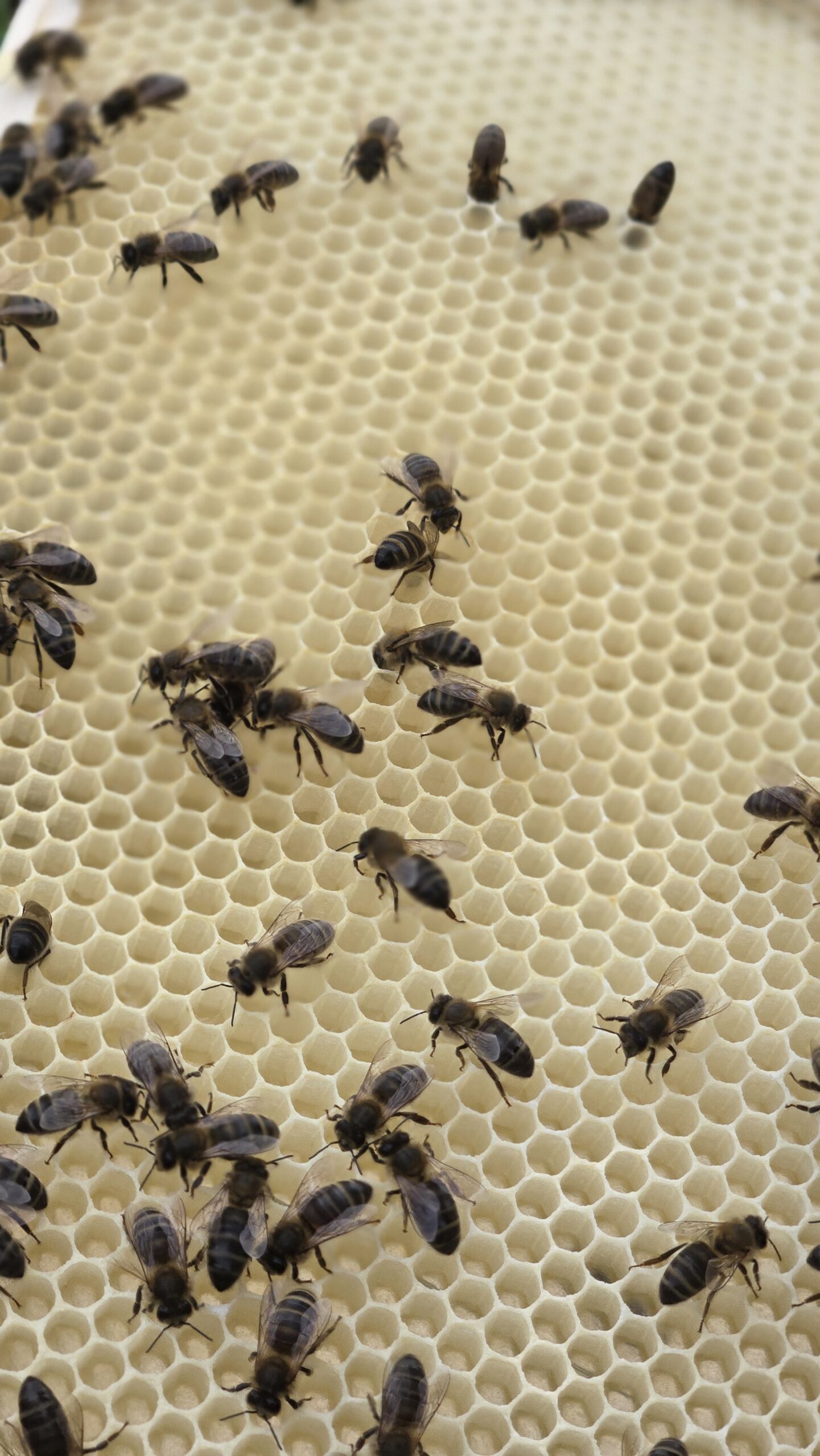
Then we went into the bottom box to check on the one thing we’ve been quietly excited about since we set it up a few weeks ago.
The drone situation (and why we’re delighted about it)
A few inspections ago, we put a shorter frame in the bottom box on purpose. A super frame, sitting in among the full-depth brood frames, leaving a gap underneath it. The idea was that the bees would look at that gap, shrug in the way that bees shrug, and build comb in it. Wild comb. Their own design. And that they’d fill that comb with drones.
They have absolutely done this.
We pulled the super frame out today and there it was — a fat, golden tongue of wild comb hanging off the bottom, every cell filled, baby drones developing inside. It is, if we’re being honest, one of the most satisfying things we have seen in two years of beekeeping. The bees built exactly what we asked them to build, in exactly the place we asked them to build it, because we gave them the space to do it and then got out of the way.
We have been insufferably pleased about this for approximately three hours.
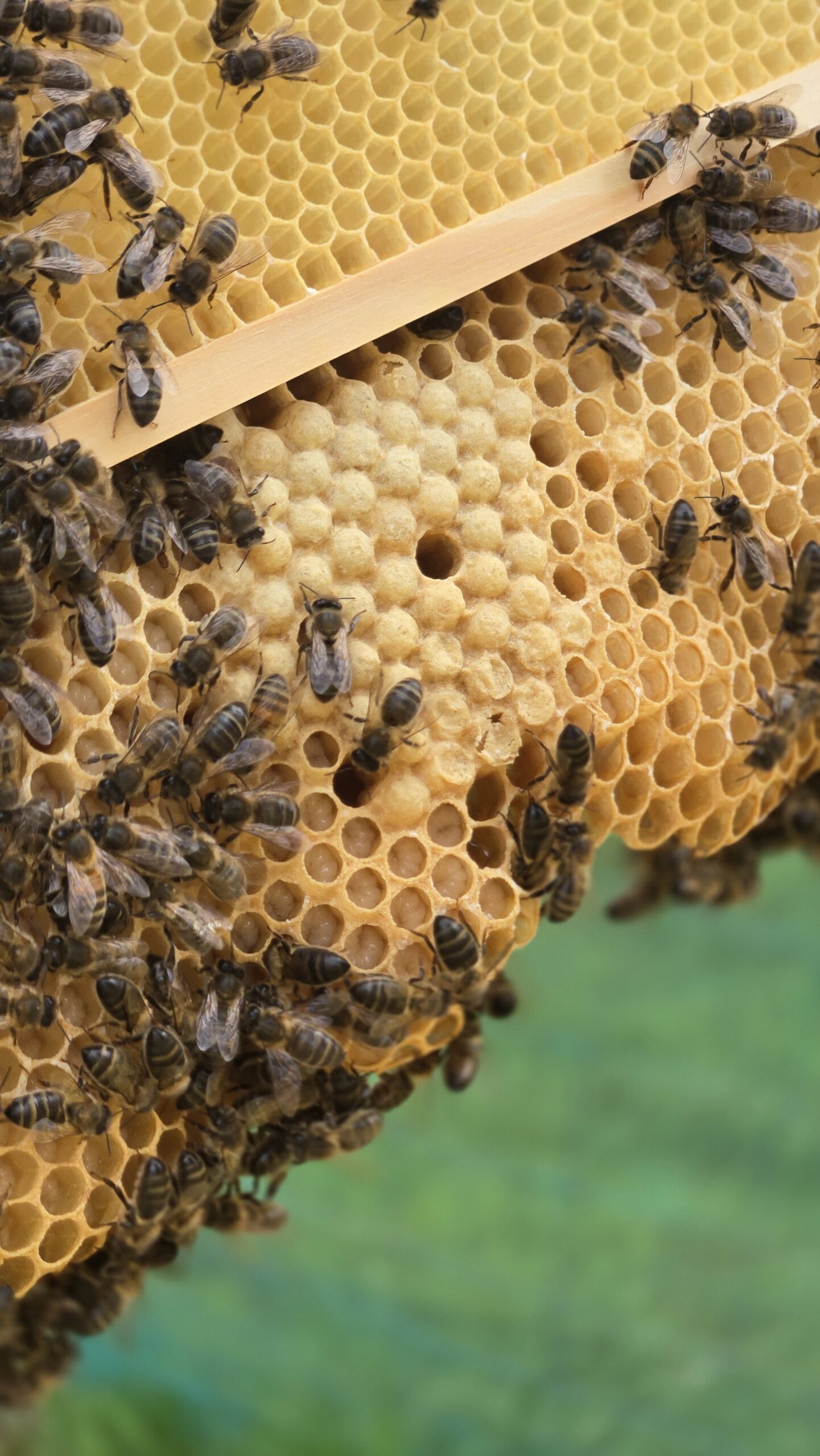
Here’s why it matters. Later this year, when our split produces a brand new 2026 queen, she’s going to fly out on her mating flight and find as many drones as she possibly can. The more of our drones are out there in the sky over County Antrim when she does, the better her chances of a good mating. We can’t control the whole county. We can control our own contribution to the local gene pool. So we asked our bees to make drones, and they did, and we are inordinately proud of the whole thing.
There’s also a varroa angle, which Stephen Martin mentioned at the conference and which has been sitting in the back of our heads ever since. Varroa mites love drone brood. It’s bigger, it stays capped longer, and from a mite’s perspective it is basically a premium holiday destination. When the time comes later in the split process to remove this frame, a significant number of mites are going to come out with it. No treatments. No chemicals. Just the bees’ biology, used deliberately.
“Think before you treat” doesn’t just mean varroa monitoring. It means thinking about the whole system, and then setting it up to work for you.
The rest of it
We pulled two middle frames from the bottom box just to be sure the queen was still on good form. She was. Eggs there. Two-day-old larvae. Three-day-old larvae. Brood pattern lovely and even, bees covering every frame. No supersedure cells, no swarm cells, nothing alarming. Just a colony that is very much getting on with the business of being a colony.
Bee Girl got a photo of the bees coming up over the top bars in the bottom box — starting to sit on top of the frames, spilling into the space above. Not boiling over. Not yet. But you can see the direction of travel. If the weather does what we’re hoping it’ll do next week, that top box could look very different by our next inspection.
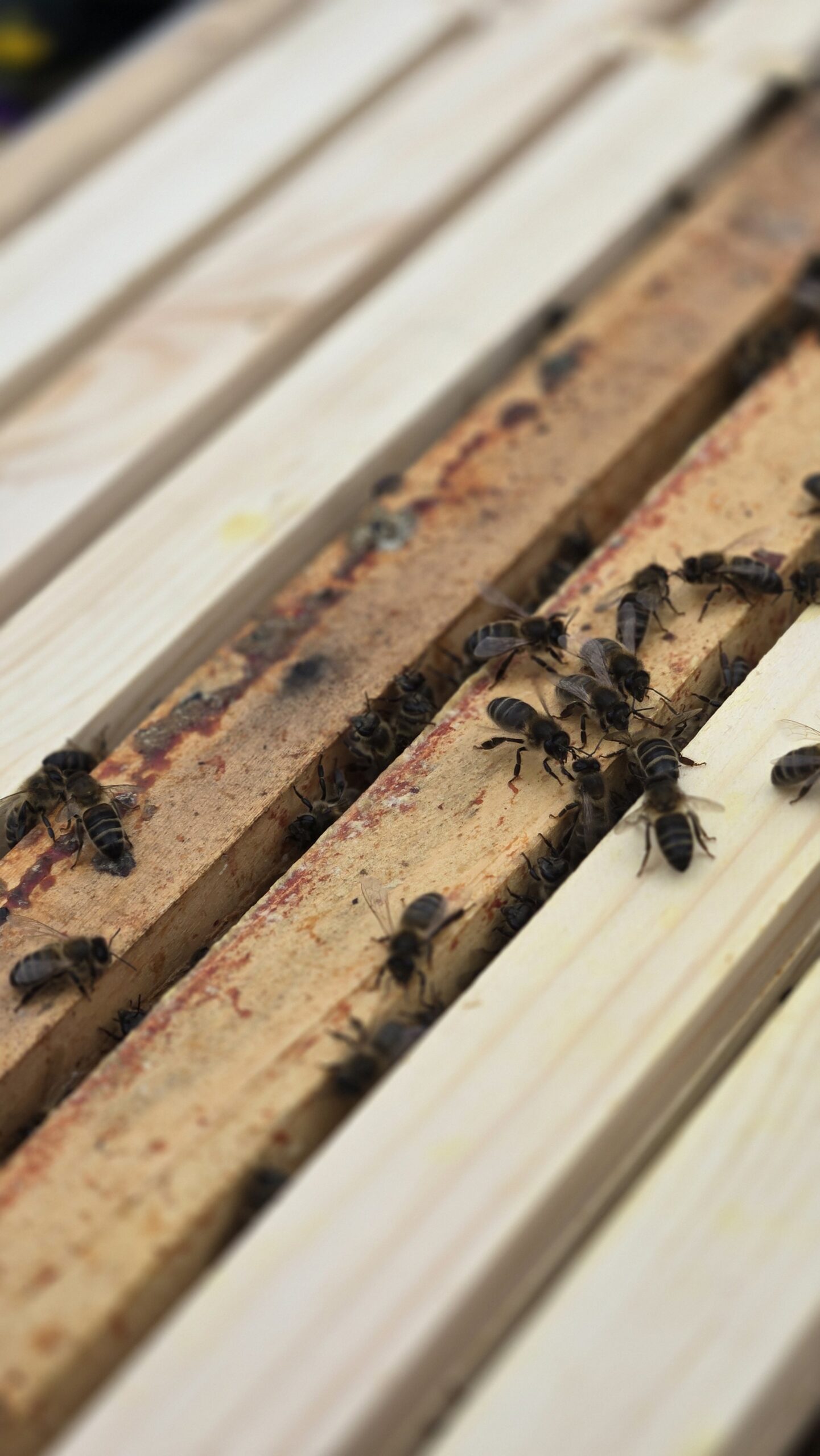
We also took out the second crown board today, so the whole hive is open from bottom to top now. They’ve earned it. They’re strong enough to keep themselves warm without us partitioning things off, and the queen needs a clear run up into those top frames when she’s ready to move.
There was a wee drop of syrup left in the feeder. We left it. They’ll clear it out themselves. They don’t need it anymore, but it felt rude to take it.
Twelve seconds after we closed up
The first drops started before we’d got the roof fully back on.
Bee Girl looked smug in the way that only an eleven-year-old who said “quick one?” and was right about it can look smug.
The bees, for their part, didn’t seem bothered.
The Good, The Bad, and The Sticky
The Good: Drone comb is drawn and filling beautifully. Queen is laying. Eggs and young larvae confirmed. Top box drawing out. The whole stage-two plan is ticking along exactly as hoped, which is not something we expected to be able to say with this much confidence in early May.
The Bad: We wanted to do a fuller inspection and we didn’t get to. There are frames we haven’t turned in a while and a storm was not the moment to rectify that. Next week, weather permitting, we go through properly.
The Sticky: At some point in this split process we are going to have to take out that drone frame. That beautiful, perfectly constructed, lovingly filled wild comb that the bees built exactly the way we asked them to. We’re going to have to take it out and remove it and that will be the end of it.
The bees will almost certainly have opinions about this.
So will Bee Girl.
Mum and Bee Girl x
pictures to follow
Think Before You Treat — The Full Series
We are documenting our varroa monitoring decisions in real time, from our first mite count through to treatment choices and outcomes.