
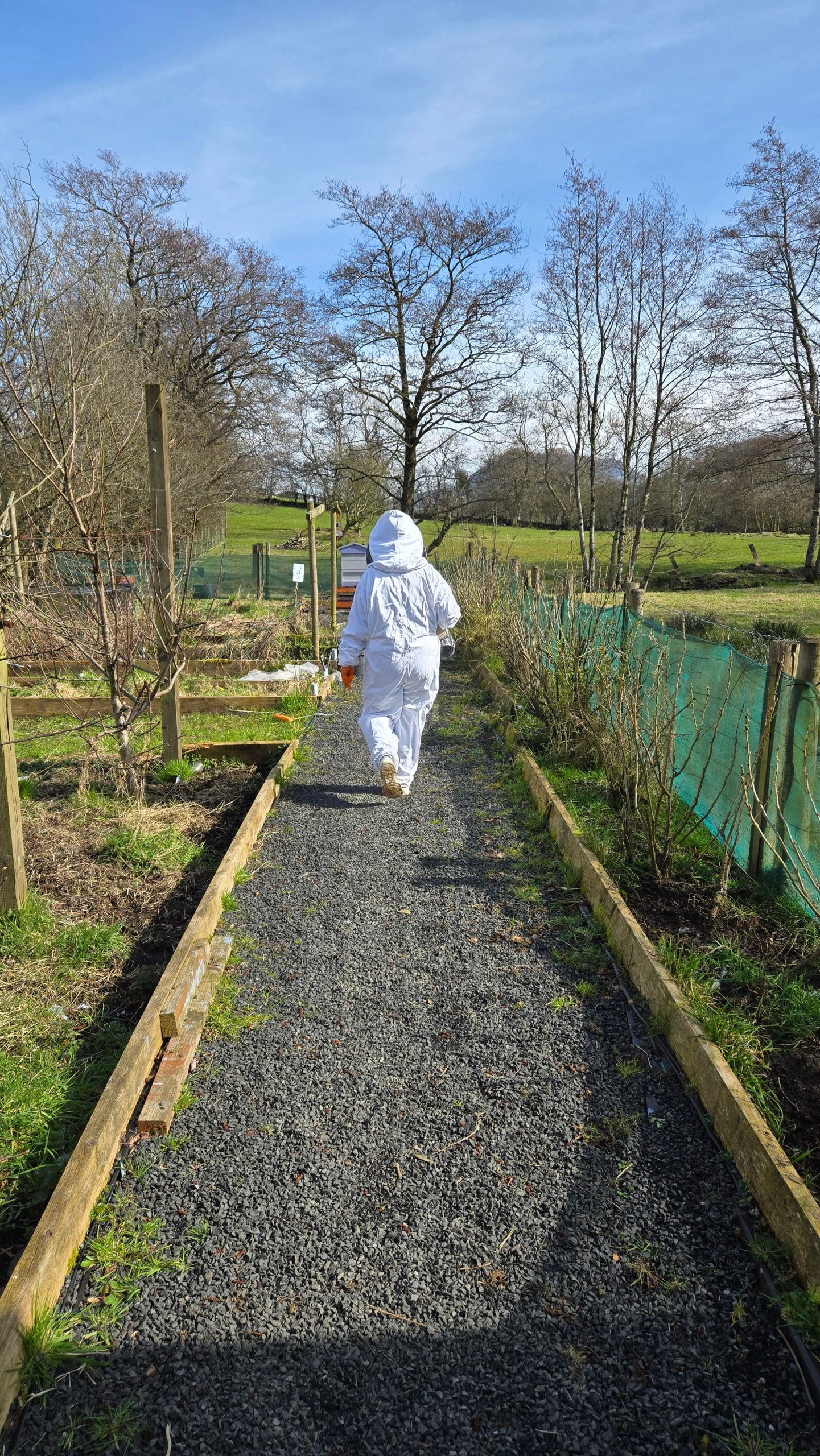
What happens when your bees decide the hive you gave them isn’t big enough
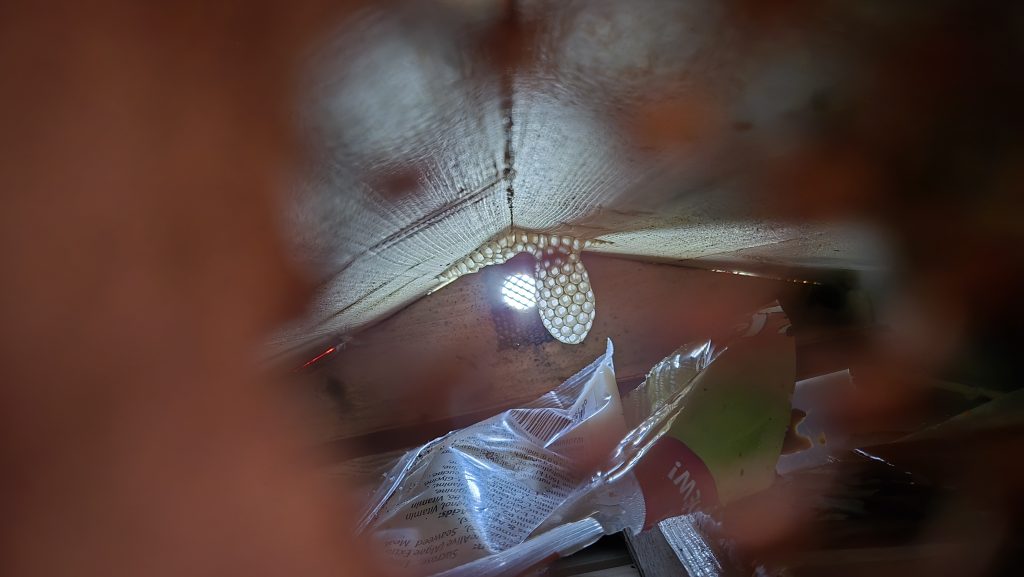
That is fresh honeycomb. Built in the apex of our hive roof. By our bees. Who apparently looked at the perfectly good hive we provided and thought, you know what, we fancy a bit of an extension up here.
This is what I found when I shone a torch up into the roof last week. And honestly, I could not even be annoyed with them. Because what it actually meant was that they had run out of room. They were not being difficult. They were doing exactly what healthy, thriving bees do in spring. They were expanding.
They needed more space, and we were not moving fast enough to give it to them. So they sorted it themselves.
Right. Second brood box. Today.
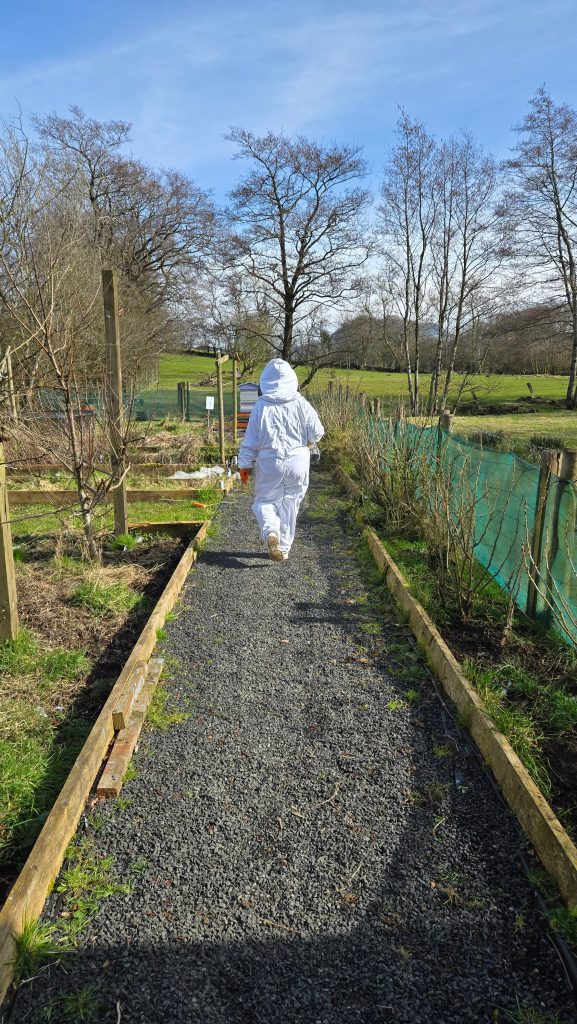
The plan was simple. Go out, put on the second brood box, come back in. Ten minutes, maybe fifteen. Easy.
Reader, I stood in the garden for a good ten minutes before I even lifted the lid.
This is what beekeeping has done to me. I cannot do a single thing without stopping to ask why.
The Graveyard on the Crown Board
The first thing I do every time I go into the hive is lift the roof and check on the fondant. We have been doing this all winter, me and Bee Girl, trudging down the garden path in our suits every few weeks to make sure they had enough to eat. And every time, there they were.
The dead ones.
A little cluster of bees sitting on top of the crown board, still and quiet. The ones who didn’t make it through. I sweep them away each time, and by the next visit there are more. January to March, same story. Their graveyard, up there on the crown board, away from the brood below.
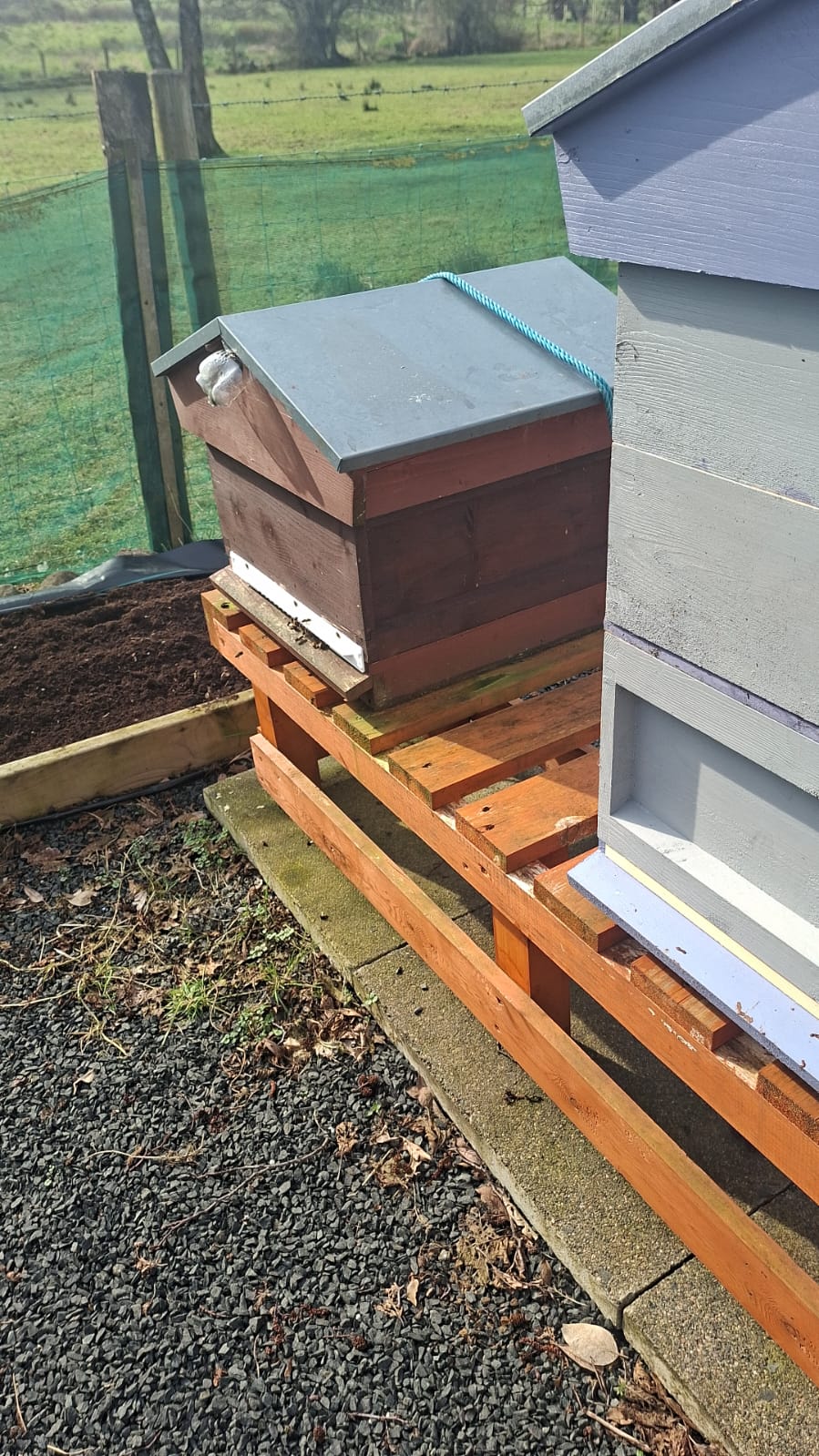
I think they end up there because of the mouse guard. The entrance is narrowed right down over winter to keep mice out, which means the undertaker bees cannot drag them outside the way they normally would. So they do the next best thing. They move them up and away from the colony.
Bee Girl was a little shocked today. There were quite a few.
I told her what I had been thinking every time I swept them away. That those bees got the colony to spring. That was their job and they did it. And then I pointed at the entrance.
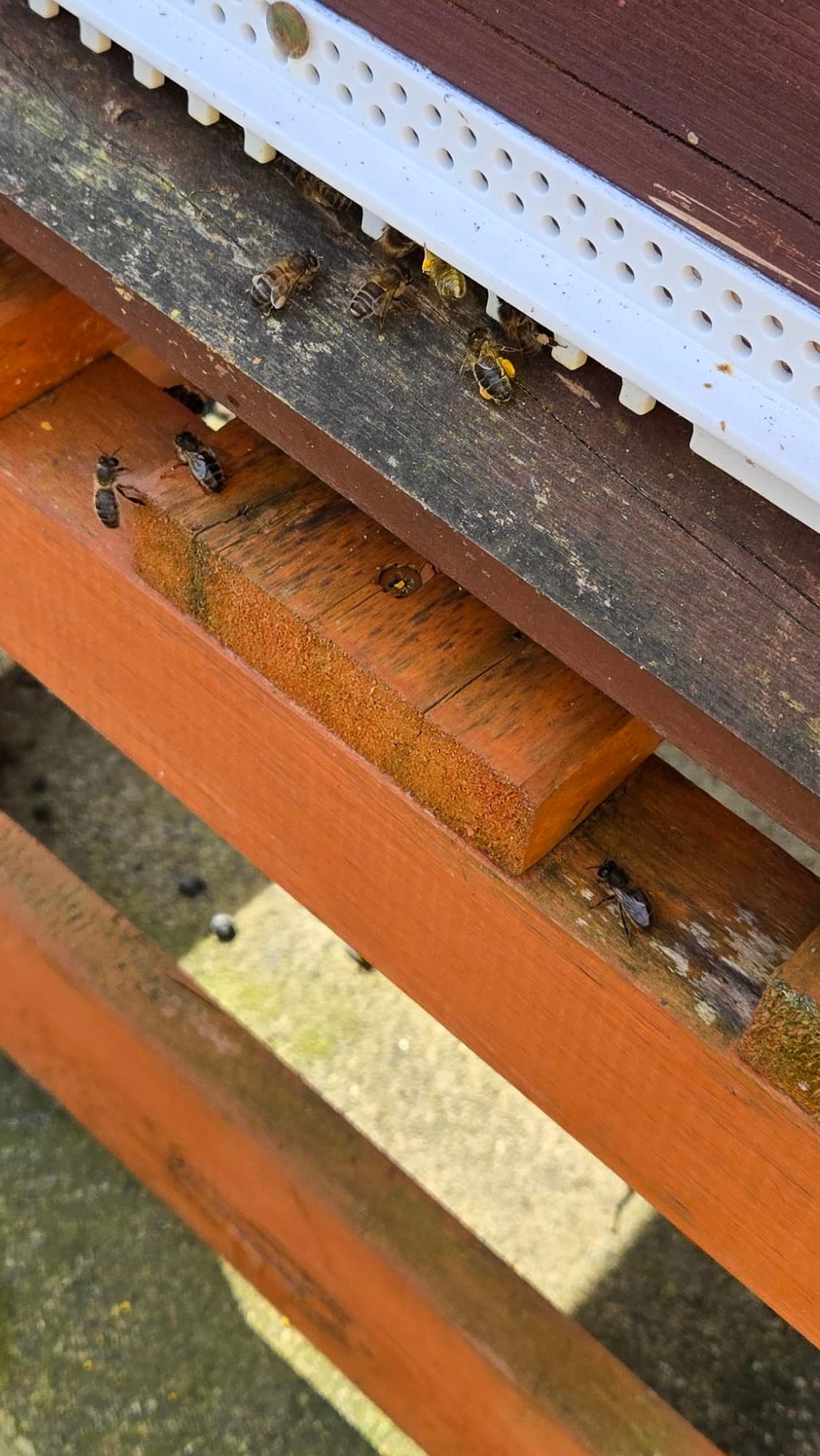
Bright yellow pollen. Everywhere. Foragers coming and going like they had a very important schedule to keep. Not sad. Not struggling. Absolutely flying.
Bee Girl was happy after that.
The Bit Where I Stood There Thinking
So. The second brood box.
The base board had capped cells across every single row. Every. Single. Row. This colony has been busy all winter and it shows. They needed more space and they needed it today. The roof comb had already told us that.
But here is where I stopped and actually thought about it instead of just stacking boxes.
It is only 14 degrees out there. Warm for March in Northern Ireland, genuinely lovely actually, but we can still get cold snaps between now and May. If I just whip the crown board off and plonk a new empty box on top, I am potentially removing the thermal buffer between the established brood nest and a big empty cold space above.
Honey bees keep their brood nest at around 34 to 35 degrees regardless of what the weather is doing outside. Every bit of heat they do not have to generate themselves is energy they can put into making more bees. Our native Irish bees, the AMM bees that Professor McCormack talked about at the UBKA conference, are particularly good at this. They evolved here over 200,000 years to cope with exactly this kind of cold, damp, unpredictable climate. They are not helpless. But why make it harder for them than it needs to be?
This is not a new idea. This is standard British and Irish beekeeping advice that has been around for decades, and the science backs it up completely. I just had not connected it to what I was doing until I stood there with a box in my hands.
Think before you do anything. Apparently it applies to more than just varroa treatment.
What We Actually Did
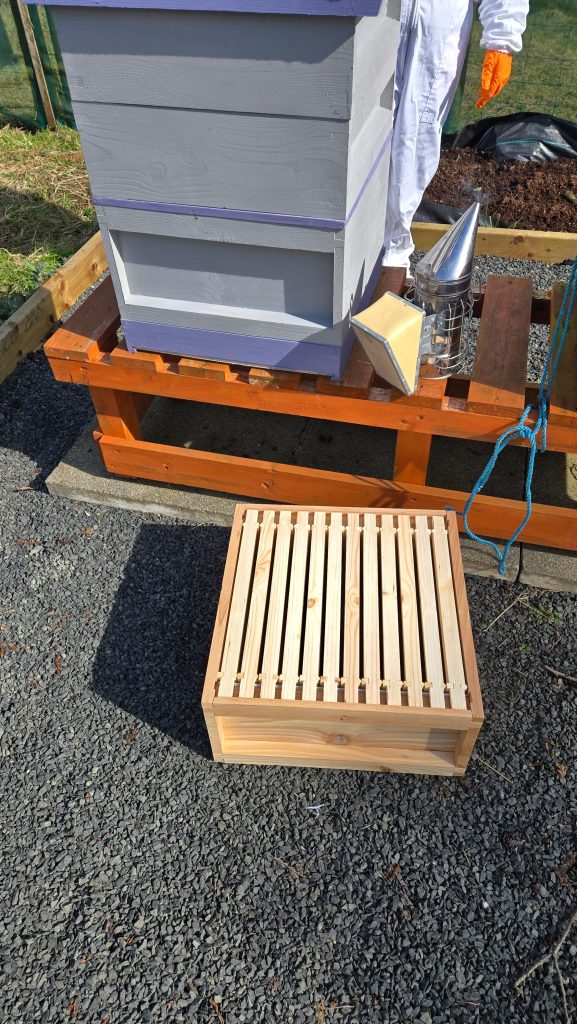
We left the original crown board exactly where it was, with the hole open. The bees can move up through it whenever they are ready. But it stays in place as a thermal buffer between the warm established brood nest below and the new empty box above.
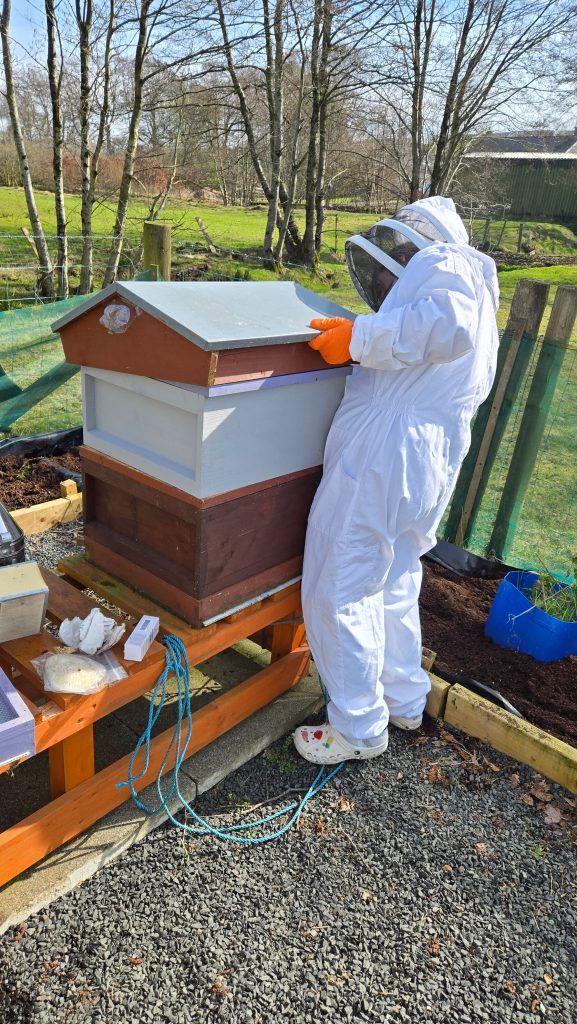
So the stack from bottom to top now looks like this. Original brood box with all their established comb and brood. Original crown board with hole open. Brand new second brood box with fresh frames. New crown board. Fondant, because we are not taking any chances with their stores yet. Roof.
No queen excluder. We are not opening the hive properly until April. She needs to be able to move freely while the colony builds up, and the last thing we want to do is restrict her now.
We also still need to remove the mouse guard, which I completely forgot about in all the excitement. That is a job for next weekend.
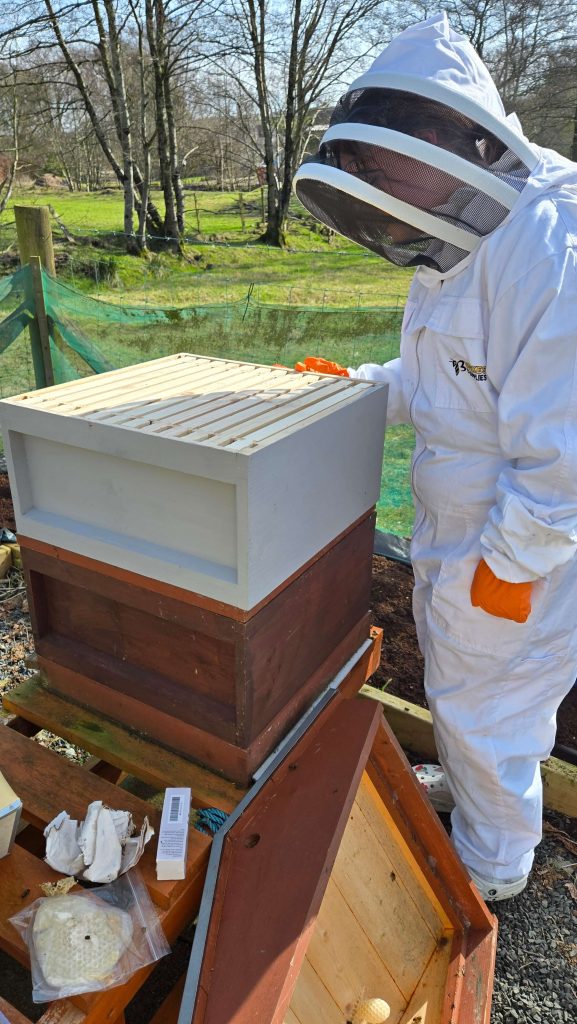
They Came Up To Say Hello
Here is the thing about today that I did not expect.
When we put the new box on, some of the bees came up to investigate. Not in an angry way. Not defensive or bothered. Just present. Curious. A few of them wandered up through the crown board hole into the new box, had a look around the fresh pale wood frames, and went back down again. As if they were saying yes, this will do, we will take it from here.
A colony in good shape tends to be curious rather than aggressive when you work with them. A struggling colony is much more reactive. These ones were calm and interested and completely unbothered by two humans in white suits fussing around their home on a Saturday afternoon.
That felt like a good sign. After a winter of not knowing what we would find, and all the uncertainty around our decision to skip the January treatment based on low mite counts, that felt like a very good sign indeed.
We will not actually know until we do our first proper inspection in April. But today felt hopeful.
The Good, The Bad, and The Sticky
The Good: Full base board of capped cells. Pollen coming in the colour of sunshine. Bees curious and calm. Second box on. Colony made it to spring.
The Bad: Bees building wild comb in the roof. I forgot to take the mouse guard off. I dropped my hive tool somewhere in the garden. Bee Girl will find it.
The Sticky: Fondant. Still fondant. Also the wild comb, which we are going to have to deal with at the April inspection. Wish us luck.
Mum & Bee Girl
beehappyhoney.uk
🐝 Keep Reading
- Our Queen Did WHAT?!
- The Best Birthday Present Ever
- The Two Plants Your Bees Are Desperate For Right Now
Related: what a hive inspection actually looks like and why May is make or break for your bees.