
How a Sunday trip to Galgorm turned into a beekeeping education, a rookie mistake, and the start of our mission to plant real food for our bees.
It started, as most of our plans do, with good intentions and zero idea what we were getting into.
Bee Girl had homework. A proper project. The kind that takes the whole Sunday and cannot be abandoned for garden centres, no matter how much she might have wanted to come. So it was just me and my youngest, extremely useful for pointing at things and asking “can we get that?” approximately every thirty seconds.
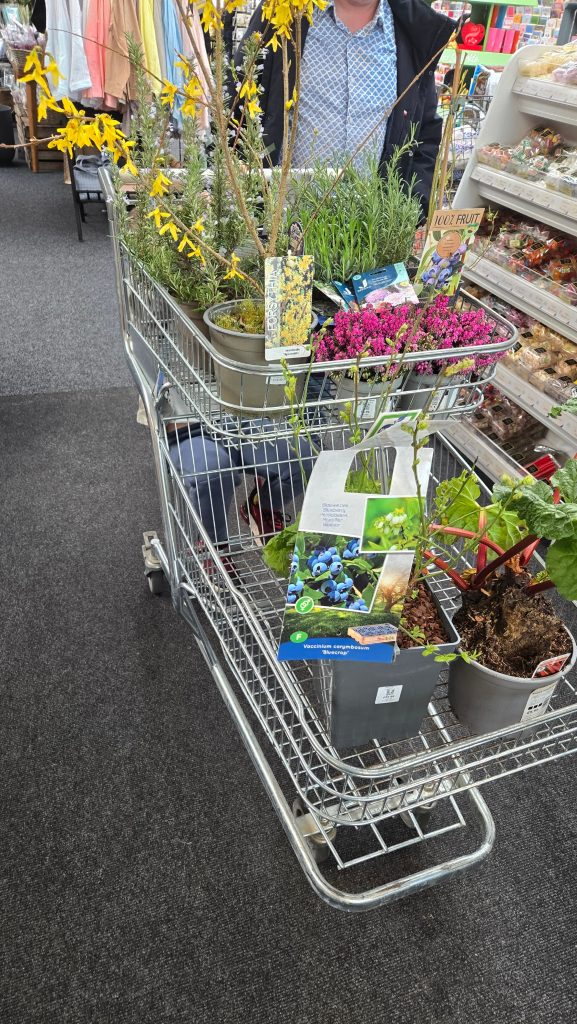
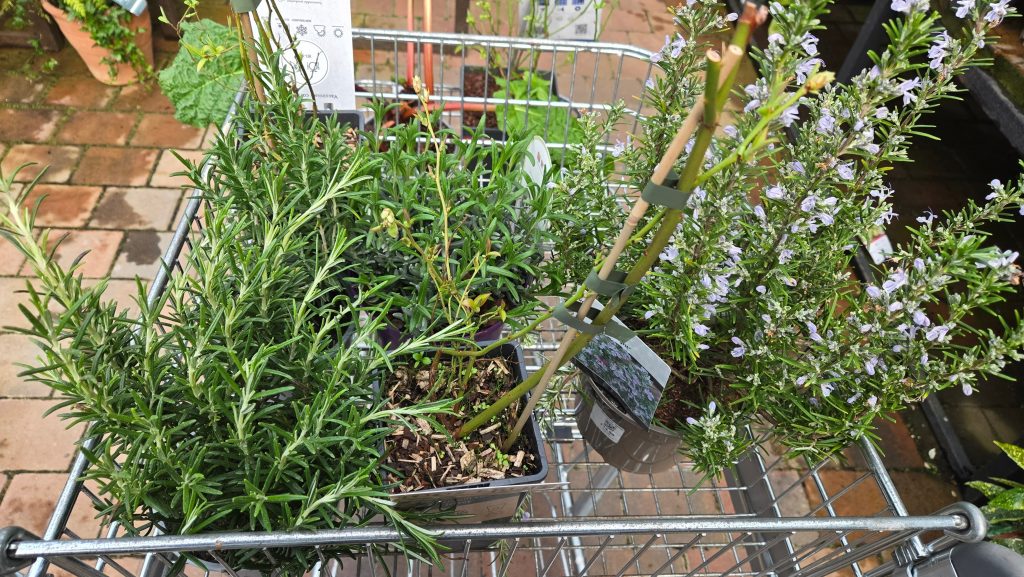
We went to Creative Gardens in Galgorm with a loose idea and a trolley. We came home with rosemary, lavender, forsythia, heather, two blueberry plants, rhubarb, five seed packets, and a lesson in reading labels properly.
More on the label problem in a minute. First, let me tell you about the trolley.
The Plan (Such As It Was)
We have one hive. We are planning a split this spring, which means we will shortly have two hives. And we have a fruit garden and an apiary area that currently consists mainly of gravel, raised beds, and good intentions.
The bees need food. Not just the honey we give them over winter or the fondant on the crown board when things get desperate. They need actual forage. Flowers. Plants that produce real nectar and pollen throughout the season, close enough to the hive that our girls don’t have to travel miles for it.
This is the start of us doing something about that. One trip, one trolley, and one very enthusiastic seven year old as assistant.
What We Actually Bought (And Why)
Rosemary x3. One of them was half price and there was absolutely no universe in which it was coming home with anything less than three. Rosemary flowers early, bees love it, it smells incredible near the hive, and if you brush past it every time you go to inspect the bees, honestly, that’s just a bonus. Three of them are going into our big honey pot planters near the apiary.
Lavender. One pot. The bees are going to lose their minds over this in summer. English lavender is a top tier honey bee plant and it will sit beautifully alongside the rosemary.
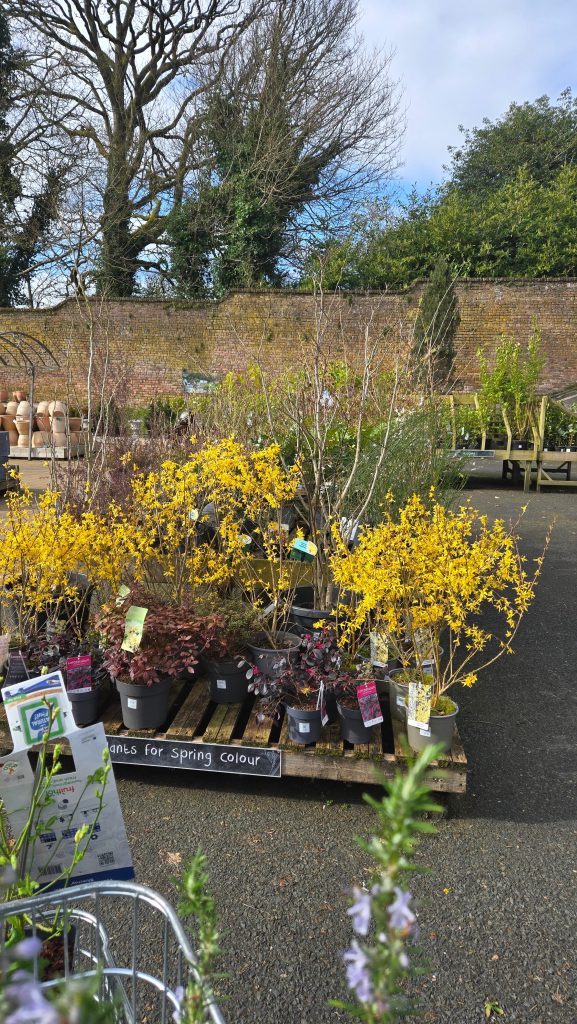
Forsythia. The big yellow shrub you see absolutely everywhere in March and April, exploding into colour before anything else has bothered to wake up. Turns out there is a very good reason it flowers so early. The bees are desperate at that point. They have made it through winter, the colony is building up, and there is almost nothing in flower yet. Forsythia is one of the first real nectar sources of spring. We should have planted one years ago.
Heather. Calluna vulgaris, to give it its Sunday name. This is the plant Northern Ireland was made for. Our acid soil suits it perfectly, and late summer heather is one of the most important honey sources in the whole country. Some beekeepers actually move their hives to the heather moors in August for the flow. We are not doing that. But we can plant some in the apiary and let our bees visit it on their own terms.
Blueberries x2. Vaccinium corymbosum ‘Bluecrop’ and ‘Jewel.’ Fruit AND flowers. The blossom in spring is good for the bees, and then in summer we get blueberries. Bee Girl has already claimed full rights to the blueberries. This was non-negotiable.
Rhubarb. My youngest’s suggestion. Not bee food exactly, but it will live in the fruit garden, the leaves will provide ground cover, and the flowers (if we let it bolt) do attract some insects. Mostly, though, we got it because he asked and he was being very patient.
The Seeds
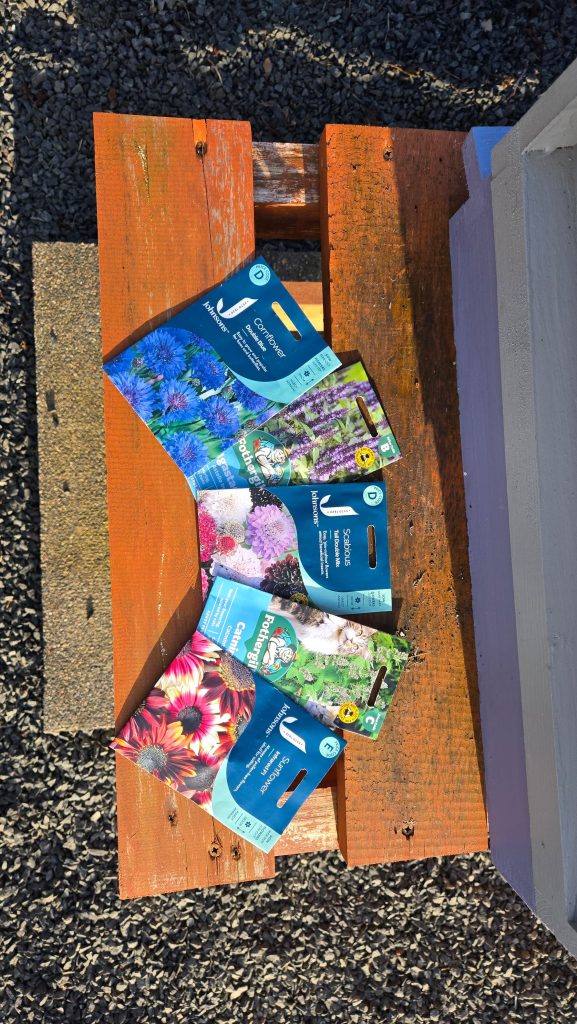
Five packets. Sunflower, agastache, catmint, cornflower, and scabious. Between them they cover June right through to September with flowers the bees can actually use. The catmint is going in a pot because if you let catmint do what catmint wants to do, you will eventually have nothing but catmint. The agastache will go wild in the fruit garden. The sunflowers are going wherever Bee Girl decides they are going, because she is going to be furious enough about missing this trip without us also overruling her on sunflower placement.
The Bit Where I Nearly Got It Wrong
Here is the thing about garden centre labels. They are optimistic.
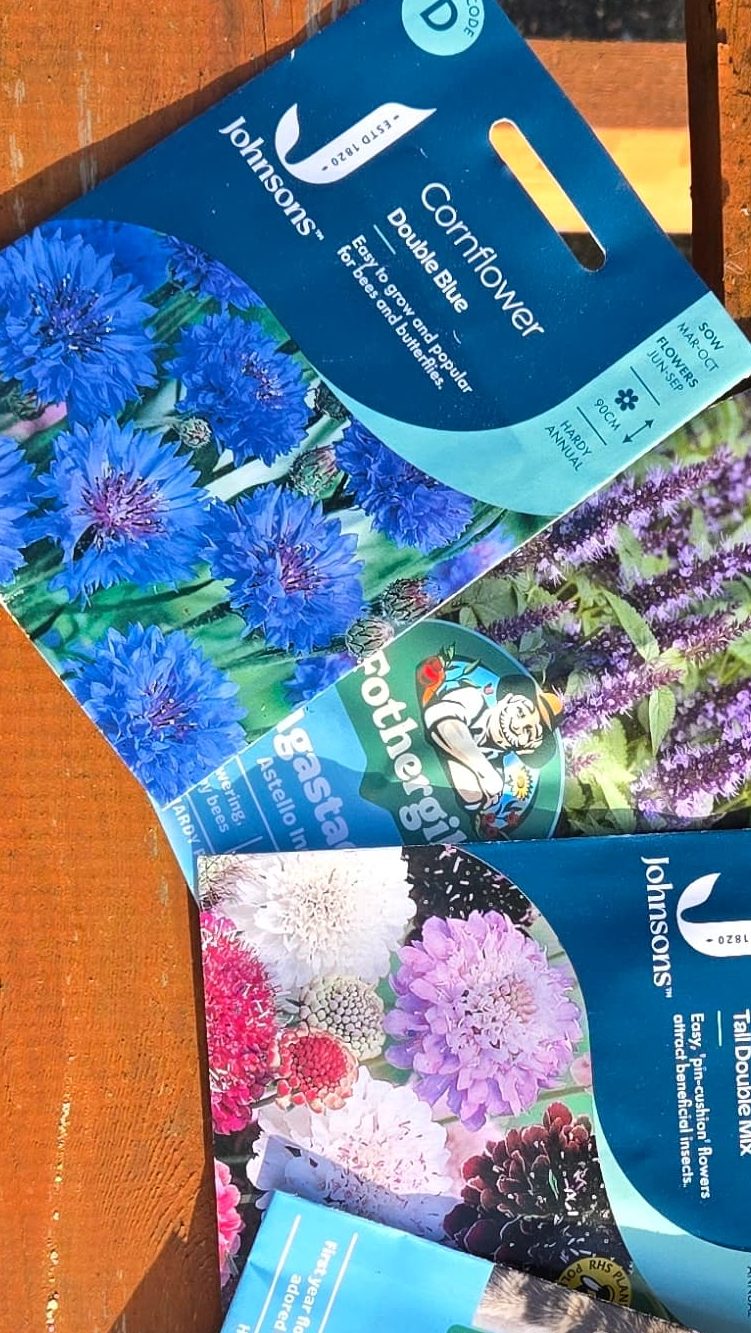
I picked up a packet of double cornflower and a packet of double scabious. Both had “pollinator friendly” messaging on the packet. One had the RHS Plants for Pollinators badge. I put them in the trolley without a second thought.
Got home. Did a bit of reading. Felt slightly foolish.
Double flowers are bred to have extra petals. More petals means more visual drama. It also means the nectar and pollen, which sit at the centre of the flower, get buried under layers of decorative petals that bees cannot get through. BBC Gardeners’ World puts it plainly: double forms often have extra petals that make the nectar and pollen inaccessible. It does not matter what the badge says if a bee cannot physically reach the food.
Now, double cornflowers are not entirely useless. Cornflowers have something called extrafloral nectaries, meaning they produce small nectar droplets on the outside of the flower as well as inside it. So a honey bee will still visit a double cornflower and get something. But she will get considerably less than from a single flowered variety, and she will work harder for it.
The doubles are going in the front garden. They will look lovely. The bees might visit occasionally for the extrafloral nectar. But they are not our serious bee food plants.
This is what this whole series is about, really. Labels like “pollinator friendly” and “insect friendly” are not lies exactly. They just do not always mean what you think they mean, and they definitely do not all mean the same thing. A plant can be brilliant for solitary bees or hoverflies and do almost nothing for a honey bee colony. A plant can carry a prestigious badge and still be the wrong choice.
The Honey Pot Army
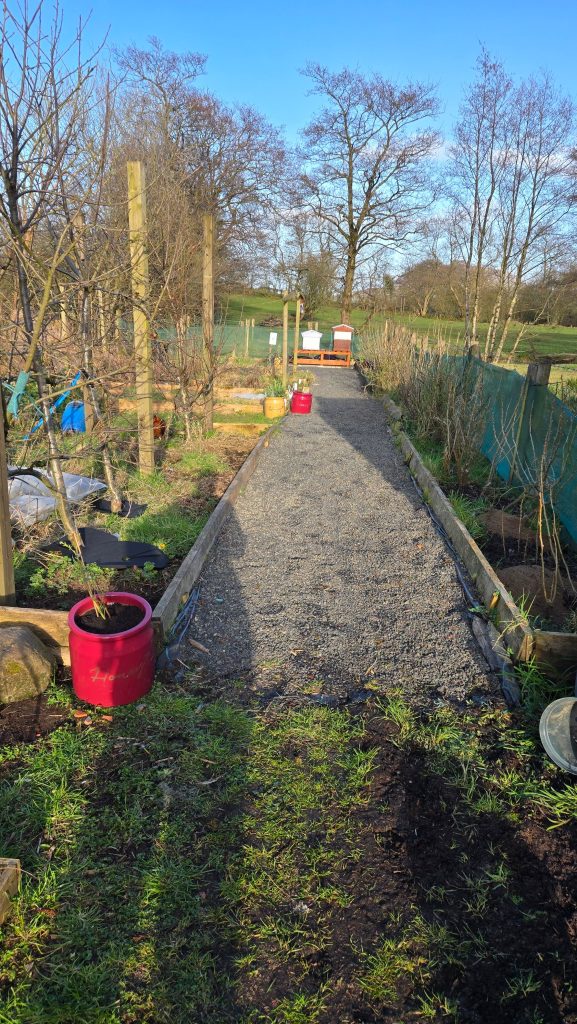
We got home, unloaded the car, and within about forty five minutes the rosemary and lavender were already planted up in the honey pot planters that line the apiary path. Gold, red, cream. Five pots of them sitting in a row in the afternoon sunshine looking extremely pleased with themselves.
Buckle the dog supervised the entire operation with her nose approximately two inches from every single pot. Quality control.
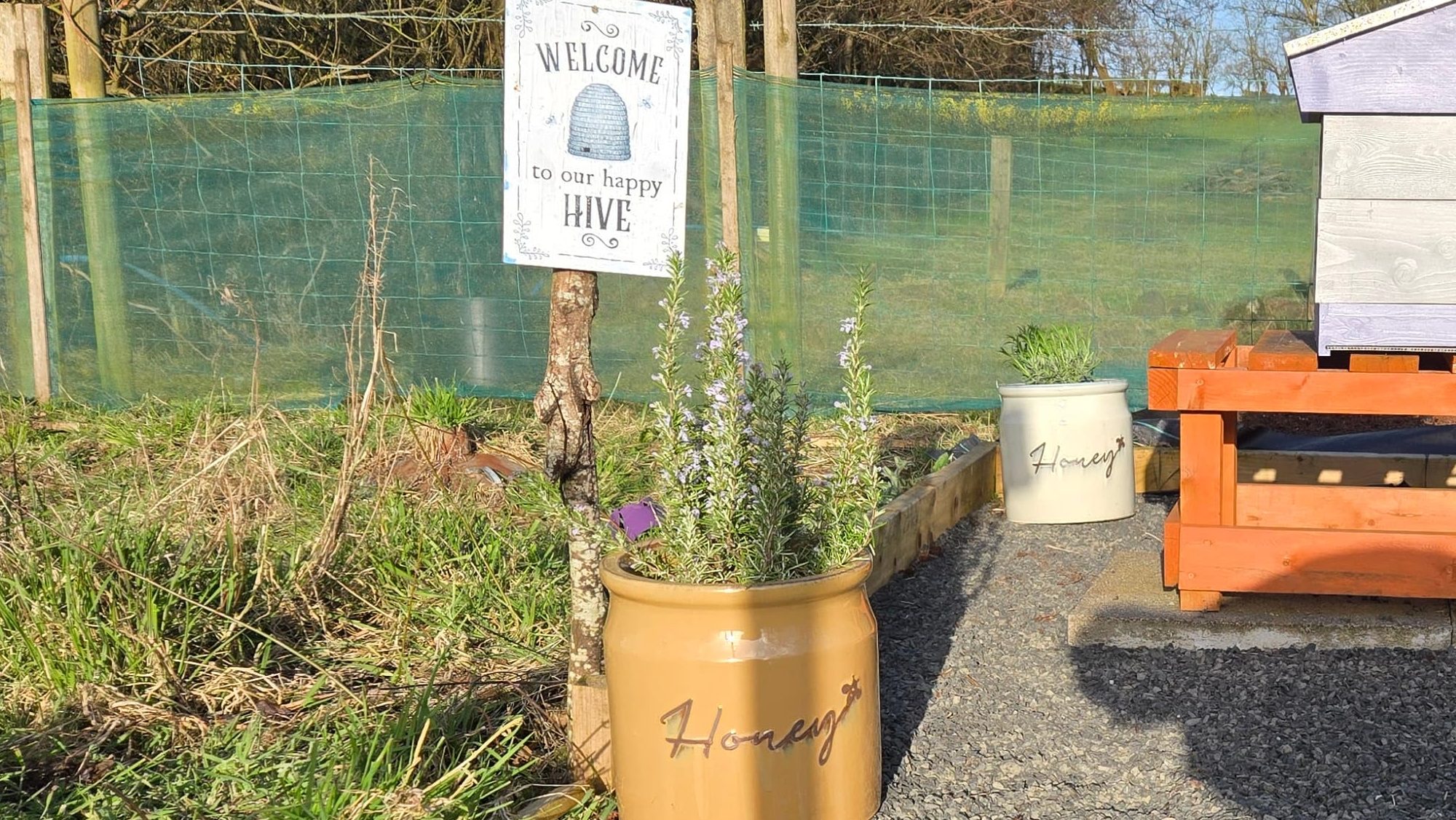
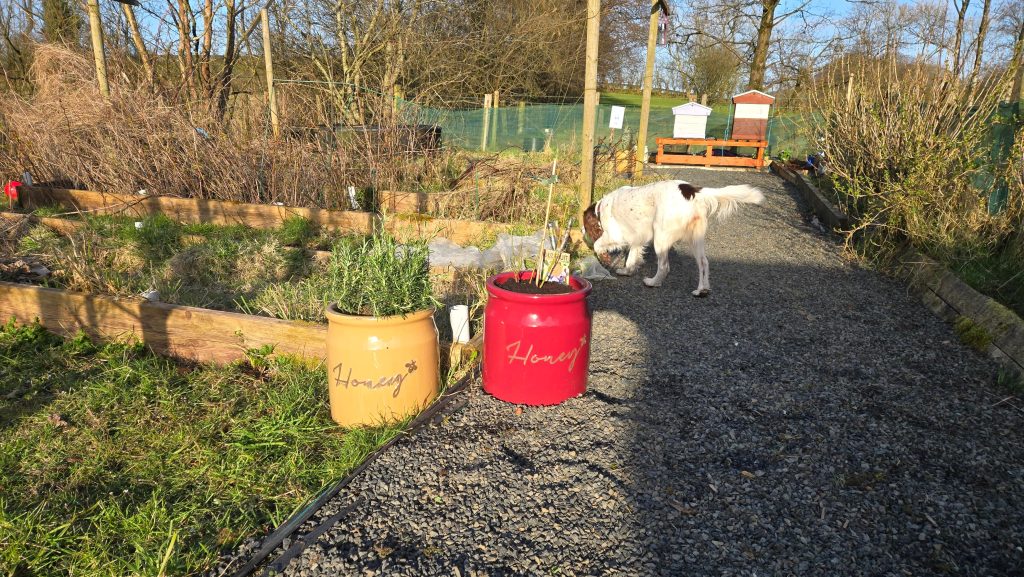
The apiary path now has plants at the entrance, pots along the sides, and two hives waiting at the end of it. Come spring it is going to look brilliant. More importantly, come spring our bees are going to have food within metres of their front door.
Bee Girl’s Verdict
She finished her homework. She came outside. She looked at the honey pots.
She was delighted about the plants.
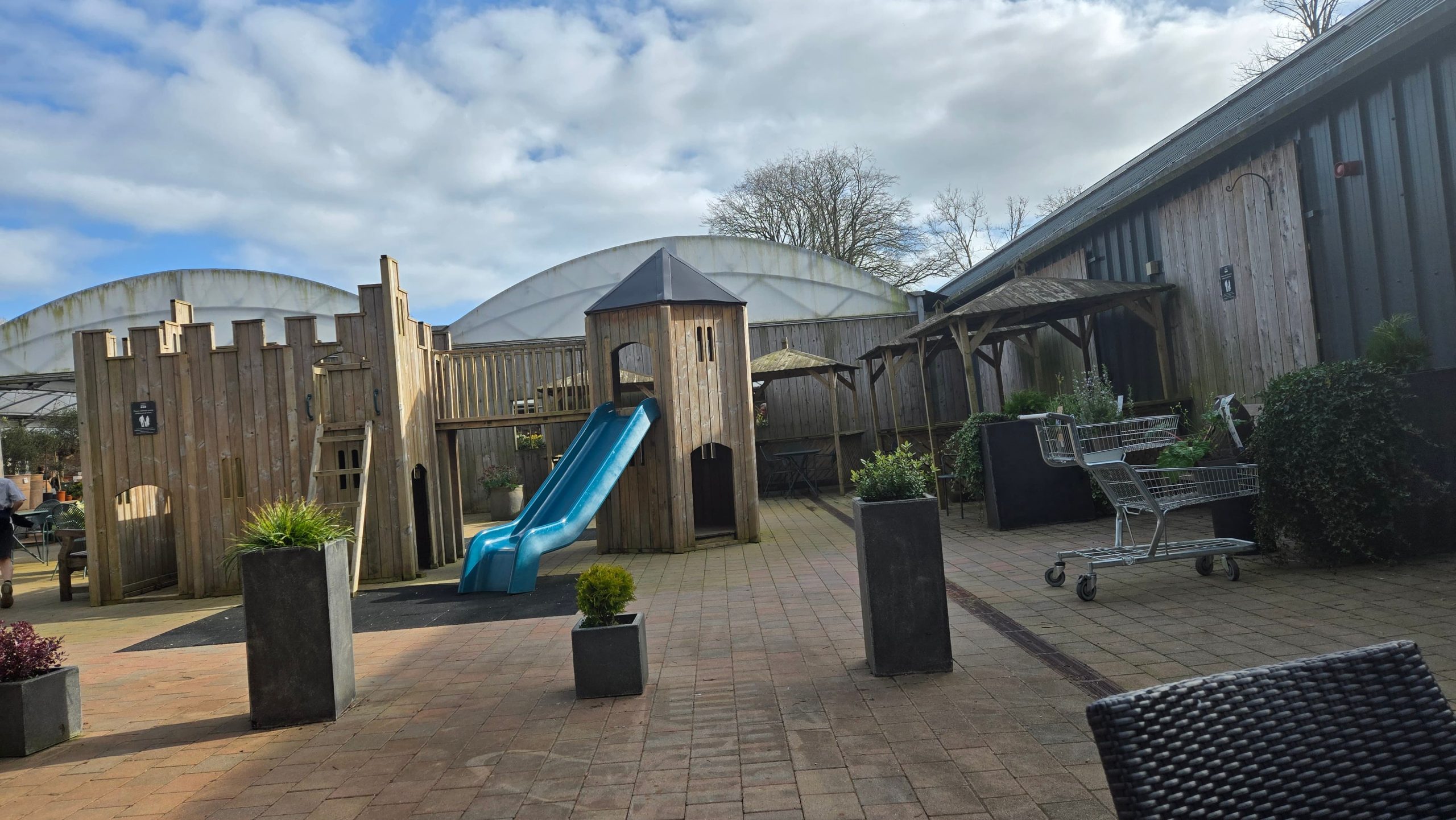
She was considerably less delighted when I mentioned that Galgorm has a castle playground.
She will be coming on the next trip.
What’s Coming in This Series
Every month this year, we are going to feature the plants that actually matter for honey bees right now, whatever time of year you are reading this. Not “pollinator friendly” in the vague marketing sense. Specifically, genuinely useful for a honey bee colony in Northern Ireland, at the right time of year, in our climate and soil.
We will also, every month, call out at least one common “garden centre imposter.” The plant that looks the part, carries the badge, and does not deliver for honey bees the way you would hope.
We are not experts. We have one hive, a fruit garden, a dog with strong opinions about plant pots, and a daughter who is now very much invested in the sunflower situation. But we are paying attention. And we are going to share everything we find out.
The Good, The Bad, and The Sticky
The Good: Forsythia in full yellow bloom and heather that suits our acid soil perfectly. The honey pot army is planted and ready for spring. And we now know exactly what single flowered catmint looks like when a bee lands on it.
The Bad: Double cornflower and double scabious, purchased with confidence, researched with humility, relocated to the front garden with dignity.
The Sticky: Bee Girl’s face when she found out about the castle playground. We will be going back.
Mum & Bee Girl x
This post is part of our The Bee Garden series, where we document the plants we are growing for our colony, month by month through the year. Next up: April, and the two plants your bees are probably desperate for right now.
🐝 Keep Reading
- The Two Plants Your Bees Are Desperate For Right Now
- So We’re Really Doing This
- Welcome to Bee Happy Honey
More bee garden posts: willow and dandelion in April and the best honey plants you already have.