
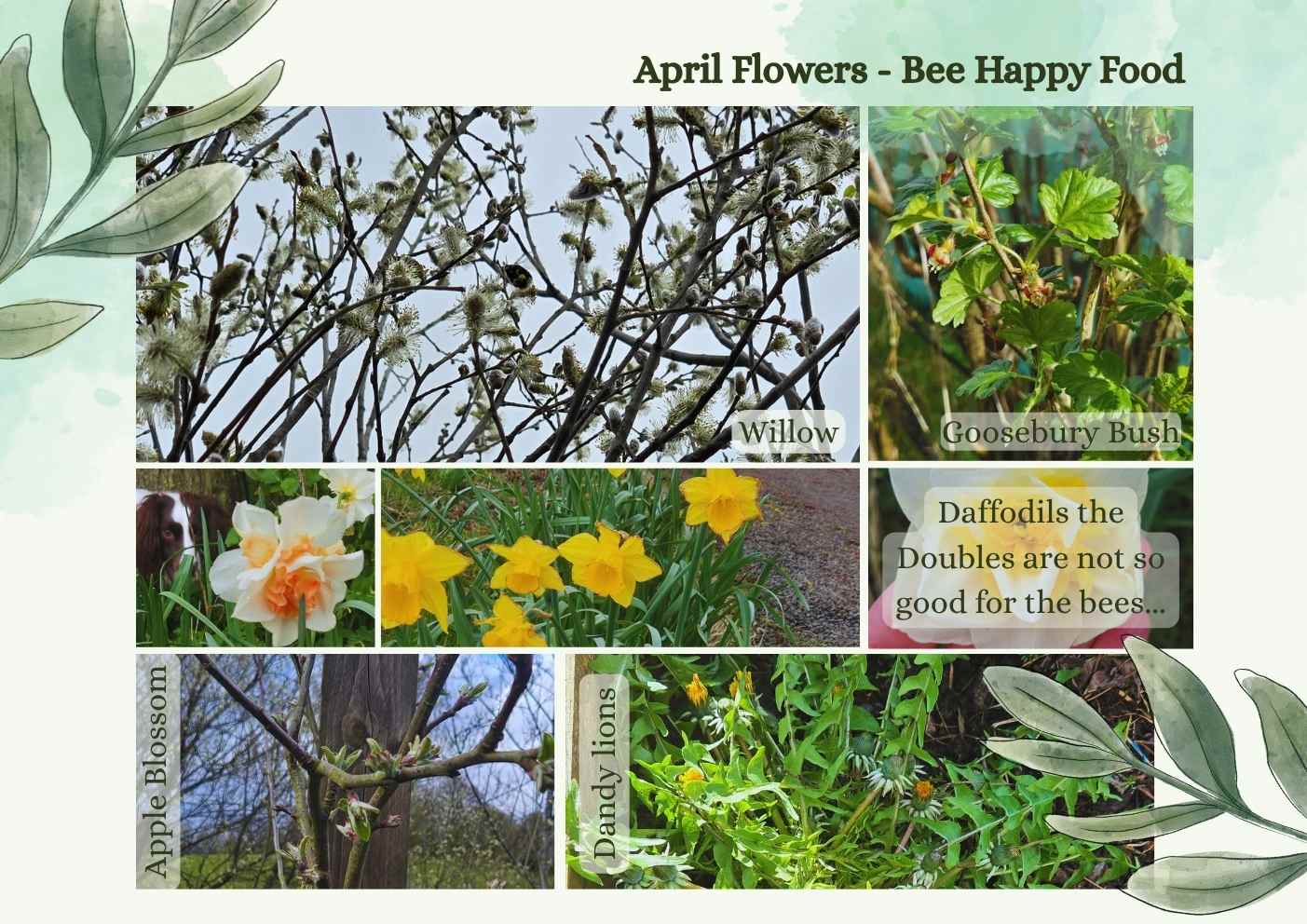
April in the bee garden: willow, dandelion, and why the scruffiest corner of your garden might be doing more for your bees than anything you have ever planted.
Here is something nobody tells you when you start beekeeping.
April looks fine from the outside. The garden is waking up. There are flowers appearing. Everything feels like spring. But inside that hive, the colony is in a race it might lose. The queen has been laying for weeks. The brood nest is expanding fast. Thousands of hungry new bees need feeding. And the foragers are flying out every mild morning looking desperately for protein and energy.
If you look at your garden and think it looks fine, look again. Because the two plants that matter most to your bees right now are almost certainly not the ones you planted on purpose.
Plant One: Willow
We do not have a willow in our garden. We have something better. We have a sheugh full of them.
A sheugh, for anyone not from Northern Ireland, is a drainage ditch. The farmers dig them to manage water across the fields, and they run along the back of our property. And growing out of ours, right behind the treehouse, is a stand of willow we walked past for years without truly understanding what it was doing.
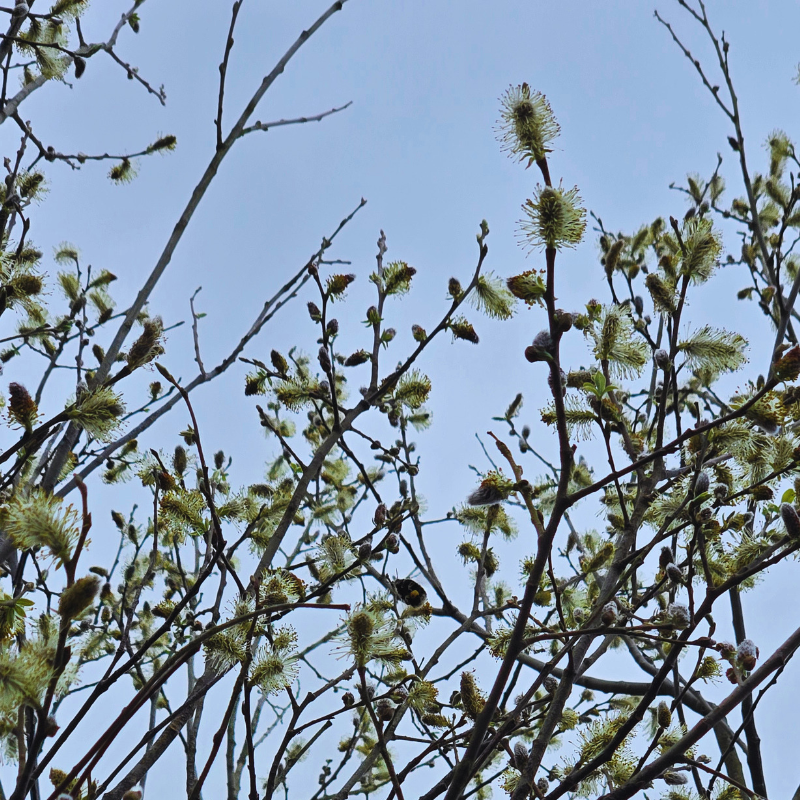
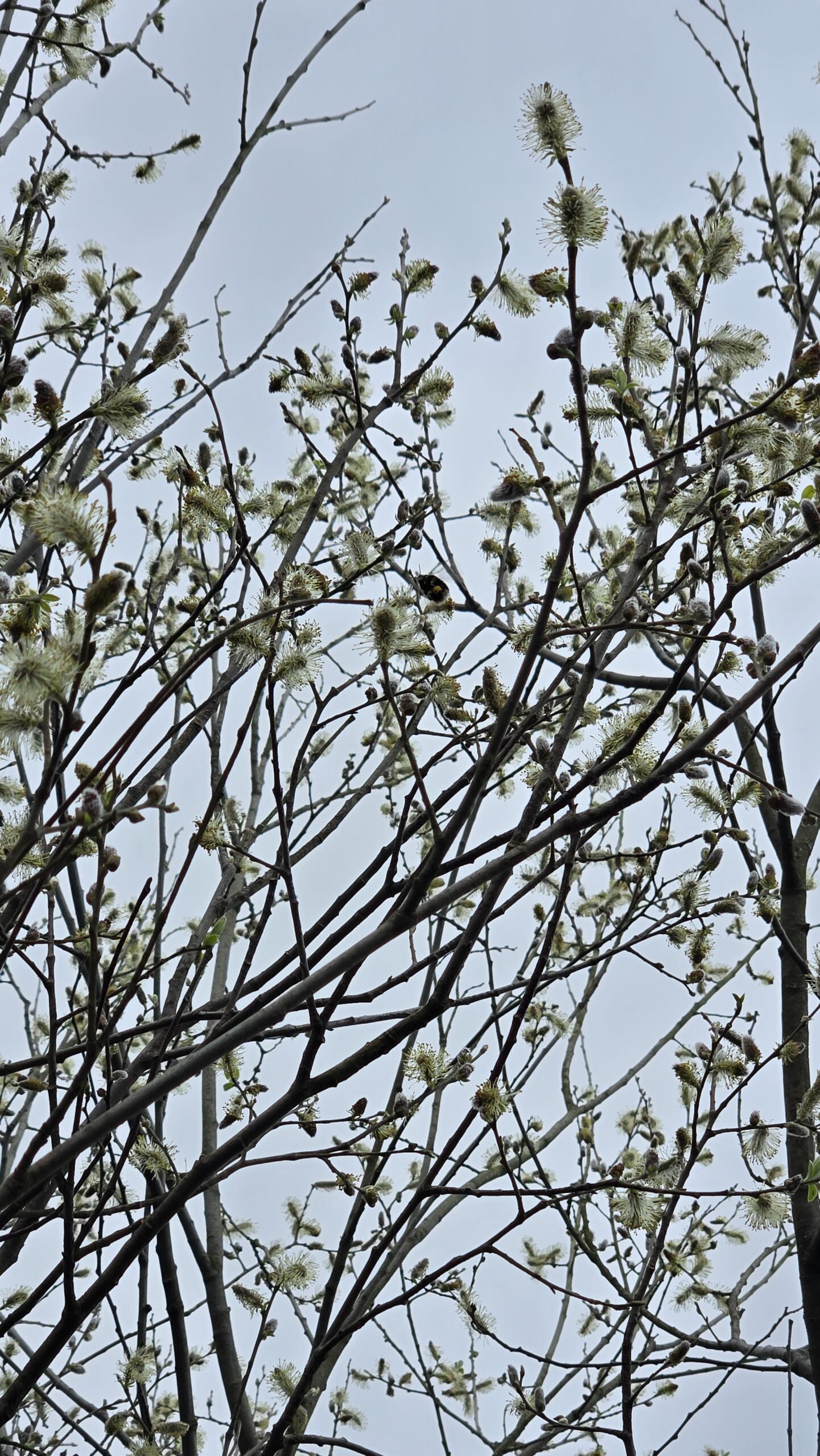
If you have ever stood near a willow tree on a mild morning in early spring and noticed it was absolutely humming with bees, you were witnessing something important. Willow is arguably the single most valuable spring forage plant for a honey bee colony in Ireland and the UK. The Federation of Irish Beekeepers notes that willow is found practically everywhere in Ireland, especially in river valleys and wet ground, and that the pollen is rich in essential amino acids, making it of great value for spring colony build-up. Most willows yield nectar too. That combination of early, abundant, high quality pollen and nectar is almost impossible to find anywhere else at this time of year.
The best species is the goat willow, Salix caprea, the classic pussy willow with fat silky catkins that appear in late February and March, turning bright yellow with pollen as they open. It is native to Ireland, loves wet ground, and the willows growing in sheughs and along drainage ditches across Northern Ireland are very likely to be exactly this species or its close relative grey willow, Salix cinerea. Both are excellent for bees. Both have probably been quietly feeding colonies in this part of the world for centuries without anyone making a fuss about it.
On a mild morning in February or March, go and stand near any willow you know about and listen. You will hear your bees before you see them. And watch the landing board on your hive for pale powder-yellow pollen coming in on their legs. That is willow. That is your colony building itself up for the season.
You Already Have More Willow Than You Think
Here is the most wonderful thing about willow, and the reason it deserves a special mention beyond just planting advice.
If you have a willow anywhere near you, you already have an unlimited supply of new willow plants. You do not propagate willow. You do not nurse cuttings in special compost or follow careful instructions. You snap off a branch, you push it into moist ground somewhere, and you come back in spring. That is it. That is genuinely all there is to it.
Ours grow out into the garden sometimes and have to be cut back. Those cut branches do not go in the compost. They go straight into any spare bit of damp ground we can find. Every one of them will root. Every one of them will eventually become another willow for the bees.
No garden centre trip. No cost. No fuss. If you have willow nearby, you are already rich in willow. You just might not have known it yet.
Plant Two: Dandelion
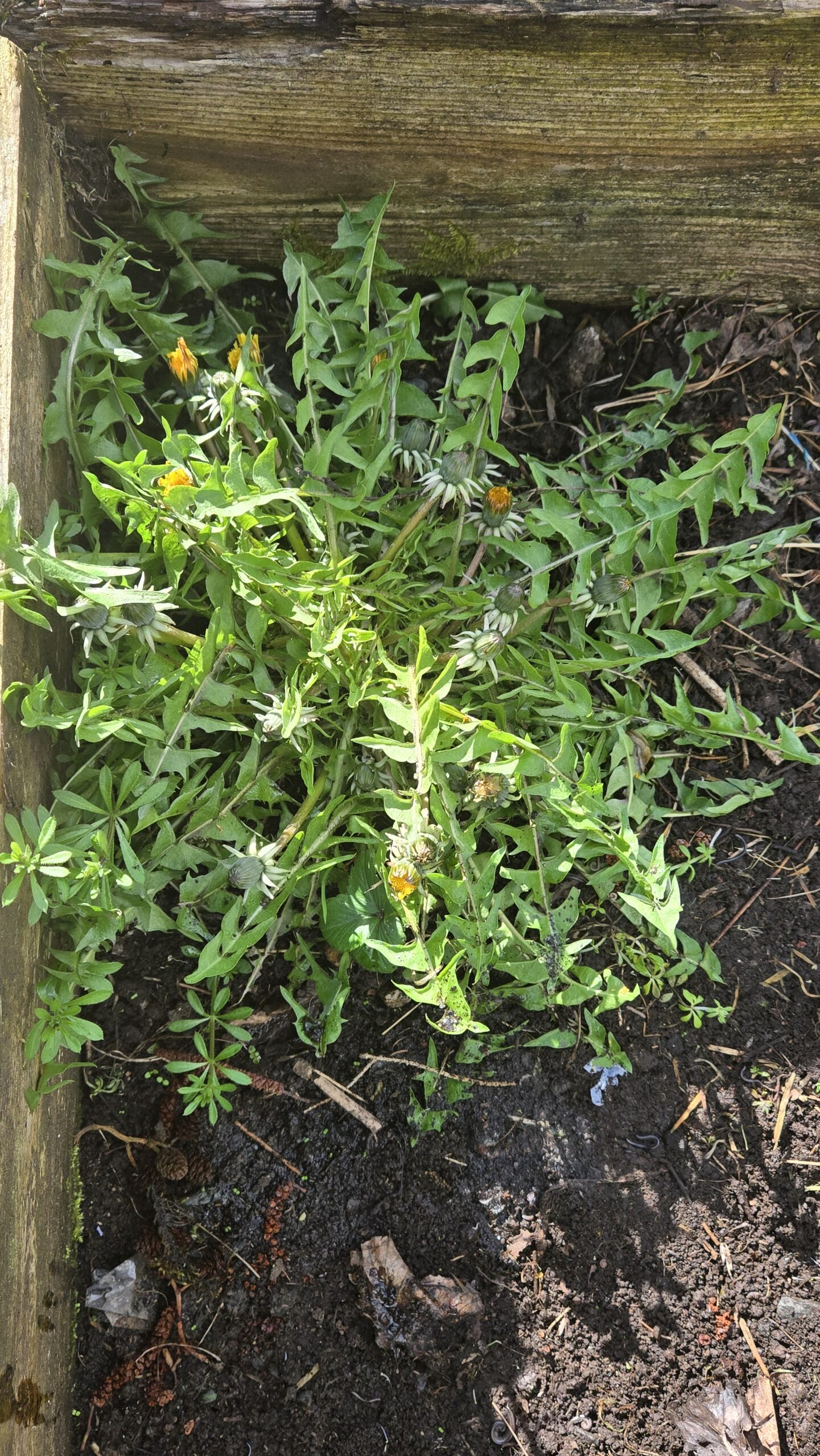
You did not plant it. You probably spent years trying to get rid of it. And yet here it is, doing more for your bees in April than most of what you deliberately put in the ground.
Dandelions are complicated, and the internet has two very loud opinions about them, both of which leave important bits out. So here is the honest version.
What is true: dandelions are one of the most accessible early nectar sources available to bees in April. The flowers open flat to the sun, the nectar is right there, and a bee does not have to work hard to get it. The Federation of Irish Beekeepers describes dandelion as a valuable source of both nectar and pollen in spring and early summer, noting that in favourable seasons a little surplus dandelion honey is even stored, easily identified by its very deep yellow wax capping.
Also true: dandelion pollen is not nutritionally complete for honey bees. Research has found it is missing several essential amino acids that bees need to raise brood effectively. It is not the ideal protein source.
So which is it? Both. Dandelions are not a perfect food. They are a plentiful, accessible, early food at a time when the colony desperately needs something. Bees do not eat only dandelions. They eat dandelions alongside whatever else is flowering. And in April in Northern Ireland, that is not very much. So every dandelion in your lawn is a genuine contribution.
The practical advice is simple. Do not mow in April. Or at least, mow around the dandelions rather than through them. The No Mow May movement has made this idea more mainstream, but for beekeepers the argument starts in March and April, not May. If you can hold off the first cut until your dandelions have finished flowering, your bees will have had weeks of forage that you provided entirely by doing nothing.
We are embracing the dandelions this year. The grass around the apiary is getting left until late April at the earliest. Bee Girl is entirely in favour of this plan, largely because it means less mowing.
The April Imposter: Double Daffodils
Every garden centre in April is full of them. Big, frilly, double-flowered daffodils in yellow and cream and white, often cheerfully labelled as spring pollinator plants. They are genuinely beautiful. We have nothing against them as garden flowers.
But those extra layers of petals that make them so showy are covering up the nectar and pollen. A honey bee landing on a double daffodil is a honey bee wasting her time. She cannot get to the food. She will leave quickly and find something more useful, which in April is hopefully your dandelions.
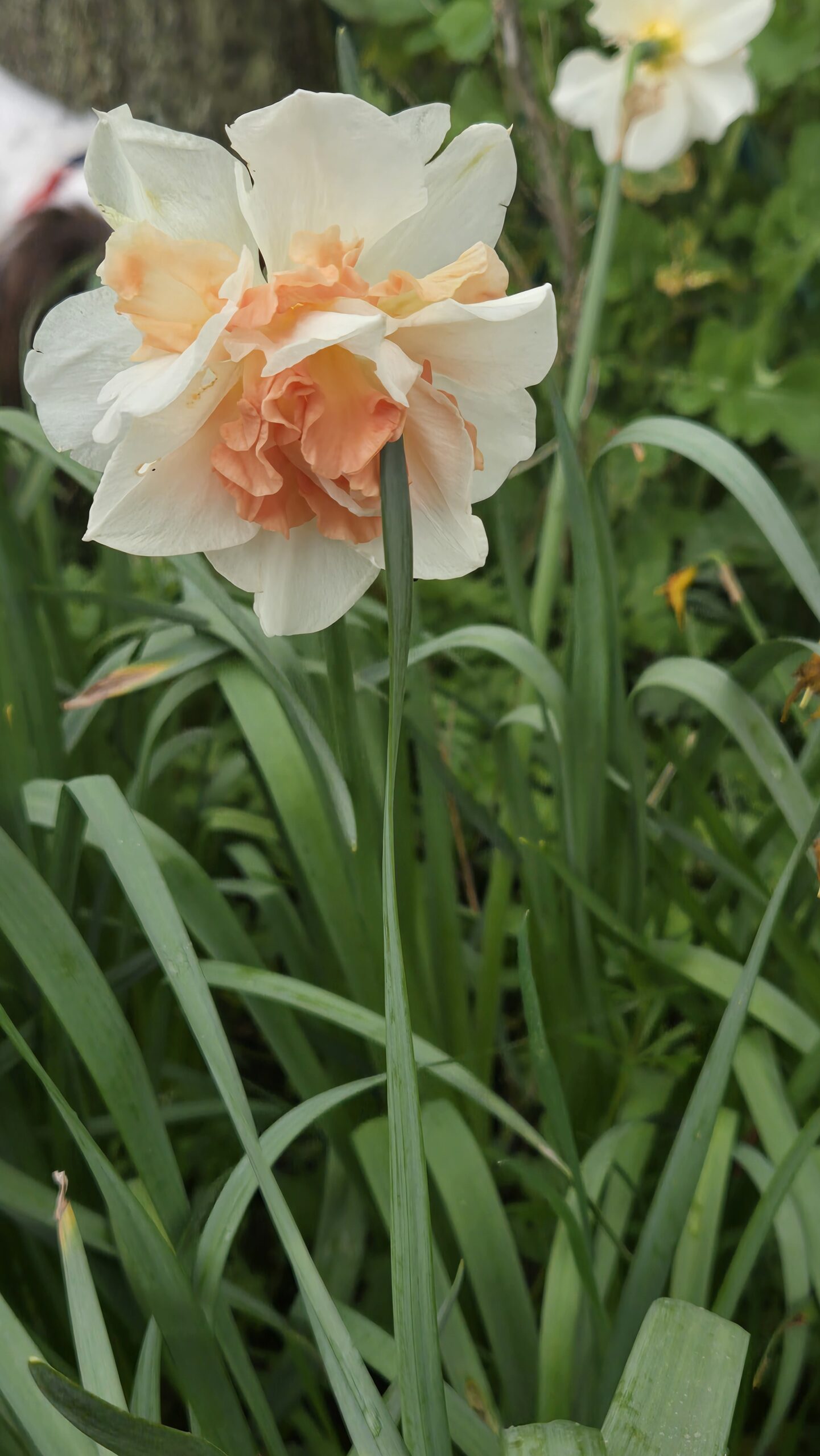
If you love daffodils and want them to do something for your bees, look for single-flowered varieties with open centres. Wild daffodils (Narcissus pseudonarcissus) are excellent. The rule, as ever: if you can see the centre of the flower clearly, so can a bee. If you cannot, neither can she.
What Else to Look For in April
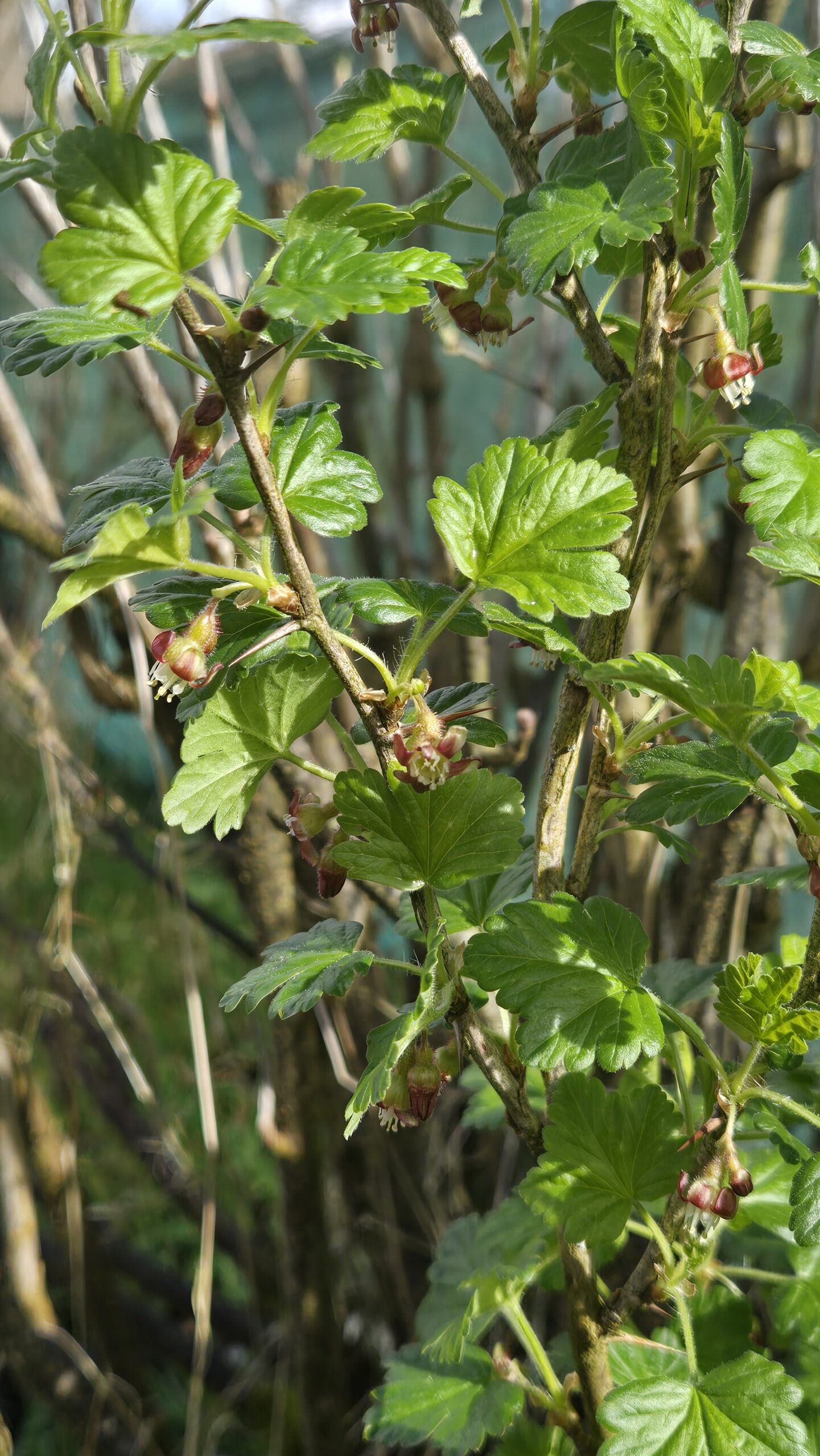
Alongside willow and dandelions, April can also offer blackcurrant blossom, single-flowered flowering currant (Ribes sanguineum), rosemary if it is still in bloom, and early heathers. None of these are as significant as a good willow in full catkin, but every accessible flower counts when the colony is building fast and forage is thin.
And if you are walking past a willow anywhere this month, whether it is in a sheugh, along a stream, at the back of a field, stop and listen. That hum means your bees have already found it. They almost certainly got there before you did.
The Good, the Bad, and the Sticky
The Good: We walked past a sheugh full of willow for two years before we understood what it was doing for our bees. If you have any willow nearby, your bees almost certainly already know about it. And if you need more willow, snap a branch off in winter, shove it in some damp ground, and stand back.
The Bad: Double daffodils. All that beauty and nothing for the bees behind the petals. Go single.
The Sticky: Dandelion honey is real. Deep yellow wax capping and all. The weed your neighbours want you to kill might be making your spring honey right now.
Mum & Bee Girl x
This post is part of The Bee Garden series, where we look at what to plant for honey bees in Northern Ireland, month by month through the year. Next up: May, and the plants that make or break the early season.
More bee garden posts: why May is make or break and the best honey plants you already have.