
BEE HAPPY HONEY | The Bee Garden | August
August in the bee garden: the moment the whole landscape turns purple and everything your bees do this month matters enormously.
There is a jar of heather honey on our kitchen shelf. Dark amber, almost reddish. If you tilt it sideways it barely moves. It sits there like jelly, which is exactly what it is, until you stir it and then briefly, magically, it flows.
We did not make it. We bought it from a beekeeper who had taken his hives up to the hills in August and brought them back six weeks later with something genuinely extraordinary inside them. One day, with any luck, we will do the same. For now we are planting heather in the apiary and watching what happens.
Here is everything we have learned about why August heather matters so much, what it does for your bees, and why the soil in Northern Ireland makes us peculiarly well placed for it.
What Makes Heather Honey Different From Every Other Honey
Most honey flows out of a jar. Heather honey does not. It sits in a thick jelly-like state that will not pour under normal conditions. This is because ling heather honey is thixotropic, a word we had to look up, which means it is gel-like when still but becomes liquid when agitated or stirred. It is the only commonly produced honey in Ireland and the UK with this property.
This makes it genuinely difficult to extract. Regular honey spins out of the comb in a centrifuge without much trouble. Heather honey stays stubbornly in place. Beekeepers who take hives to the heather moors either use a special heather honey press that physically squeezes the honey out of cut comb, or they agitate the honey first with a device called a loosener before spinning. Many simply sell it as cut comb and skip the extraction problem entirely.
The flavour is unlike any other honey we have tasted. Strong, dark, tangy, slightly smoky, with a lingering aftertaste. Brother Adam, the celebrated Buckfast Abbey beekeeper, described it as red-brown like the water of the peat bog, a gift of nature carrying the tang of moorland air. That is exactly right. It tastes like somewhere specific.
Ling vs Bell Heather: The One That Matters Most
There are several plants called heather and they are not all equal for bees.
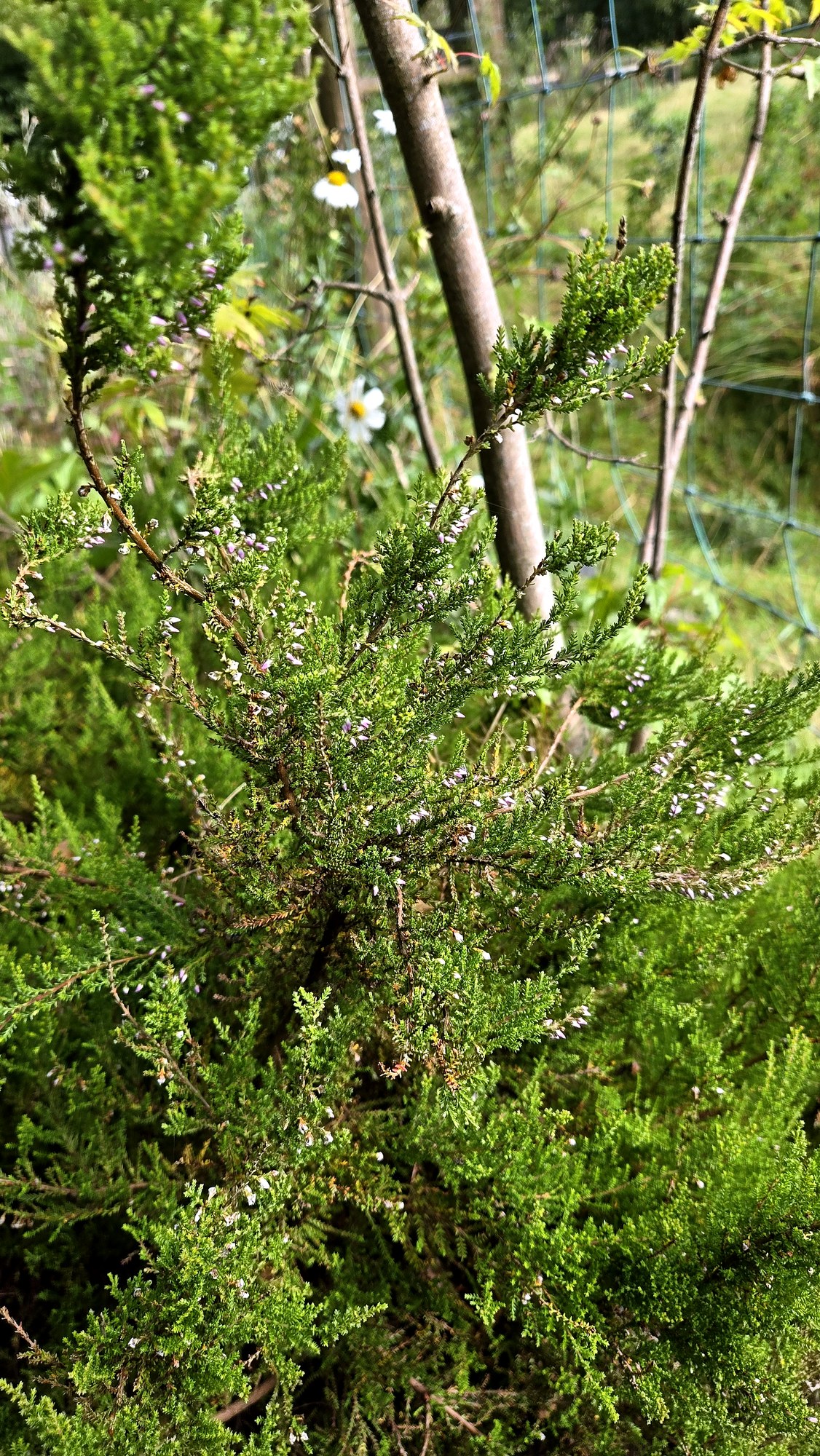
Ling heather, Calluna vulgaris, is the one beekeepers mean when they talk about heather honey. It is the plant that turns hillsides and moorlands purple from late July into September. It loves acid soil, open ground, and the kind of damp Atlantic climate Northern Ireland has in abundance. The honey it produces is the thixotropic, gel-like, deeply flavoured stuff.
Bell heather, Erica cinerea, flowers slightly earlier than ling, has larger individual flowers, and produces a runny port wine coloured honey. It is also a good bee plant but the honey yield is lower and it does not have the same legendary status.
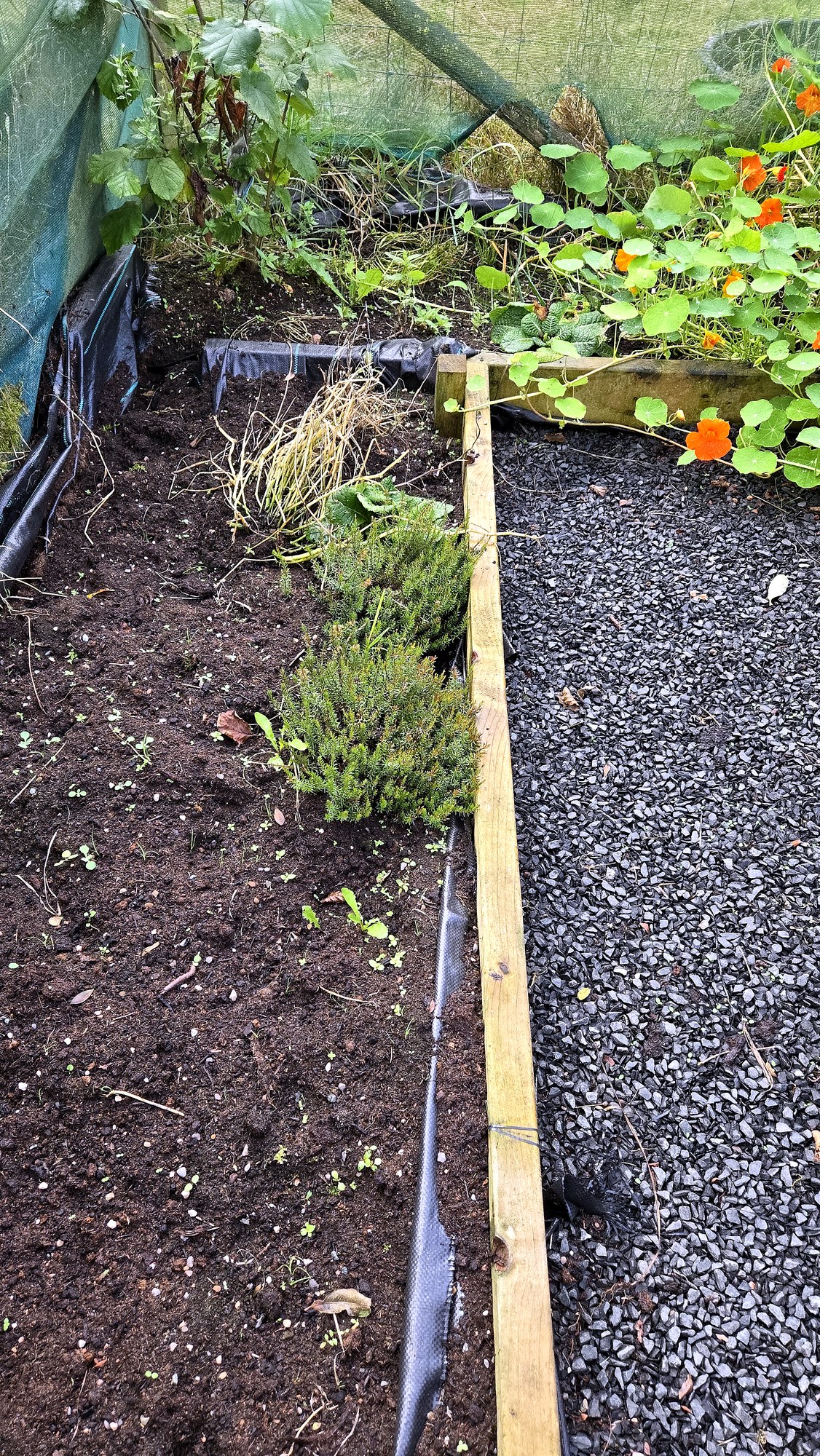
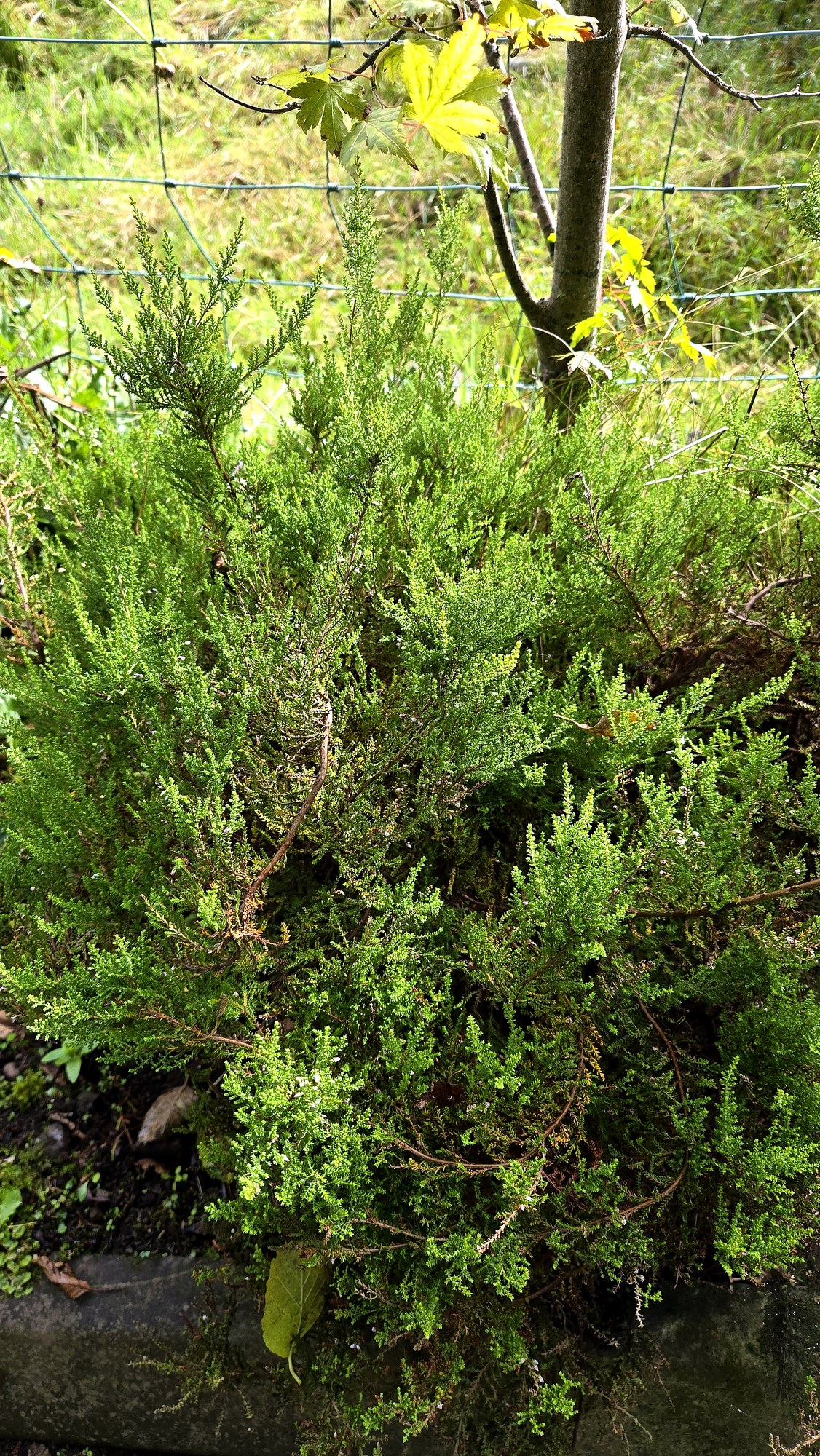
The heather we bought at Galgorm is ling heather, Calluna vulgaris. It went into the apiary because our soil is naturally acid, which is exactly what ling heather needs, and because Northern Ireland has precisely the right climate for it. We are not expecting a heather honey harvest from a few plants in pots. We are planting for the bees, for the late season nectar, and for the long term.
Slemish Is Right There But Too Far Away
On a clear day we can see Slemish from our place. The basalt mountain where Saint Patrick is said to have tended sheep as a young slave, rising out of the fields a few miles to the east. In August it turns purple with heather. It is genuinely one of the most beautiful things you can see in this part of Antrim.
Our bees could theoretically fly there. Honey bees can travel up to three miles from the hive at their absolute maximum. But bees are practical creatures. Three miles uphill with a full load of nectar is not their idea of an efficient foraging trip, and the energy cost of that return journey largely cancels out the benefit of the nectar collected. They will find closer sources first and work those far more reliably.
So we plant heather in the apiary and let the bees decide. The ling in the honey pots gives them late season nectar within metres of the hive entrance. They do not need to go to the mountain. The mountain can look after itself.
The Nomadic Beekeeping Tradition
The heather flow is so valuable that some beekeepers do not simply hope the bees find it. They load entire hives onto a trailer in the middle of the night, drive up into the hills, and leave the bees there for six weeks.
This tradition is centuries old. August 12th has historically been known in beekeeping circles as the Glorious Twelfth, borrowing the name from the grouse shooting season, as the traditional date for moving hives to the heather moors. The old advice was go early and come home late: early in the morning when all the bees are safely home, early in August to catch the flow at its best, and late in September when the last of the heather is spent.
The nectar flow itself is extraordinarily brief. The actual peak nectar production from ling heather lasts only about four to six days during the whole flowering season. Everything has to be in place at the right moment. Strong colony, hives in position, weather cooperating. Miss the window and you miss the harvest.
We are not doing this yet. We have one hive and a lot still to learn. But knowing the tradition exists, and understanding why experienced beekeepers put in the work of moving hives up muddy hillsides in the dark, makes the jar on our kitchen shelf feel like something that was genuinely earned.
Why Northern Ireland Is Perfect Heather Country
Ling heather requires acid soil, open ground, and a cool damp climate. It does not thrive in alkaline or waterlogged conditions and it does not compete well with rank grass if the ground is too fertile.
Northern Ireland has large areas of naturally acid upland soil, significant bogland, and a reliably damp Atlantic climate. The hillsides around Slemish, the Antrim plateau, the Sperrins, the hills above the coast, much of this landscape is natural heather country. The Federation of Irish Beekeepers lists ling heather alongside white clover and blackberry as one of the small number of plants from which Irish beekeepers actually get surplus honey crops.
Even in a garden or apiary setting, if your soil is naturally acid and you have a reasonably open sunny spot, ling heather will establish well and provide late season nectar every August for years. It does not need much attention once it is in. Young heather produces more nectar than old heather, so cutting it back periodically, as upland farmers have done for centuries by controlled burning, encourages fresh growth and keeps the nectar flowing.
The August Imposter: Winter-Flowering Heather
Garden centres sell several types of heather year round, and not all of them are useful for bees in August when it matters.
Winter-flowering heathers, mainly Erica carnea varieties, are commonly sold as low-maintenance ground cover. They flower from December through to March, which sounds useful until you remember that your bees are clustered in winter and largely not flying. A plant that flowers when the bees cannot leave the hive is not doing your colony much good, however lovely it looks in a winter garden.
Erica carnea is not the same plant as ling heather or bell heather. When you are buying heather for August bee forage, look specifically for Calluna vulgaris, ling heather. That is the one with the right flowering time, the right nectar, and the right relationship with acid soil. Any heather labelled simply as a winter garden variety is almost certainly Erica carnea and will flower at entirely the wrong time for your bees.
NB, and we only learned this ourselves: the same trap catches you with ivy. Common ivy lives two separate lives. The juvenile phase is the one everybody pictures, lobed arrow-shaped leaves climbing up a wall with aerial roots, and it never flowers, however big it gets. Only once ivy reaches its adult phase does it flower, and adult ivy looks different: the leaves lose their lobes and go plain and oval, and it stops climbing and bushes outward, usually along the top of a wall or high in a tree where it finally gets full light. That is the growth that carries the flower heads in autumn. So a wall smothered in ivy can look like an enormous amount of late forage and deliver none at all. Two questions tell you which you have. Lobed or plain leaves, and still climbing or gone shaggy and outward. More on this next month.
THE GOOD: Northern Ireland is natural heather country. Acid soil, damp climate, and Slemish visible on the horizon turning purple every August. Plant Calluna vulgaris in the apiary now and your bees will have late season nectar for years. The mountain will have to manage without them.
THE BAD: Winter-flowering heather bought from a garden centre looks like it should help your bees. It flowers when the bees are clustered indoors. Check the label. Calluna vulgaris is what you want.
THE STICKY: Heather honey. Jelly in the jar, liquid when you stir it, dark and smoky and unmistakably from somewhere. There is nothing else quite like it. One day we will make our own. For now we are learning.
This post is part of The Bee Garden series, where we look at what to plant for honey bees in Northern Ireland, month by month through the year. Next up: September, and the plant every beekeeper should be grateful for.
Mum & Bee Girl x