
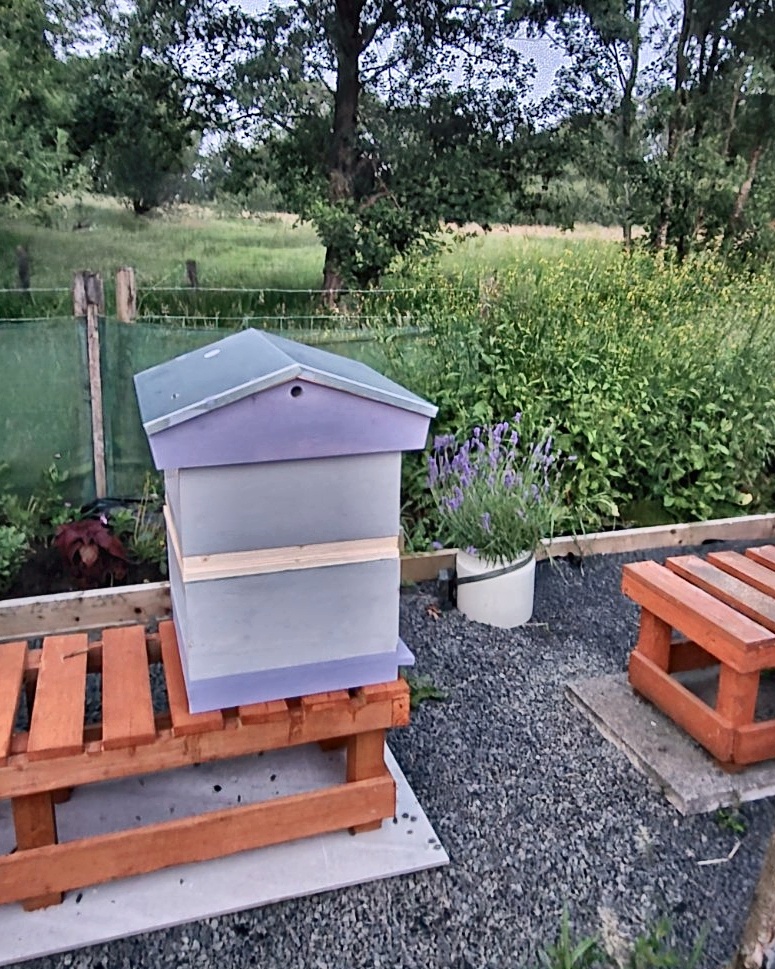
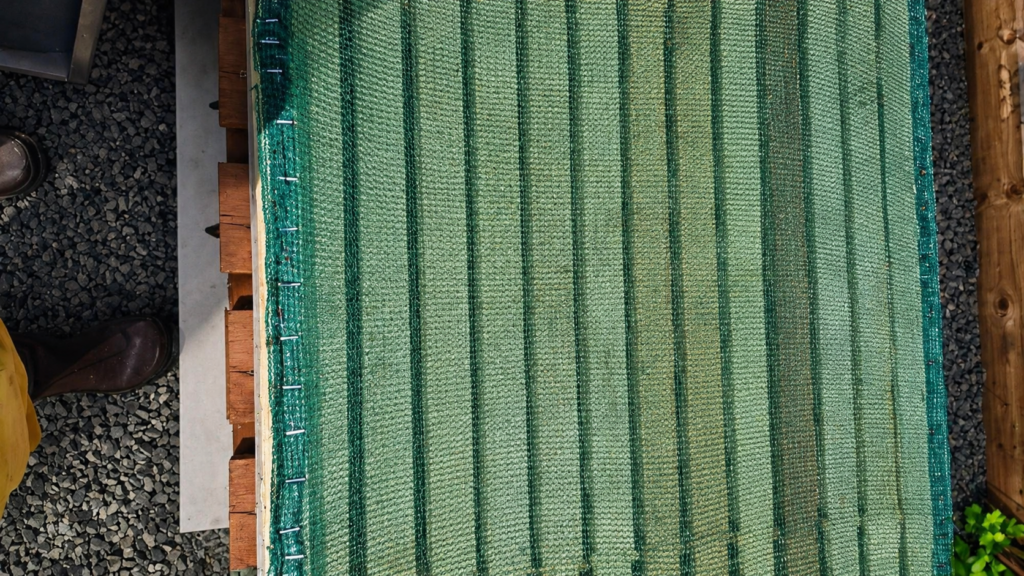
Last time I left off with a screen stack, a bit of garden windbreak fabric doing a job it was never advertised for, and a plan I genuinely wasn’t sure would hold. Grab a cuppa, because there’s a lot to catch you up on and none of it happened quietly.
Quick refresher if you’re new to this saga or just need reminding what a laying worker actually is. Normally only the queen lays eggs, and her presence (through pheromones) keeps everyone else’s egg-laying bits switched off. Leave a hive queenless too long, and some of the ordinary worker bees start laying eggs of their own instead. The trouble is, they’ve never mated, so everything they lay comes out as drones, boy bees, useless for keeping a colony going. Worse, they lay badly, multiple eggs stuffed into one cell, scattered all over instead of a tidy pattern. A hive full of laying workers is, in beekeeping terms, in real trouble.
The Screen Stack
Quick reminder of what this actually is, since I realise “screen stack” means nothing if you haven’t been following closely. It’s a frame of fine garden mesh sitting between two hive boxes, laying worker colony on top, my strong queen’s colony underneath. The mesh is fine enough that the bees on either side can touch through it, but not pass through fully. The idea is her scent and her calming influence creep through gradually, without the two colonies colliding as one population overnight, which is when things tend to go wrong.
I moved the whole hive under cover of darkness like I was smuggling something across a border, kept the door shut for three days, and left the fabric to get on with it while I went and did literally anything else.
Three days in, I had a proper look and could already see a difference. The colony had cleaned up the eggs that had been sitting there, and they were drawing out fresh comb rather than just tending the mess. The water I’d put in for the heat was nearly gone too, which told me they’d genuinely needed it in there. Small thing, but it was the first proper sign this daft-looking bit of garden mesh was actually doing something, not just me hoping very hard at a hive.
When I finally opened the door, I didn’t come charging in with frames like it was Christmas morning. My new queen is still young, and I wasn’t about to throw the full weight of somebody else’s fight at her all in one go. Overwhelming her with a sudden clash of laying workers arriving en masse could have done more damage than the laying workers ever would have on their own. So I gave it a day, let whatever drifting was going to happen happen on its own, and let her settle before I started being deliberate about anything.
A day after that, first frame went down into her box. Two days later, a second. Building it up steadily rather than tipping the whole mess in at once and hoping for the best.
If this keeps going the way it has, I’m expecting a full merge within the next week or so, and a super going on top for the young bees to draw out once the two sides are properly one colony again.
I’m not going to stand here and tell you this is a done deal though. I’ve read enough this past week to know laying worker colonies are notoriously stubborn, and even a strong queen with good numbers behind her doesn’t always win that fight. But the early signs are good, and honestly, that’s further than I expected to be a fortnight ago when I couldn’t find a queen anywhere in that box.
Meanwhile, Hive 001
While all that was going on, because apparently one drama at a time is asking too much this year, a completely separate story was quietly playing out in another hive.
001 had gone through its own queenless stretch after a swarm I absolutely did not plan for and would not have chosen if consulted. I gave them a frame of brood to work with, not realising at the time that the frame I’d handed over was already carrying problems of its own. Most of what came from it turned out to be drone brood rather than worker, which gave me a proper fright when I found it, wondering for one horrible moment if 001 had quietly gone the same way as the other hive without me noticing.
But 001 had also drawn out a proper queen cell entirely on their own, from good brood, and this week she emerged. For anyone not steeped in this, a queen cell is a special, larger cell the colony builds when it needs to raise a new queen, and what comes out of it isn’t ready to lay eggs straight away, she’s a virgin, and she has to go out on mating flights first before she’s any use to the colony. I found the cell opened cleanly at the base, a bee inside cleaning it out, exactly what a successful hatch is meant to look like. Not torn down, not rejected, just a tidy, textbook emergence, the one bit of this fortnight that went entirely to plan.
She’s a daughter of the queen from the other hive, though that’s nothing to lose sleep over. Whatever went wrong there wasn’t a family trait she’s carrying, it was that colony’s own bad luck, full stop.
So now she’s got two hurdles of her own ahead. Getting out, mated, and home safe is the first, same as any virgin faces. The second is quieter but just as real, whether 001 had gone far enough into its queenless stretch for laying workers to have already started before her cell was even ready. If they had, she’s coming home to a harder job. If they hadn’t, she should come home to a hive that falls in behind her without much fuss.
There’s genuinely nothing to do but wait and see which one it is. I’m leaving her be through the mating window and letting the answer show up in what she lays, not in me poking about trying to find it early.
The Backup Plan
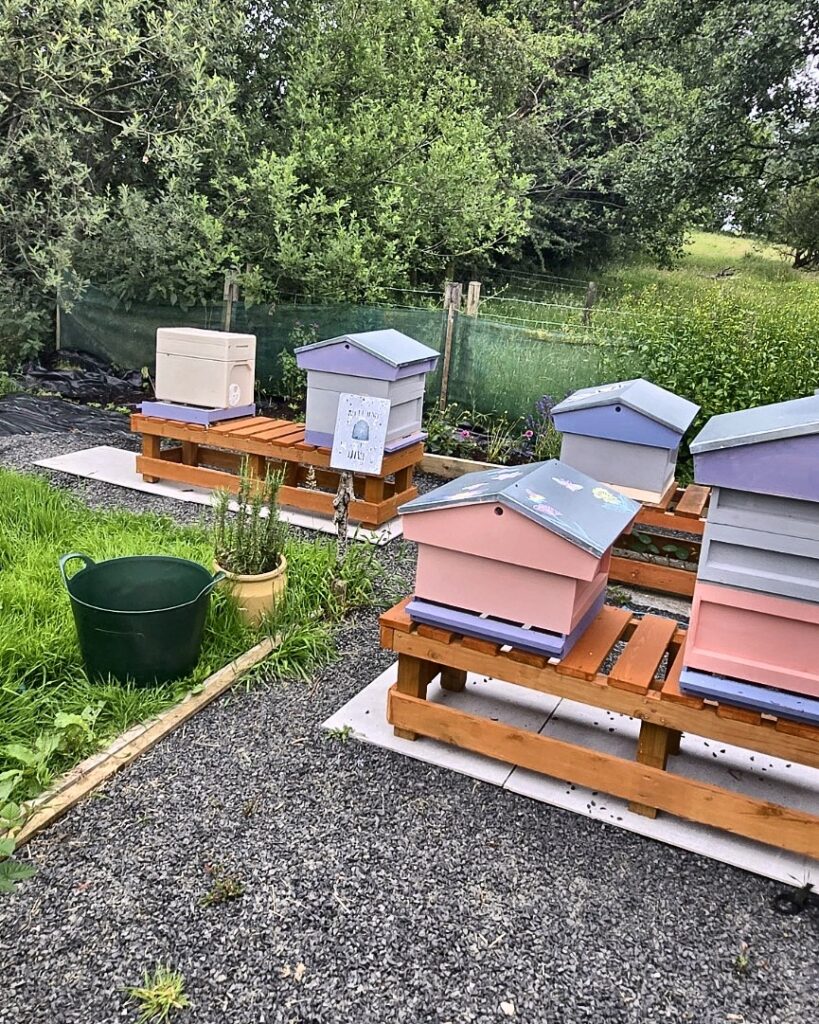
Given how this season’s gone, I am not waiting to find out the hard way twice. I’m grafting again from my strong queen as insurance, in case 001’s new queen doesn’t come home mated, or comes home to more than she can handle.
It’s not a decision I’m making lightly. Pulling another frame of eggs off my good queen, on top of everything else she’s already giving toward the merge, is asking a lot of one colony, and I’m watching closely to make sure she can actually spare it without being stretched too thin herself. But I’ve already watched one virgin vanish without explanation this year. I’d rather have a spare option quietly ticking along than be caught with absolutely nothing again.
How Did We Actually Get Here
I keep asking myself that, if I’m honest. And this time I actually know the answer, rather than just shrugging at bad luck.
It traces back to an artificial split I did earlier in the season, once we thought a new queen was ready to go in. That left the original hive without a queen for two weeks while we waited on her. She’d been tested clean before I even got her, no sign of any laying worker issue at source, so there was no reason at the time to think anything was wrong with the plan. Two weeks felt reasonable, and by the normal logic of it, it should have been fine.
I still can’t say for certain what actually went wrong after that, but I’ve got a theory now that fits better than anything else I’ve come up with, and it ties together three things that all felt separately unexplained until I put them next to each other. My best guess is that only one or two workers had already started laying by the time she went in, not the whole colony, just a small, entrenched pocket. That would explain why she was accepted well enough to seem fine at first, but still ended up killed, since even a hive that’s mostly fine can have a couple of hostile individuals capable of taking out a queen they see as competition. It would also explain why my first batch of grafted cells got torn down afterwards, the exact same one or two workers likely saw the grafts as a threat too, for the same reason they saw her as one. Only once I ran the actual shake test and confirmed no queen at all did the real picture properly emerge, a small, quiet laying worker presence that had been undermining every attempt to fix the hive from underneath, invisible the whole time from the outside.
I want to be honest that this is a theory, not a confirmed fact. I’ll never know for certain what happened in that hive. But it’s the explanation that actually fits all three failures rather than treating them as three separate bits of bad luck, and that’s good enough for me to hold onto going forward.
If I’m learning anything concrete from this year, it’s a more general caution rather than a clean explanation for this specific case. There isn’t one fixed number anyone can give you here, and every colony’s different, but the general shape of it seems to be that laying workers can start developing anywhere from about two weeks queenless onward, with risk climbing the longer it goes past that. So two weeks isn’t a safe target to aim for, it’s closer to the edge of the cliff than the middle of the field, even when everything going in looks sound, the way it did here. Worth knowing that if you’re newer to this than me and someone tells you two weeks is fine, that’s not quite the full picture.
So next time, if I do another split at all, I’m aiming for one week queenless at the absolute most, well inside the safer end of that window rather than right up against it. Or maybe I skip the artificial split altogether and work through nucs instead, combining queenless nucs together rather than leaving a full hive sitting without a queen for any length of time. Might be the safer bet all round. Ask me again next season whether that theory held up.
Hold my breath.
Where Things Actually Stand
Three separate queen situations still running on three different clocks, same as I said last time. The difference now is I’ve got real movement on all three rather than just plans on paper and a lot of nervous hoping.
The laying worker hive is showing genuine signs of coming right. 001 has a fresh virgin out facing her own two hurdles. And I’ve got a backup graft going in behind all of it, because this year has taught me not to assume anything’s settled until I’ve actually seen it with my own two eyes.
I’m putting the kettle on. I think I’ve earned it. But I’m not popping the cork just yet, because none of this is finished, and this year has taught me not to celebrate anything until it’s actually done and dusted.
The Good: real, visible progress on the screen stack, a textbook clean emergence in 001, and a queen who’s building fast enough to make all of this possible in the first place.
The Bad: none of it is guaranteed, and I’m still pulling resources off my one good colony to prop up two separate problems at once.
The Sticky: the bit where I have to just trust the process and stop checking every five minutes, which if you know me at all, you’ll know is not my strong suit.
The story so far: diagnosing the laying worker hive and the fix we chose. And what happened two weeks after that.
Mum & Bee Girl x