
So that’s what I did. I built hive stands. I tidied the garden. I enjoyed, genuinely enjoyed, having nothing beekeeping related that needed doing. If you keep bees you will know how strange that feels. Standing in your own garden with your hands empty, on purpose, is not something this hobby prepares you for. I did not know it yet, but I was about to spend the next few weeks working out that I had a laying worker hive.
Two weeks passed. I went in.

The Brood That Looked Fine
There was brood. Quite a bit of it. I was delighted. It reminded me of the solid pattern from an earlier inspection, back when everything still looked completely normal.
It wasn’t capped yet, but the weather had been warm, and I told myself she’d maybe been a bit put off settling in by the heat, or the bees hadn’t got round to capping over everything yet. There was plenty of it. I didn’t think anything more about it.
I left those frames exactly as they were and went to check my other hive, the one waiting to see if it would pull its own queen cells. It had. Good news there, at least, so I left it to get on with things.
I never saw the Randalstown queen after that day, the same vanishing act as the one in Where Did She Go?
A Week Later
I went back in a week later expecting capped worker brood.
What I found was capped brood, right enough. All of it drone.
Every cell that should have held a neat, flat-capped worker had the tall, domed cap of a drone cell instead. Not a patch of it. All of it.
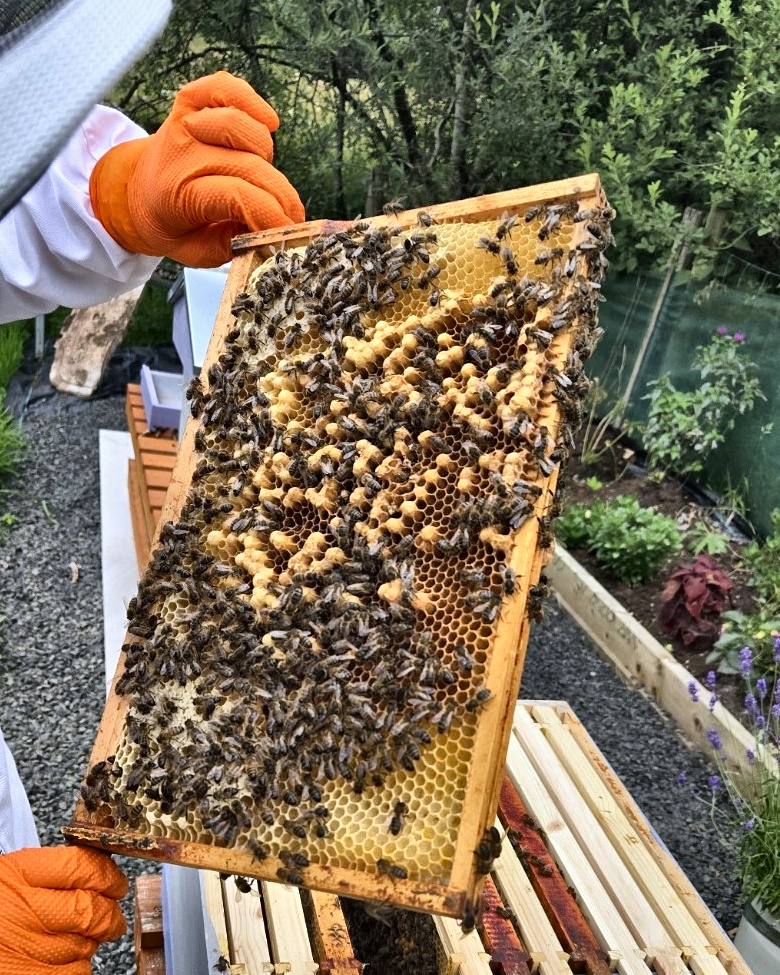
I went down to the club to ask. The answer was the kind of answer that’s meant to be reassuring and only half works: it can happen sometimes, don’t worry about it. So I left it another week.
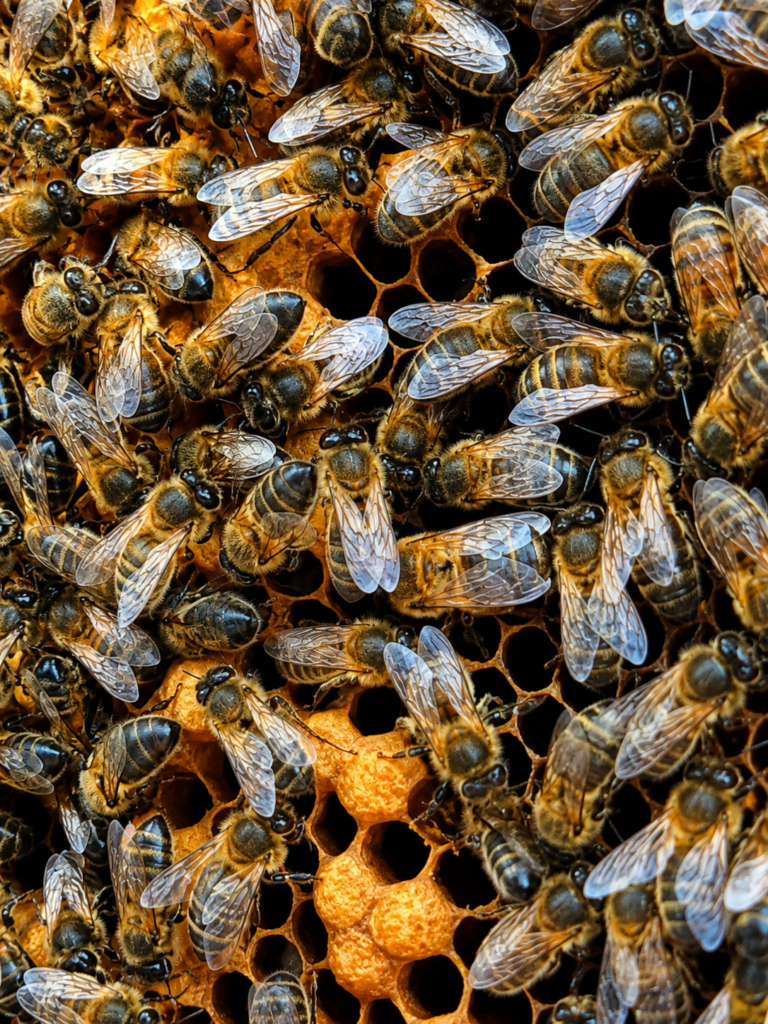
When I went back I searched properly for her. No sign of a queen anywhere on the comb. There were eggs, which gave me a flicker of hope she was in there somewhere, just keeping out of sight. But the pattern across the frames was rough. Not the tidy, confident laying you want to see.
Around the same time, other people in my beekeeping group started posting the exact same thing. Drone brood everywhere, no queen to be found, all within the same few weeks. Whatever had gone on with my queen, I wasn’t the only one dealing with it.
The Laying Worker Hive Rabbit Hole
Once I knew other people were seeing this too, I went looking for how to actually fix it. This is where it got confusing.
One video said shake the bees out well away from the hive and most of the laying workers won’t find their way home. Another said that’s built on a myth, that laying workers supposedly can’t fly because their ovaries are too swollen, and that this isn’t even true. A third said something closer to the middle, that they can fly perfectly well, it’s more about them losing their bearings if you move them far enough, which is a different mechanism to being flightless.
None of this is settled science I could just look up and trust completely. Everyone had a version. Everyone was confident in their version. This is apparently very normal in beekeeping and nobody warns you about it until you’re standing in your kitchen at ten at night with four browser tabs open, none of them agreeing with each other.
Finding Out We Had a Laying Worker Hive
Before deciding what to do about anything, I needed to know for certain whether there was a queen in that hive at all.
The test is straightforward once someone explains it properly. Set up a fresh box: one brood box on the bottom, a queen excluder on top of that, then two empty supers stacked above with no frames in them at all. Shake every single bee from the suspect hive into the top. The workers can pass back down through the excluder and find their way home. A queen cannot fit through the excluder, so if one exists, she gets left behind on top.
I shook the whole colony through.
No queen. Not anywhere in the whole hive.
That was the answer, plain and simple, even if it wasn’t the one I wanted. I had a genuinely queenless colony with at least one laying worker in it, confirmed properly rather than guessed at.
Which left me exactly where every article, video and well meaning bit of club advice disagreed with each other. There is no single right way to fix a laying worker hive. There’s a whole shelf of methods, all with a reasonable case behind them, and no clean answer for which one you should reach for.
I had to work out my own answer, with the bees I actually had, not the textbook version.
That’s the next post.
Mum & Bee Girl x