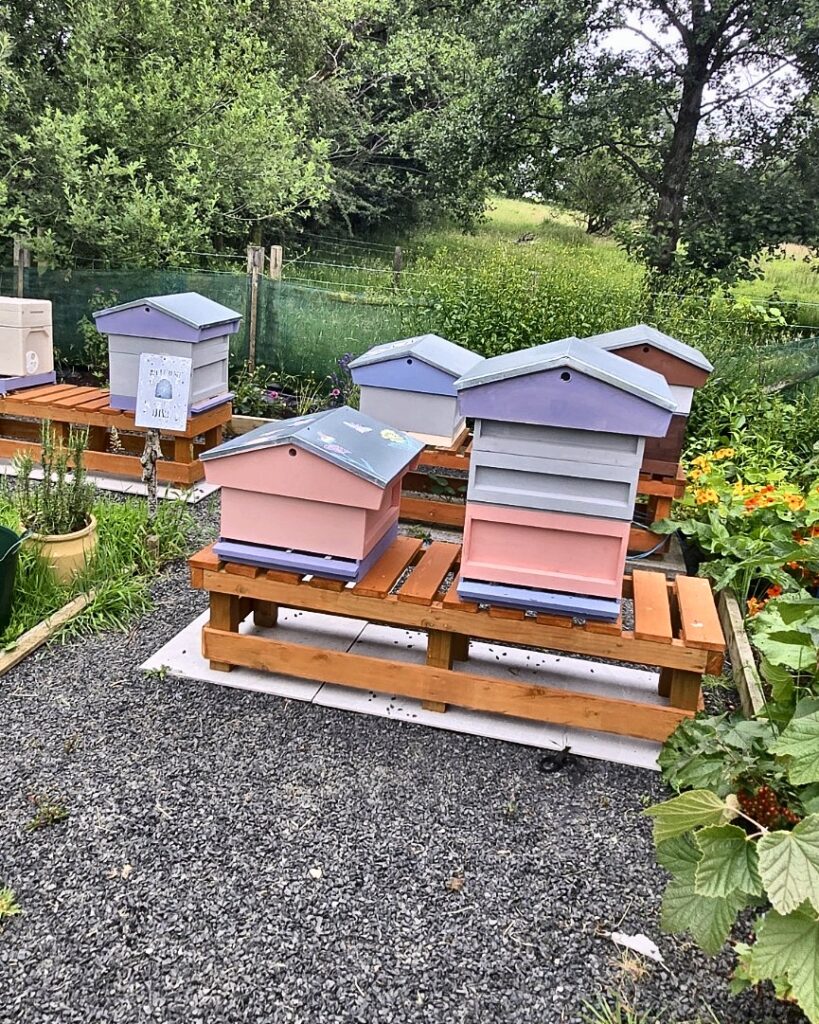
Last time I left off with a confirmed queenless colony, at least one laying worker, and a genuinely confusing pile of advice on what to do about it. No queen anywhere in that hive. That much I knew for certain.
What I didn’t know was which fix was right for me. So here’s the thinking, and here’s what I chose.
The Methods I Weighed Up
For anyone else standing where I was, here’s roughly what’s out there. None of it is wrong exactly. Some of it just doesn’t fit every situation.
Shake the whole colony out well away from the apiary. The idea is that most of the laying workers won’t successfully find their way home, thinning the population enough that you can then unite what’s left onto a queenright colony with better odds. The myth about them physically being unable to fly isn’t true, but there is something to the disorientation. The cost is real too. Every bee you shake out is a bee you might not get back, and my hive was already thin on numbers after weeks with no queen and no new brood coming through. I had bees I genuinely couldn’t afford to lose for a method that would only really matter if I had dozens of laying workers, not one or two.
Split a frame of the affected bees out to every colony across the apiary, rather than dealing with the problem as one lump. Spreading a small number of laying workers thinly across several strong, queenright colonies means each one only has to absorb and police a tiny handful rather than facing the whole population at once. It’s a genuinely good method when you’ve got the numbers to support it. I didn’t. With only a few colonies in the apiary right now, and more than one of them themselves waiting on queens, there wasn’t a spread of strong, settled, queenright colonies to share the load across. This one goes on the list for when the apiary’s bigger, not for this season.
A straight newspaper unite. Layer of newspaper between the two colonies, a couple of slits cut in it, done within a day or two once they’ve chewed through. Fast and usually effective, but it relies on the queenright side having enough numbers to properly overwhelm and reorganise the other side. My queenright colony is new. Three frames of brood, still building. Not the numbers advantage this method wants.
Just introduce a queen or a cell, no merge at all. Generally the least reliable option going. A queenless colony full of laying workers doesn’t have the normal social structure to accept and protect a new queen. She’s far more likely to be killed than accepted.
Feed them frames of open brood repeatedly over a few weeks, hoping the brood pheromone alone suppresses laying without ever giving them an actual queen. Possible, but slow, and it eats through resources from your healthy colonies that you might not have spare.
Accept it and merge outright, no clever staging, treat the equipment and any salvageable bees as raw material for a stronger combined colony and move on. Sometimes the most honest and least sentimental choice, especially late in the season.
What I Actually Did
The one thing I wasn’t willing to risk was my new queen. She’s only just built up to three frames of brood, two of honey, and she’s doing everything right. Throwing a full, unknown-strength batch of laying workers straight onto her felt like solving one problem by creating a much worse one.
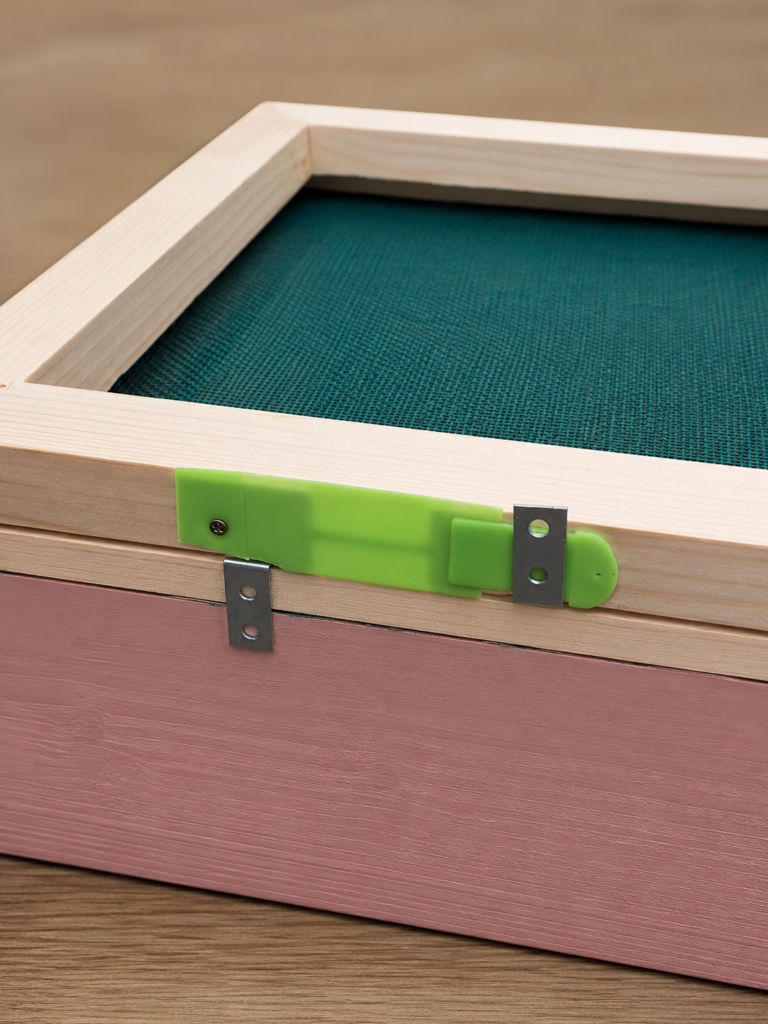
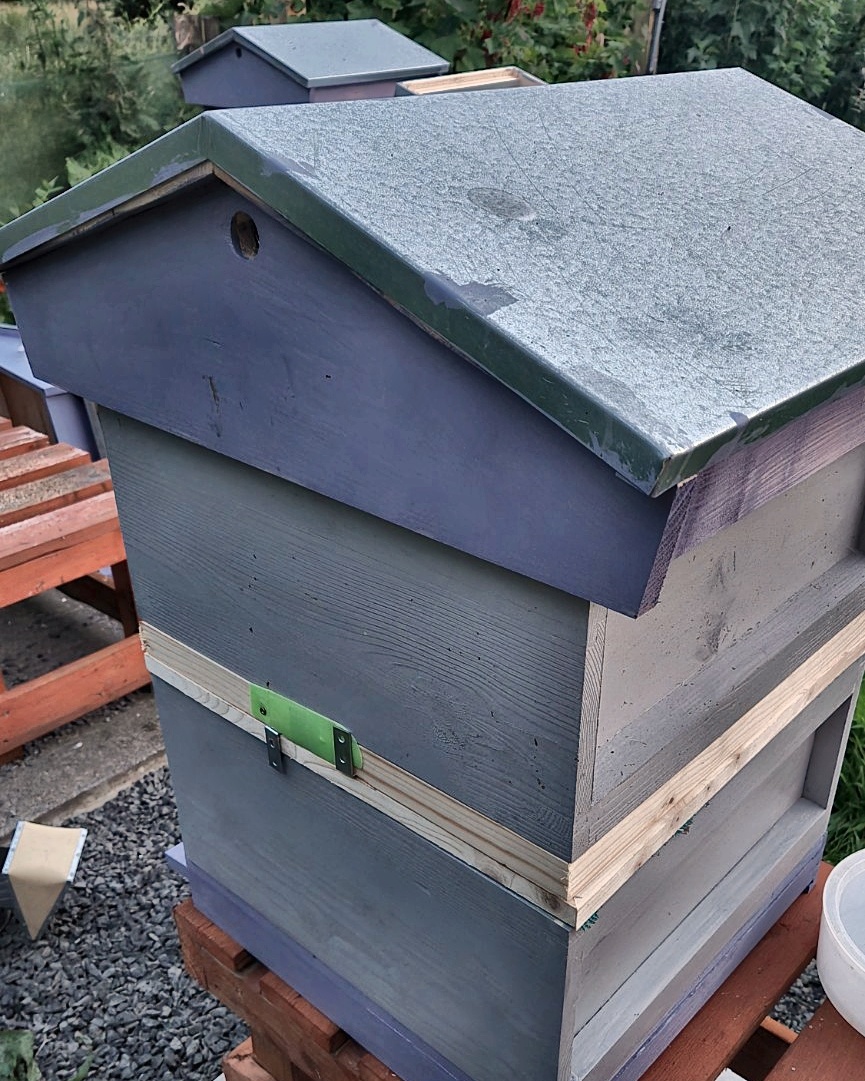
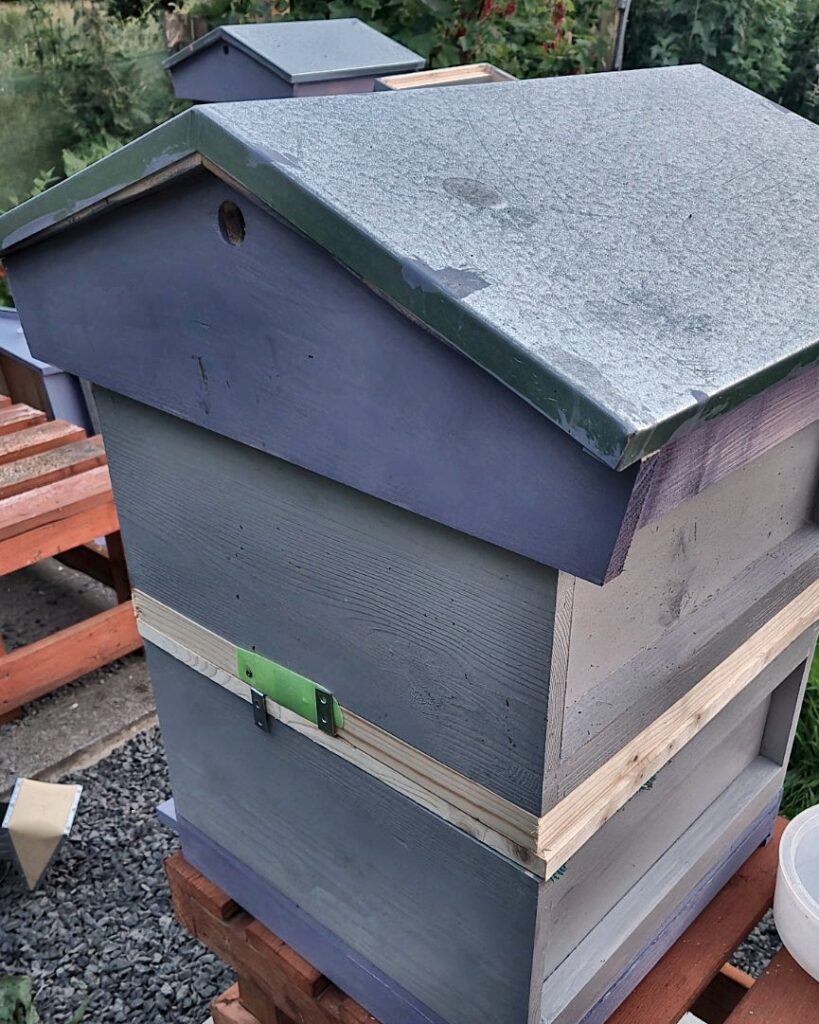
So instead of a full merge, I built a fabric screen, fine enough that the bees on either side can actually touch each other through it, antennae and all, rather than a solid mesh keeping them fully apart. Stacked the laying worker hive on top of her, with a small entrance of its own so the drones can get out and about rather than being sealed in. That way her scent and the physical contact both start doing their work gradually, without the two colonies fully colliding as one population straight away. No sudden collision of populations. No risk to her.
Since then there’s been a good development on her side. I moved her into a full sized box on Thursday, and she’s already running low on laying space in it. That’s a strong, fast build up for a queen who was only on three frames not long ago, and it means she’ll have real numbers behind her sooner than I’d planned for. Good news for the whole plan, since the sooner she’s strong, the sooner that screen can actually come down.
At the same time, I had another problem to solve. One of my nucs had a virgin queen properly disappear on me. She emerged, mated, came home, seemed to settle, then vanished, leaving behind a second queen cell that never opened. Well over two weeks overdue by the time I accepted she was gone.
Rather than take a frame of brood from a healthy colony to try and fix that one too, I grafted fresh queen cells straight into it instead, using it as both a test and a possible fix in one move. If the bees tore the new grafts down, that tells me there’s still a queen’s pheromone somewhere in there I haven’t accounted for, and she might still turn up. If they accept the grafts and start drawing proper cells, that confirms she’s genuinely gone, and gives the colony something constructive to focus their energy on instead of drifting further towards laying workers themselves.
Either result tells me something. That felt like the smartest use of one small risk.
This was also one I worked through entirely on my own. There was too much still unknown, and it was too uncertain a stretch, to bring Bee Girl into the decision making on this particular problem. Some of it wasn’t a good feeling to sit with either. That one was mine to carry.
Two Honest Cautions
I want to include these because they’re the useful bit for anyone reading this who ends up in the same spot.
The first is about taking comfort instead of checking. When I described what I was seeing at the club, the answer I got back was that it can happen sometimes, don’t worry about it. That’s fair advice in general, it genuinely can happen and usually isn’t serious. But whoever’s giving that advice is only ever working from what you tell them, not from what’s actually on the frame in front of you. They weren’t seeing what I was seeing. They had every reason to assume I might just be a nervous second year overreading a normal blip, because that’s a completely reasonable thing to assume from a description alone. The bit that was on me was taking that as settled and sitting on it for two more weeks instead of going and checking for certain myself. It wasn’t bad advice. It just wasn’t a substitute for looking. I only worked out how to actually check, the shake test with the queen excluder and empty supers, because someone else mentioned in passing that they’d done exactly that on their own hive. That’s what set me thinking about how to do it properly, not anything the club had walked me through directly.
The second is about the screen itself. Bees touching through the fabric is a genuinely stronger form of contact than a solid mesh keeping them fully separate, and it should carry both her scent and some of the normal policing behaviour down through to the laying workers faster than I first gave it credit for. But the small entrance underneath is there for the drones to come and go, not for the laying workers to leave or mix with her colony’s workers. That means the laying workers still have their own space below to keep laying in the whole time this is parked like that, because nothing is actually stopping them from doing so, only encouraging them to stop. Caution is the right instinct. Caution without an actual deadline just becomes limbo. So I’m setting myself a proper trigger point now rather than leaving it open ended: if there’s no clear change in the laying worker hive within three weeks of the screen going up, I pull it and force the issue, either a full merge or a requeen attempt from whatever 004 gives me, rather than letting the stack just sit there indefinitely.
The Good, The Bad, and The Sticky
The Good: the new queen from my first nuc is thriving, moved into a full box on Thursday and already running low on laying space in it. The other hive pulled its own queen cell exactly as it should, due to emerge any day. And the graft trick in the failing nuc is doing its job either way, giving me an answer whichever way the bees respond.
The Bad: I lost the Randalstown queen and never found out what actually happened to her. No dramatic scene, no string this time, just brood that looked fine one week and was all drone the next, and she was simply gone. The nuc’s virgin went the same way. Mated, home safe, seemingly settling, and then nothing. Two queens this season I will genuinely never get closure on.
The Sticky: this is the post where I have to be honest that for a few days there, with three separate queen situations sitting unresolved at once and one confirmed problem hive on top, I was not in a good state. Every source disagreed with every other source. There was no single right answer to reach for. In the end the only way through was to just pick the option that protected the one thing I genuinely couldn’t afford to lose, write everything down, and keep going.
That’s beekeeping in high summer close to Slemish. Not every queen gets a tidy ending. Screen stays up for now, with a proper date on it this time rather than an open ended wait.
I will let you know how it goes.
If you missed it, this follows on from no queen, all drone brood. The update is in how we are getting on.
Mum & Bee Girl x