
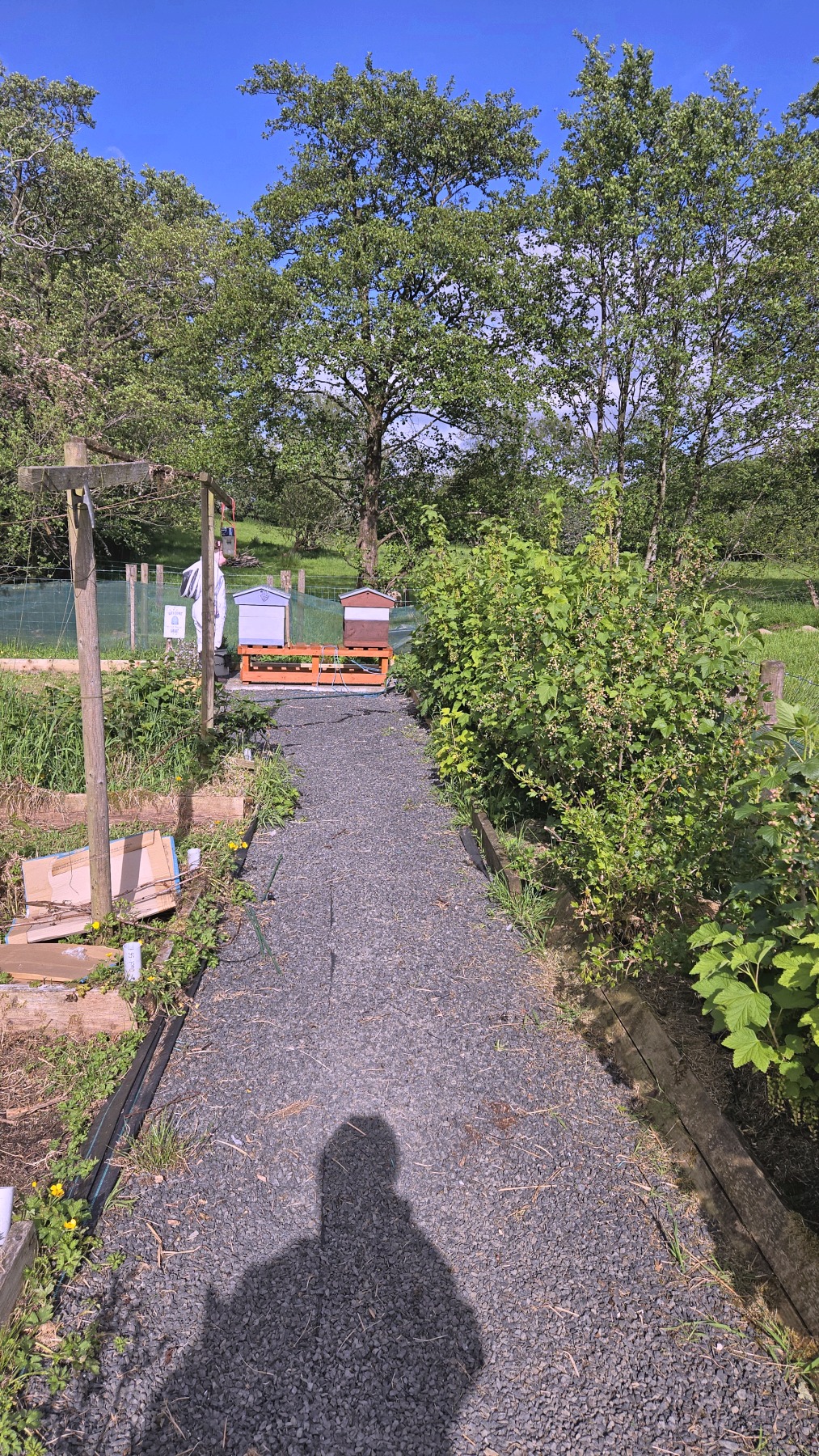
Before I start, a quick note. There are approximately twenty different ways to do everything in beekeeping and every beekeeper you meet will swear theirs is correct. They’re probably all right. This is just our way, our season, our very humbling few weeks. Your mileage may vary. The bees’ mileage definitely will.
Right. Now that’s said.
It Started So Well
It started so well.
Spring. A plan. A proper textbook artificial swarm to stop the main hive swarming. We executed it carefully, the colony responded exactly as expected and we went home feeling like we’d finally got ahead of the bees for once.
Where It Went Wrong
We hadn’t.
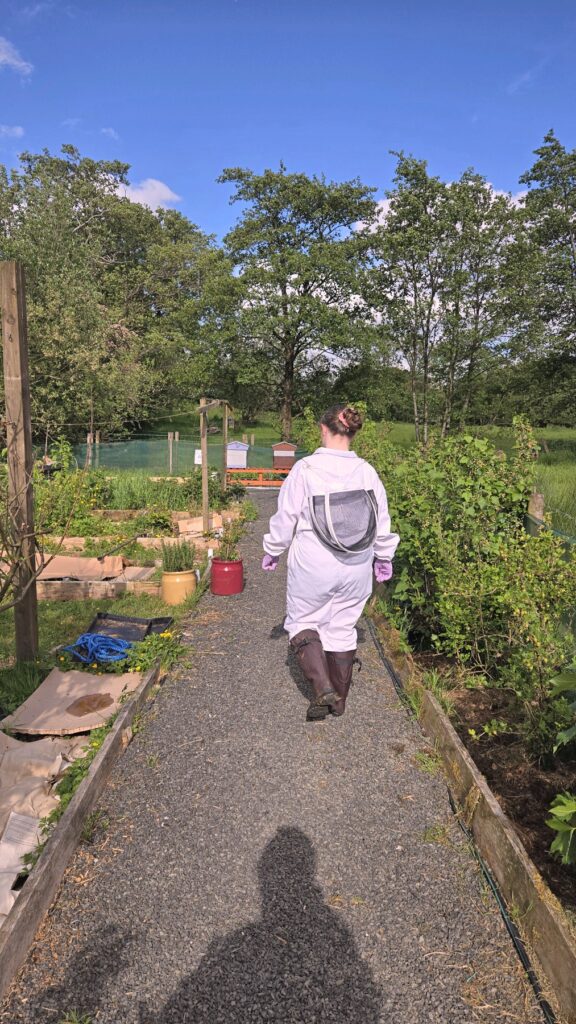
Because the textbook forgot to mention that a colony which has already decided to swarm will swarm anyway. The impulse was already running before we made our move and once bees have made up their minds they are considerably more committed to their plan than we ever are to ours. We arrived at the apiary to find the aftermath. Queen cells capped, brood present, no queen visible.
Someone then mentioned, helpfully but approximately six weeks too late, that we should have put the queen into the nuc during the split rather than leaving her in the main hive.
Good information. Genuinely useful. March would have been better.
The second hive was queenless long enough that the workers had started laying. If you haven’t encountered this before it teaches you a great deal very quickly and none of it is comfortable.
And then we convinced ourselves the main hive was queenless too. Couldn’t find the queen, couldn’t see eggs, couldn’t be certain of anything. What we should have done was place a frame of young eggs in and wait 48 hours. If they build emergency cells on it they’re queenless. If they ignore it something queenright is present. Clean, simple, definitive.
We didn’t have a spare frame and honestly, we panicked.
What the Association Said
This is the part where I have to talk about Randalstown Beekeeping Association.
We are members of RANBKA and across the past few weeks we have tested that membership thoroughly. Phone calls, questions, more questions, probably questions that made it fairly clear how uncertain we were feeling. Every time the advice came back clear, patient and practical. The experienced members looked at our situation and told us we were in a good position.
We looked at our situation and said how. How are we in a good position. How do we fix this.
The answer came in pieces. A mated queen sourced through the association for the queenless hive. Clear instructions on introduction, cage time, fondant release. Advice on reading colony behaviour — on what queenless sounds like versus what calm and purposeful sounds like. On the fact that sometimes queens take a laying pause after disruption and the hive that looks queenless is just a hive that’s had a difficult few weeks and needs a minute.
The Queen Introduction
Here is the thing about clear instructions. They make complete sense when an experienced beekeeper is explaining them at the apiary. And then you go home and it’s just you, and the instructions are still clear in your head but your hands are slower and your confidence is quieter and every decision feels heavier than it did an hour ago.
We stood at the hive alone and made the calls anyway.
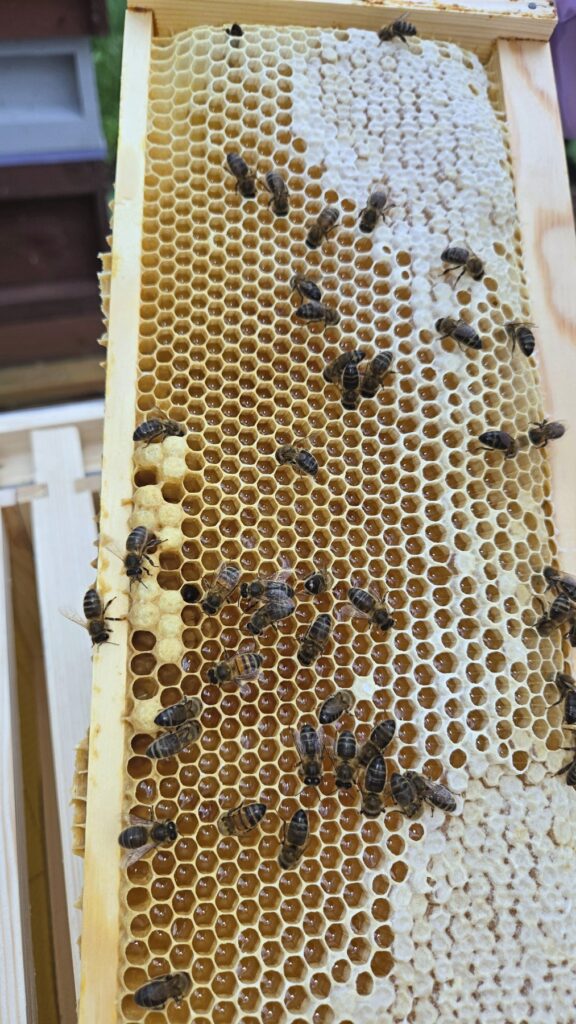
The Randalstown queen went in this week. Cage introduction, attendants present, bees attending calmly rather than balling her — which is your acceptance signal if you’re wondering. She’s behind fondant now, three days to release, the colony will eat through to her in their own time. We don’t rush introductions. The bees know what they’re doing even on the days we’re less certain that we do.
What We Think Is Happening Now
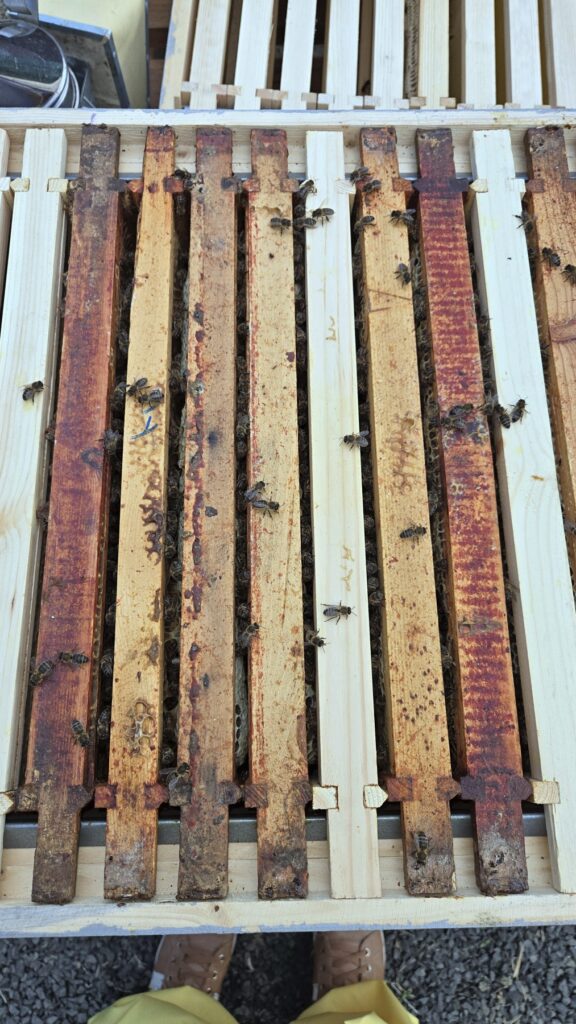
The main hive remains a mystery we’re making peace with. Full of bees, drawing new comb, pulling in honey, calm and purposeful. Not queenless behaviour. Something in there is directing them even if we can’t find her. Our best guess is the clipped queen is still present or a virgin has emerged quietly and is maturing. The test frame will tell us the truth in a couple of weeks.
If the experienced members at Randalstown hadn’t told us what to look for we’d still be standing at the entrance convinced everything had gone wrong.
What We Want You to Take From This
What I want you to take from this, if you take anything, is this. We are not perfect beekeepers. This season has been humbling in ways we didn’t expect. The textbook is useful right up until the bees decide it isn’t. The club is at the end of the phone and we are not too proud to call them. Standing alone at a hive making uncertain decisions is not a sign you’re doing it wrong.
It’s just beekeeping.
Everyone is having a season this year. The bees even reached the news. We are all out here doing our best.
Sophia says the new queen looks like she has good energy. We’re going with that.
Related: the time our queen absconded, and what we learned about introducing a new queen.
Mum and Bee Girl x