
BEE HAPPY HONEY | The Bee Garden | June
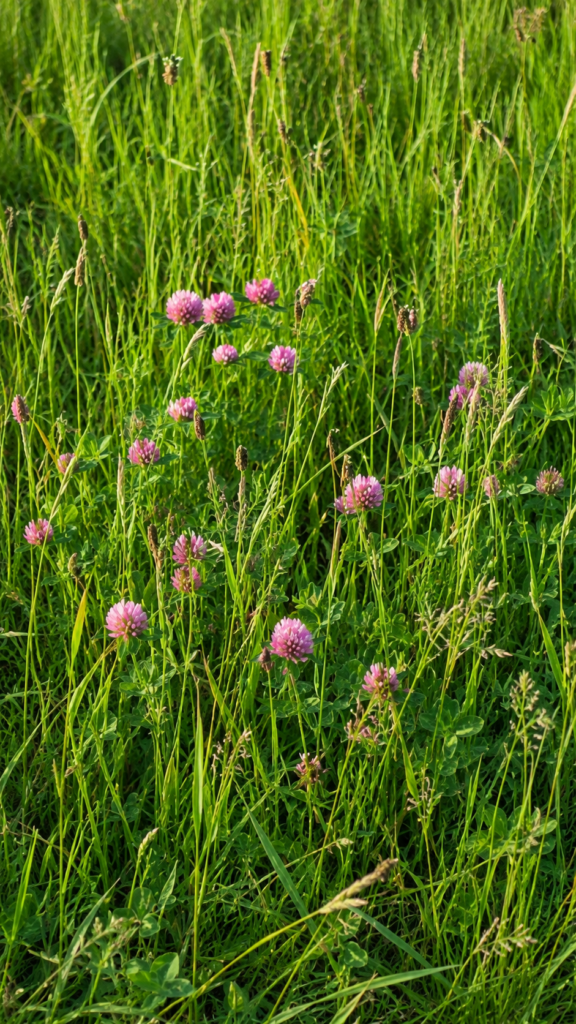
White clover and bramble. Two of the most important bee plants in Northern Ireland are growing in gardens and hedgerows right now, and most people are trying to get rid of them.
There is a moment in early summer when the clover comes into flower in the lawn and you have a choice. You can mow it and have neat short grass. Or you can leave it a bit longer and watch what happens.
What happens is that your bees go absolutely mental for it.
White clover is the backbone of honey production in Ireland. Not lavender, not borage, not any of the plants we enthusiastically put in the trolley at Galgorm. White clover. The thing that grows in every lawn and pasture field in the country, the thing that most gardeners try to eliminate.
Plant One: White Clover
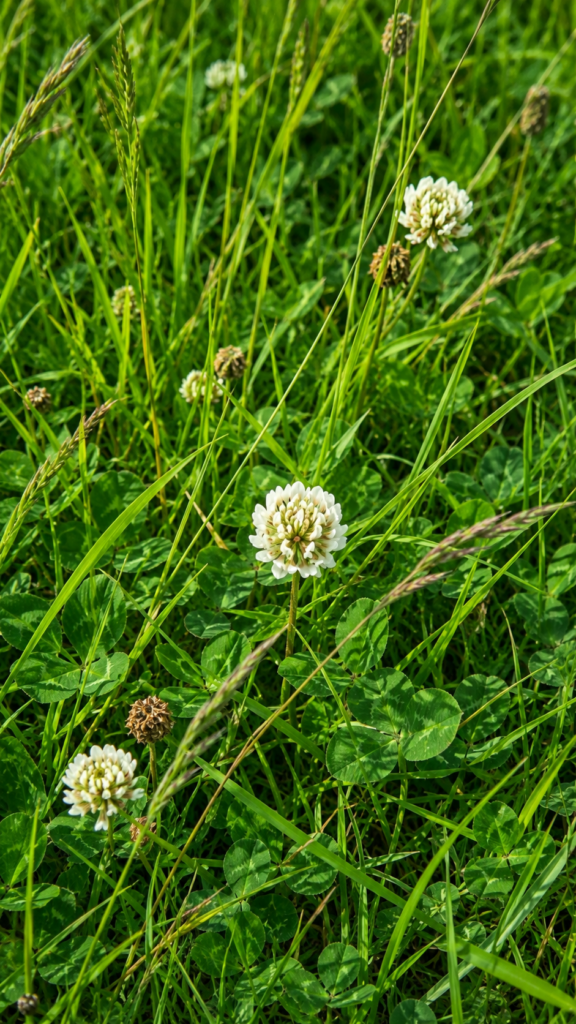
Trifolium repens. It grows almost everywhere in Ireland and Northern Ireland, in lawns, roadsides, field margins, and pastures. It flowers from late May through to August. And it is one of the most productive nectar plants in the entire Irish bee flora.
The Federation of Irish Beekeepers lists white clover as one of the main sources from which Irish beekeepers get genuine honey surpluses. That means harvestable honey, not just colony maintenance. Real crops come from clover.
The nectar is high quality, the pollen is useful, and honey bees work it readily when it is in flower. The honey it produces is classic, light, mild, and excellent. Most of the Irish honey you have ever bought probably has significant clover content.
What can you do? The simplest thing is to stop trying to eliminate it from your lawn. If you have been doing No Mow May, June is the moment to keep that energy going a little longer rather than immediately reaching for the mower. Leave the grass a little longer in June and July, clover flowers better when it is not mown to the ground every week. Consider leaving a patch entirely uncut for a few weeks. That is enough.
If you want to actively plant it, white clover seed is cheap and available everywhere. Scatter it in any rough grass area you have. It will establish itself and return year after year.
A Word About Clover Colours: Not All Clover Is Equal
This is something we did not know when we started, and it matters.
When people say clover they often just mean clover, as if it is all the same plant. It is not. And the differences between varieties matter enormously for honey bees specifically.
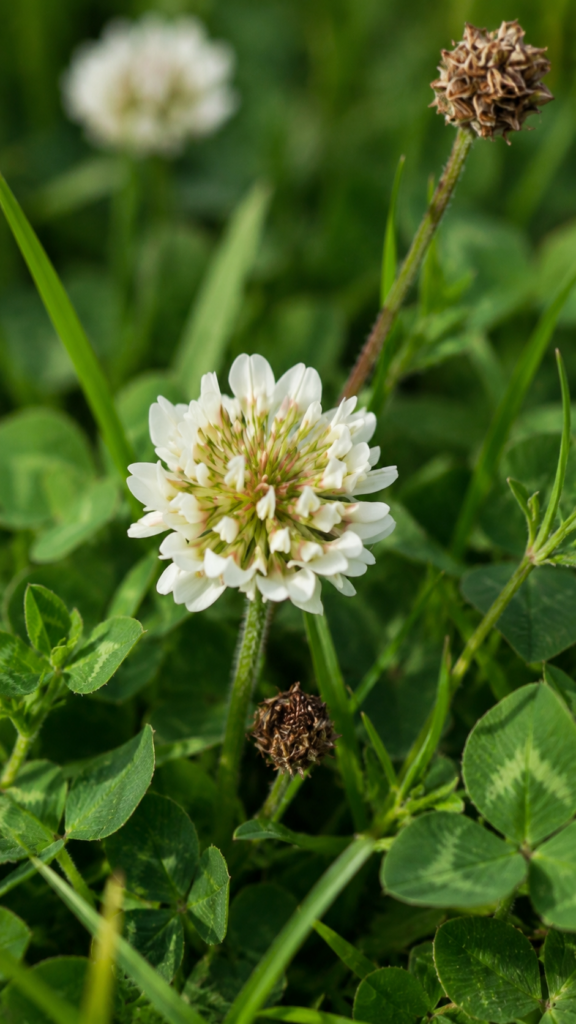
White clover (Trifolium repens) is what we are talking about above. Small, low-growing, open flowers that honey bees can access easily. The backbone of Irish honey production.
Red or pink clover (Trifolium pratense) is a different plant entirely. You see it everywhere in Northern Ireland fields in June and July, tall pink-purple flower heads swaying in the grass. It looks like brilliant bee food. But there is a problem. The individual florets are significantly deeper than a honey bee tongue can reach under normal conditions. Red clover is predominantly pollinated by bumble bees, which have longer tongues. Your honey bees will largely fly straight past a field of red clover and find something more accessible.
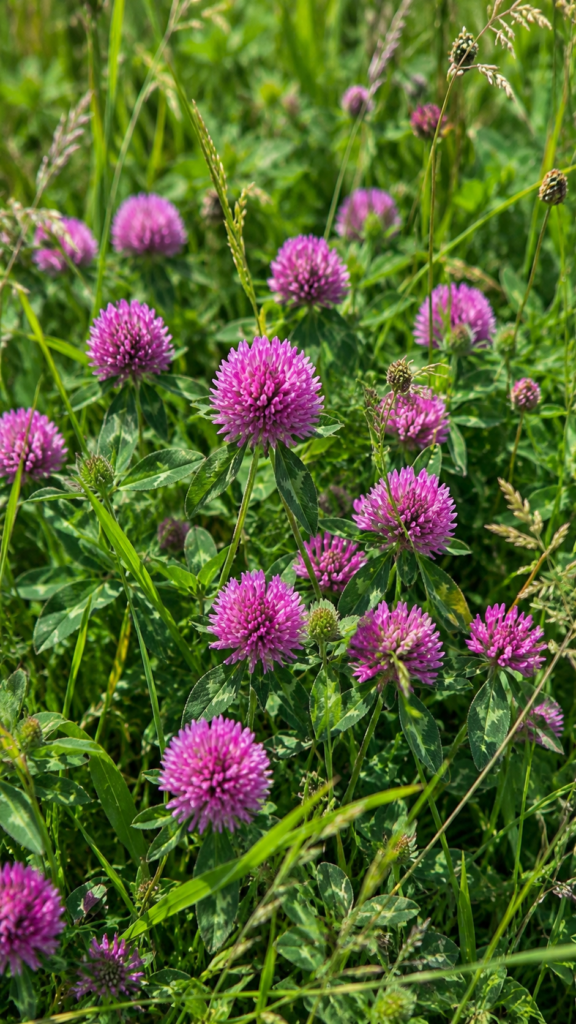
There are exceptions. If red clover is cut and regrows, the new flowers have shorter florets and honey bees can access them. And in very wet conditions when nectar levels are unusually high, honey bees will work it. But as a reliable honey bee plant you can count on, red clover largely does not deliver.
We actually have what we think is a red clover field near us, and until we started researching this series we assumed our bees were all over it. We are going to check properly this summer and report back. It is entirely possible we have been wrong about our own forage for the past year.
The third one worth knowing is crimson clover (Trifolium incarnatum), which confusingly has deep red flower heads despite the name. Although the overall flower is elongated, each individual floret is shorter, and honey bees can access the nectar readily. It is an excellent honey plant and nothing like the red clover confusion would suggest. If you are buying clover seed specifically for bees, crimson clover is worth including.
The shortcut: white clover is almost always the right answer for honey bees. If you are ever told a field or garden has clover and you want to know if it is useful for your colony, check the colour. White clover is the one that matters most.
Plant Two: Bramble
Also known as blackberry. The thing that grows along every hedgerow and field margin in Northern Ireland, that catches on your clothing when you walk past it, that takes over corners of gardens if you give it an inch.
Also one of the most important bee plants in the country.
Bramble flowers from June through to August, sometimes later. It produces nectar steadily throughout that long season. Bees work it heavily when it is in flower and bramble honey is a real thing — the honey from late summer bramble flows is often dark and richly flavoured.
The Irish beekeeping calendar lists bramble alongside clover and heather as one of the plants responsible for genuine honey surpluses in Ireland. That is remarkable for something that most landowners spend time cutting back.
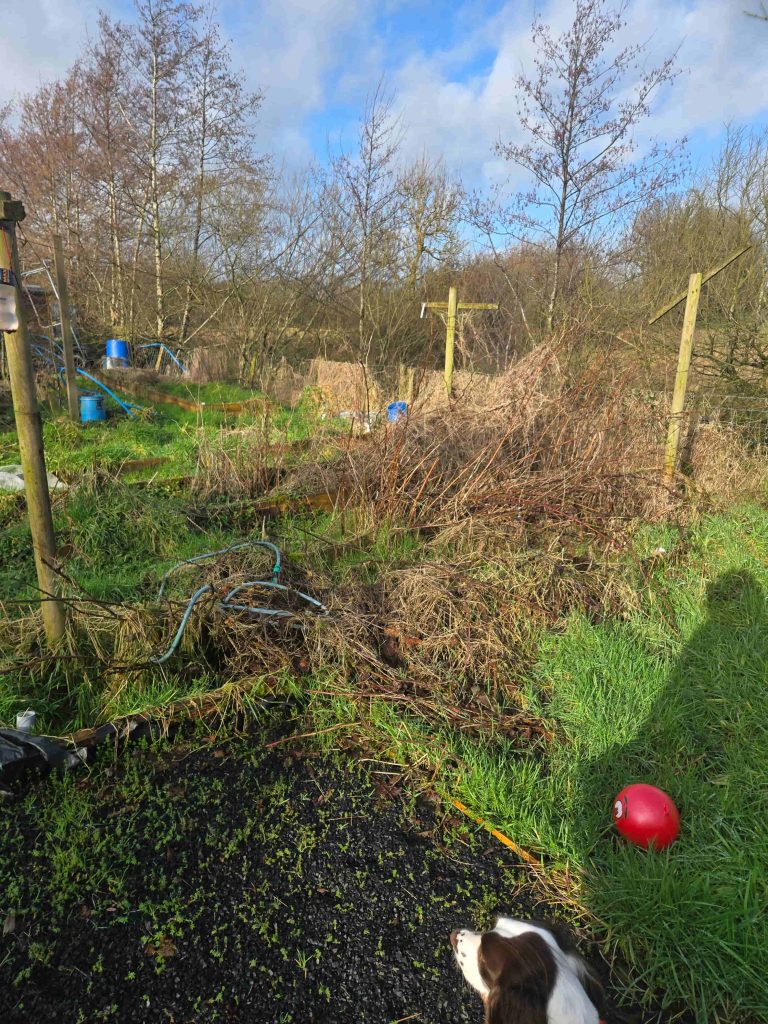
We are not suggesting you let bramble rampage unchecked through the garden. But that rough patch at the back of the plot, the hedgerow boundary, the corner you cannot quite reach with the mower — letting bramble flower there costs you nothing and gives your bees something genuinely valuable.
The June Imposter: Hybrid Tea Roses
Beautiful. Classic. Completely useless for honey bees.
Hybrid tea roses are bred for their flowers — the big perfect blooms that florists love and that grace gardens everywhere. All that breeding has produced flowers with multiple layers of petals that bury the reproductive parts completely. There is no accessible nectar for a bee even if she tries.
You will sometimes see roses labelled as good for pollinators. Some roses genuinely are. Single-flowered wild roses, dog roses, and simple open species roses are worked readily by bees and other insects. The pollen is accessible and the hips provide food for birds in autumn.
The rule applies here just as it does everywhere in this series: if you can see the centre of the flower clearly, a bee probably can too. If it is buried under layers of petals, she cannot.
THE GOOD: White clover. Already in your lawn, free, and one of the best honey plants in Ireland. Stop mowing it quite so often in June and your bees will thank you. And if the field near you looks like clover, check the colour before you assume your bees are on it.
THE BAD: Hybrid tea roses. Gorgeous. Completely shut to bees behind all those petals. Plant a dog rose instead and get the best of everything.
THE STICKY: Bramble. Everyone complains about it. The bees love it. The honey from a good bramble flow is some of the best you will ever taste. Sometimes the weeds are right.
This post is part of The Bee Garden series, where we look at what to plant for honey bees in Northern Ireland, month by month through the year. Next up: July, and the two plants that make bees go absolutely mental.
More bee garden posts: lavender and borage in July and surviving the June gap. See also what the garden centre label did not tell us.
Mum & Bee Girl x