
There is a moment in beekeeping where something you sat in a lecture hall learning about in theory becomes something you are actually doing with your hands. In a room. With a marking pen. And a queen in a tube. And your daughter concentrating so hard she has forgotten to breathe.
We had that moment this week.
But we need to back up a little.
The bit I have not told you
Back in April we went to Jack Silberrad’s queen rearing talk at the UBKA conference and I wrote about it here. I called it Year Three stuff. I said we were not ready. I said maybe someday.
What I did not tell you is that shortly after that I quietly joined a queen rearing group at RANDBKA.
On the quiet. Nothing on the blog. Just me, a room full of experienced beekeepers, a grafting tool, and approximately zero confidence.
Grafting, if you have not come across it yet, is the process of taking a larva that is less than 24 hours old so tiny you can barely see it and transferring it from a worker cell into a queen cup. The idea is that if you move it before it is too old, nurse bees in a queenless colony will feed it royal jelly and raise it as a queen instead of a worker. The larva does not know it is going to be a queen. The beekeeper is essentially intercepting fate.
It sounds straightforward when someone explains it. It is not straightforward when you are doing it.
We started with a frame of twenty. Twenty carefully selected larvae, transferred as gently as we could manage, placed into a queenless colony and left to the bees to finish.
One made it.
One.
Meet Clover
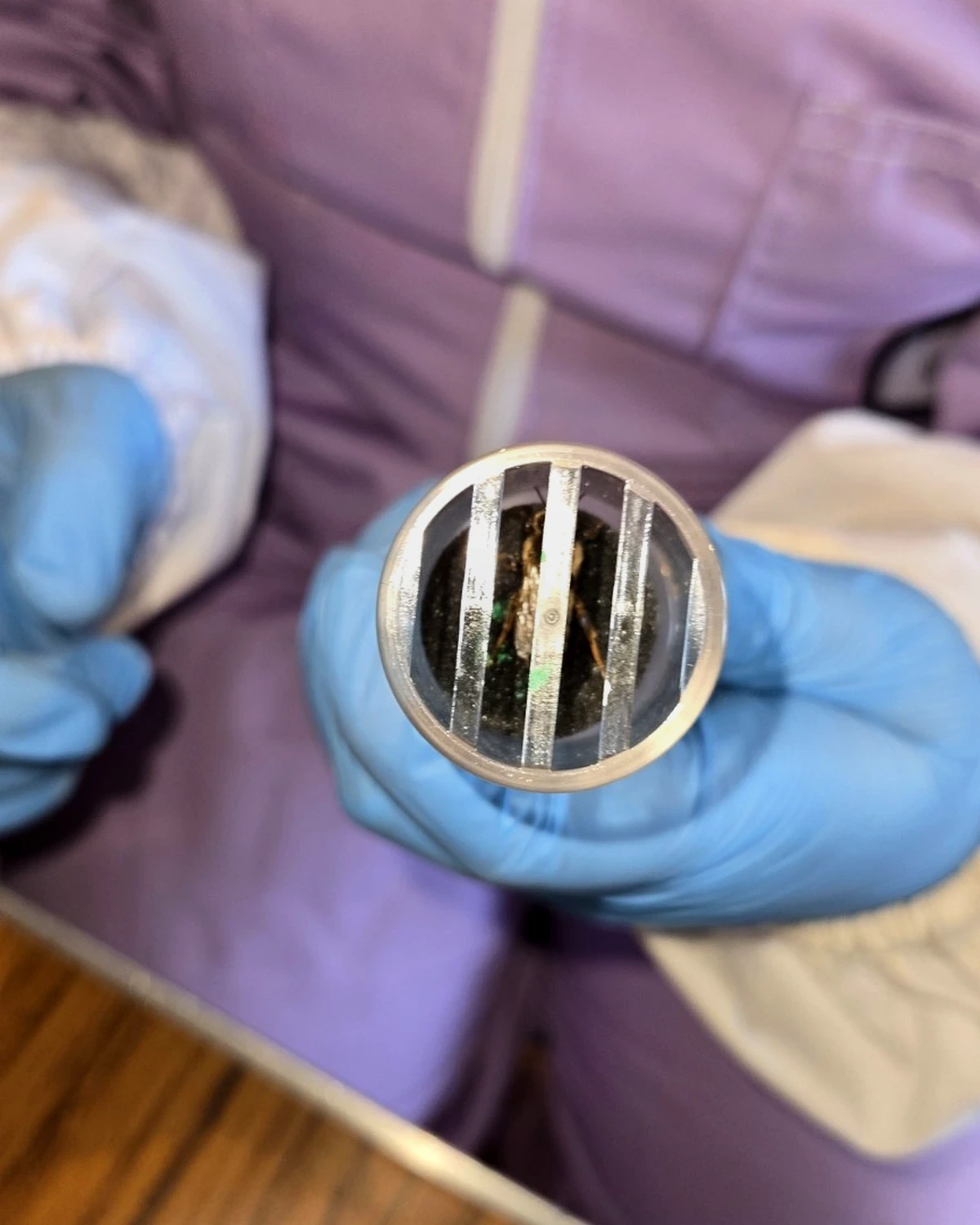
Officially her designation is 2026-01-002. That is the year, the apiary number, the hive number. That is what goes in the register.
Bee Girl named her Clover approximately four seconds after being handed the marking tube.
Here is the thing about Bee Girl and this queen rearing session. She knew we were going to a practical at the association. She knew there would be a queen to mark. What she did not fully know was that the queen she was about to mark was the one larva out of twenty that had made it. That her mum had been quietly sitting in a room learning to graft for weeks. That this particular queen existed because of a very small tool, a very steady hand, and a considerable amount of luck.
She found out when I told her on the way home.
She went very quiet for a moment, which if you know Bee Girl is basically the equivalent of anyone else bursting into tears.
Then she said she already knew Clover was special.
The practical session
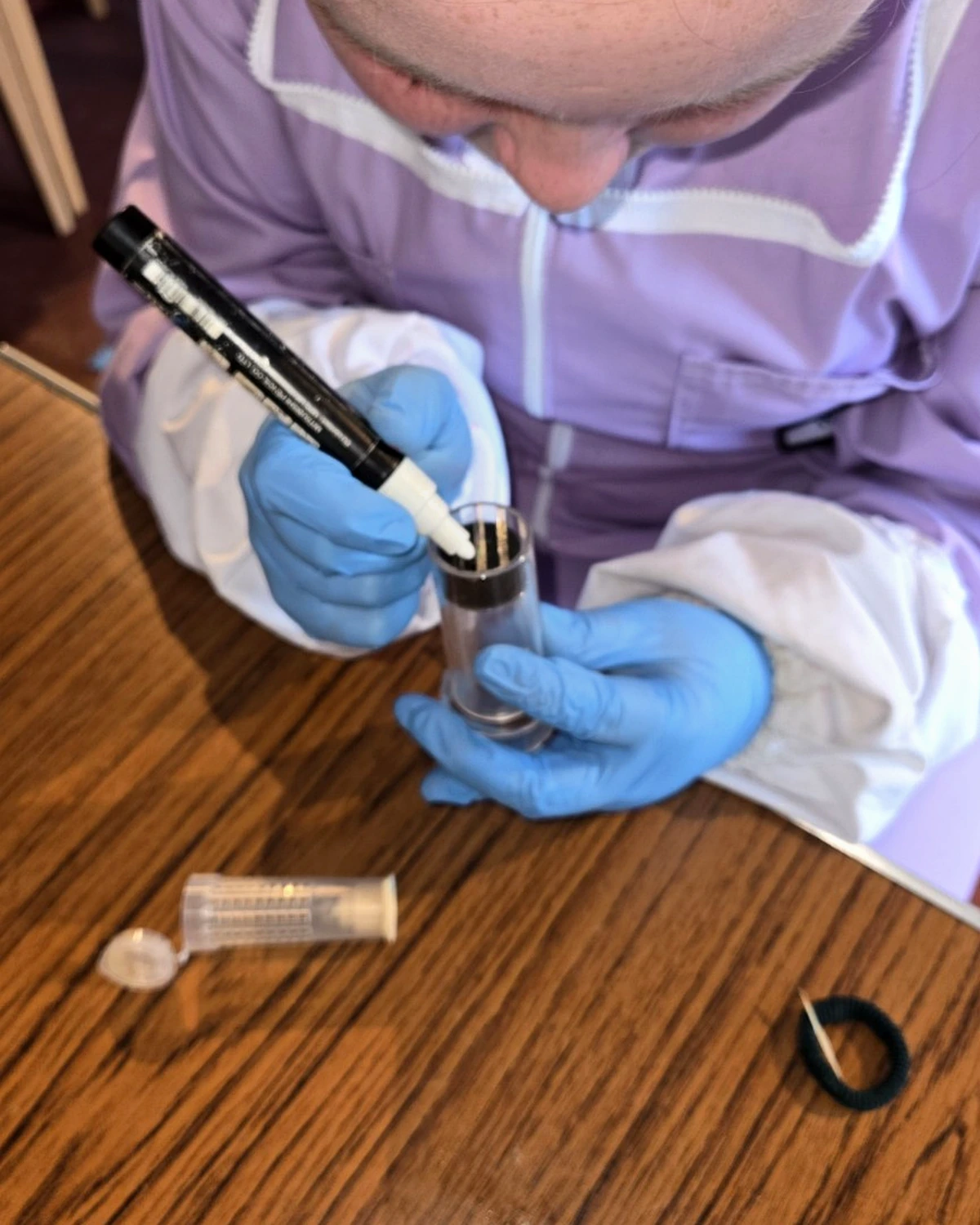
Our mentors at RANDBKA run these sessions with the kind of calm patience that suggests they have watched many nervous beginners drop things, squint at things, and ask the same question four times. We are exactly that kind of beginner.
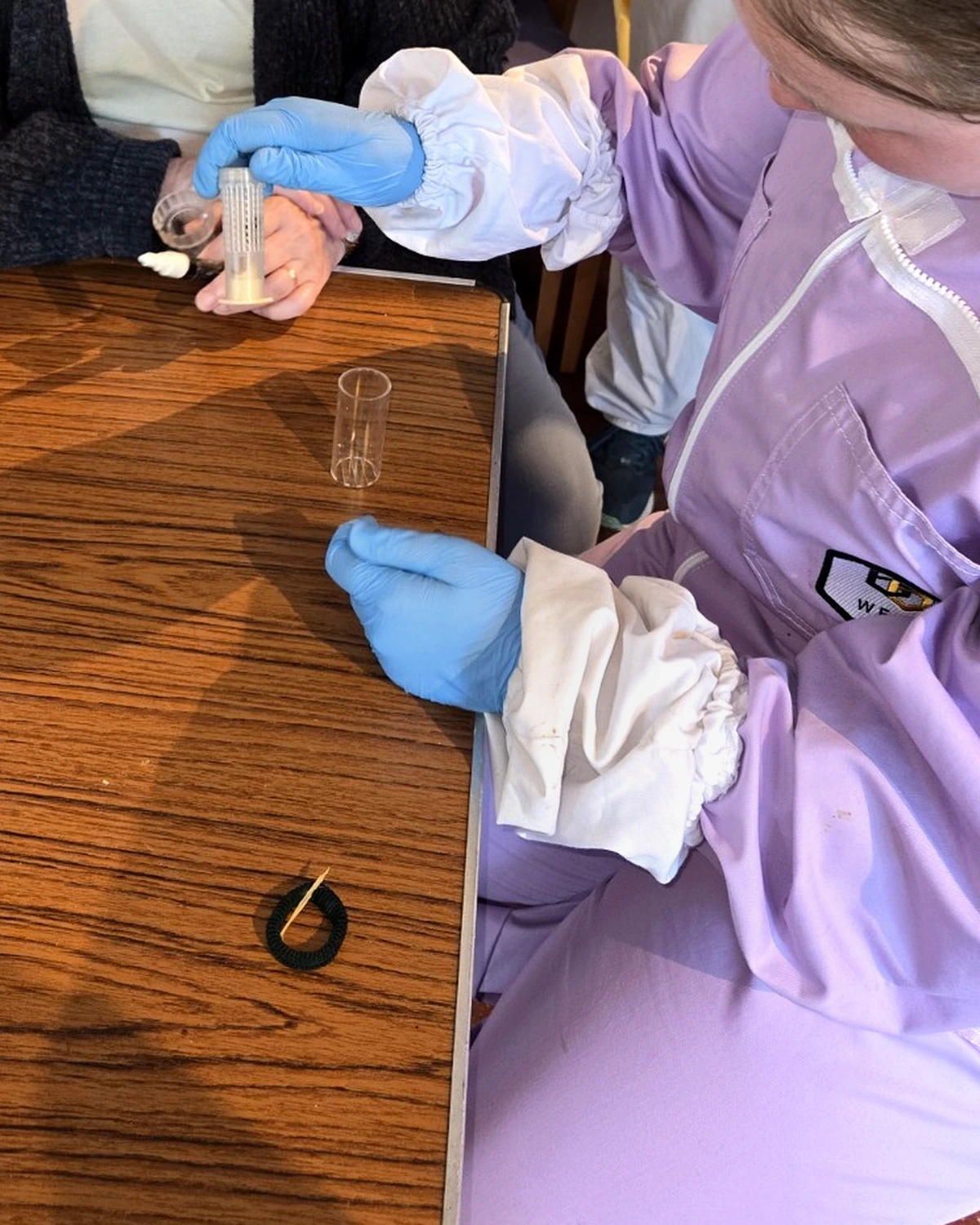
Bee Girl got her hands on the queen catcher tube first. The idea is simple enough. You position the open end over the queen, she walks in, you cap it. In practice it requires stillness and confidence in equal measure, and Bee Girl had both.
Then came the marking pen.
Before you mark your actual queen you practise on drones. The little yellow practice box on the table, the drones walking around inside, the pen poised. Get the technique right before you go near the queen. Bee Girl listened, watched once, and did it.
Then Clover.
White. Because 2026 queens are marked white. The colour system runs through five colours on a five year cycle and the way to remember the order is a mnemonic one of our mentors taught us at the session.
Will You Rear Good Bees.
White. Yellow. Red. Green. Blue.
Years ending in 1 or 6 are white. Our existing queen, the blue 2025 queen who has been with us since the beginning, was marked blue for a year ending in 5. Clover is white. When Bee Girl marks her first queen someday, the colour will depend on the year. That is a conversation for another time.
(Reader, we had that conversation approximately two paragraphs later. We are not good at waiting.)
Bee Girl put the white dot on Clover’s thorax with the focus of someone defusing something. She did not waver. She did not rush. She got it right first time.
I did not say anything about the one from twenty. I just watched.
Where Clover is now
Clover is in a nuc.
A mating nuc is a small colony, just enough bees to keep a virgin or newly mated queen warm, fed, and protected while she does what she needs to do. She needs to take her mating flights, meet the drones, come back, and begin laying. That takes roughly two weeks depending on the weather, and if you have been following along with our weather lately you will understand why we are watching the forecast with the same anxious energy we bring to everything beekeeping related.
In two weeks, if everything goes to plan, Clover goes into our queenless hive.
That hive has been waiting since we did the split. It has brood, it has stores, it has nurse bees. What it does not have is a queen. It has been waiting patiently, in the way that bees wait for things, which is to say by getting on with everything else and not worrying about it the way their beekeeper is worrying about it.
Clover is the answer to that waiting.
One larva from twenty. Marked white. Named by an eleven year old who had no idea what she was holding.
The colour on our hive
When Clover goes in she will join a colony that was headed by a blue 2025 queen. That queen is now in the queenright half of our split, still laying, still going. Blue and white. Two queens, two hives, one very steep learning curve.
If you are new to beekeeping and the colour system is new to you, here is the short version. The international queen marking system uses five colours cycling across years. White, yellow, red, green, blue, then back to white. It is how you know at a glance how old your queen is when you find her. A blue queen is a 2025 queen. A white queen is 2026. A yellow queen next year will be 2027.
Will You Rear Good Bees.
Write it on your hive tool. Tattoo it somewhere sensible. It is the most useful five words in beekeeping.
And yes, we know we said that was a conversation for another time. We said queen rearing was Year Three stuff as well. It is Year Two. It is May. We are apparently not great at waiting.
What this means for the split plan
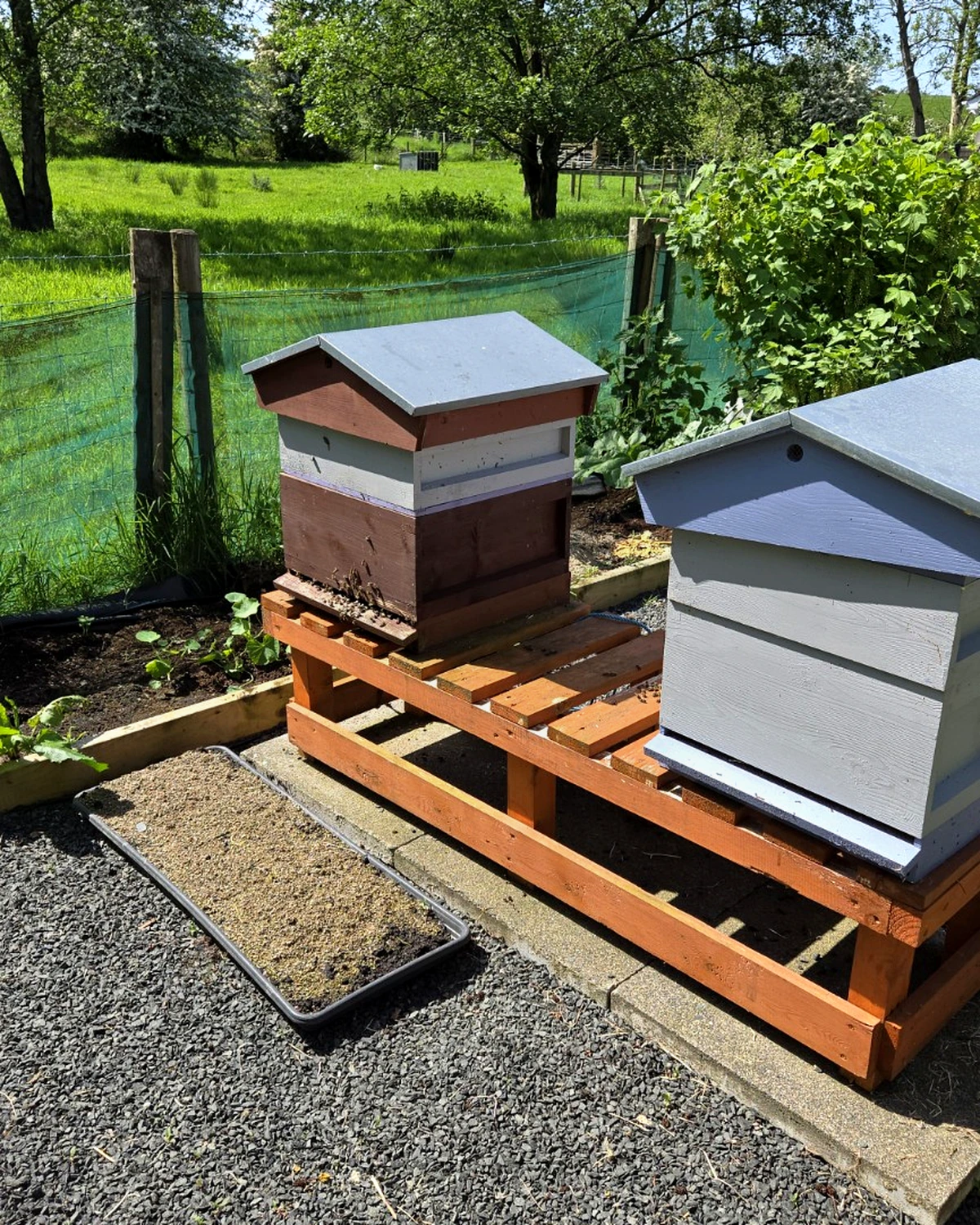
Back in spring we started a six stage plan toward a first split. We documented the queen crossing up into the top box. We put the excluder in on a cold May morning because it was the right small intervention on the wrong day for a full inspection. We did the split.
And now we have a grafted queen, in a nuc, two weeks from going home.
We sat in a lecture in April and said this was Year Three stuff.
It is May. It is Year Two.
Jack, we owe you an apology and also possibly a thank you.
The Good, The Bad, and The Sticky
The Good: One queen from twenty grafting attempts. Bee Girl marked her without flinching. Clover is in the nuc, mating flights pending, two weeks from the queenless hive. The name means luck. We are going to need it.
The Bad: One from twenty. We are choosing to frame this as a success rather than dwell on the nineteen. Grafting is hard. Anyone who tells you otherwise has either been doing it for years or is being very generous with the truth.
The Sticky: Telling Bee Girl on the way home. Watching her go quiet. Hearing her say she already knew Clover was special. That one is going to stay with us for a while.
Mum & Bee Girl x