
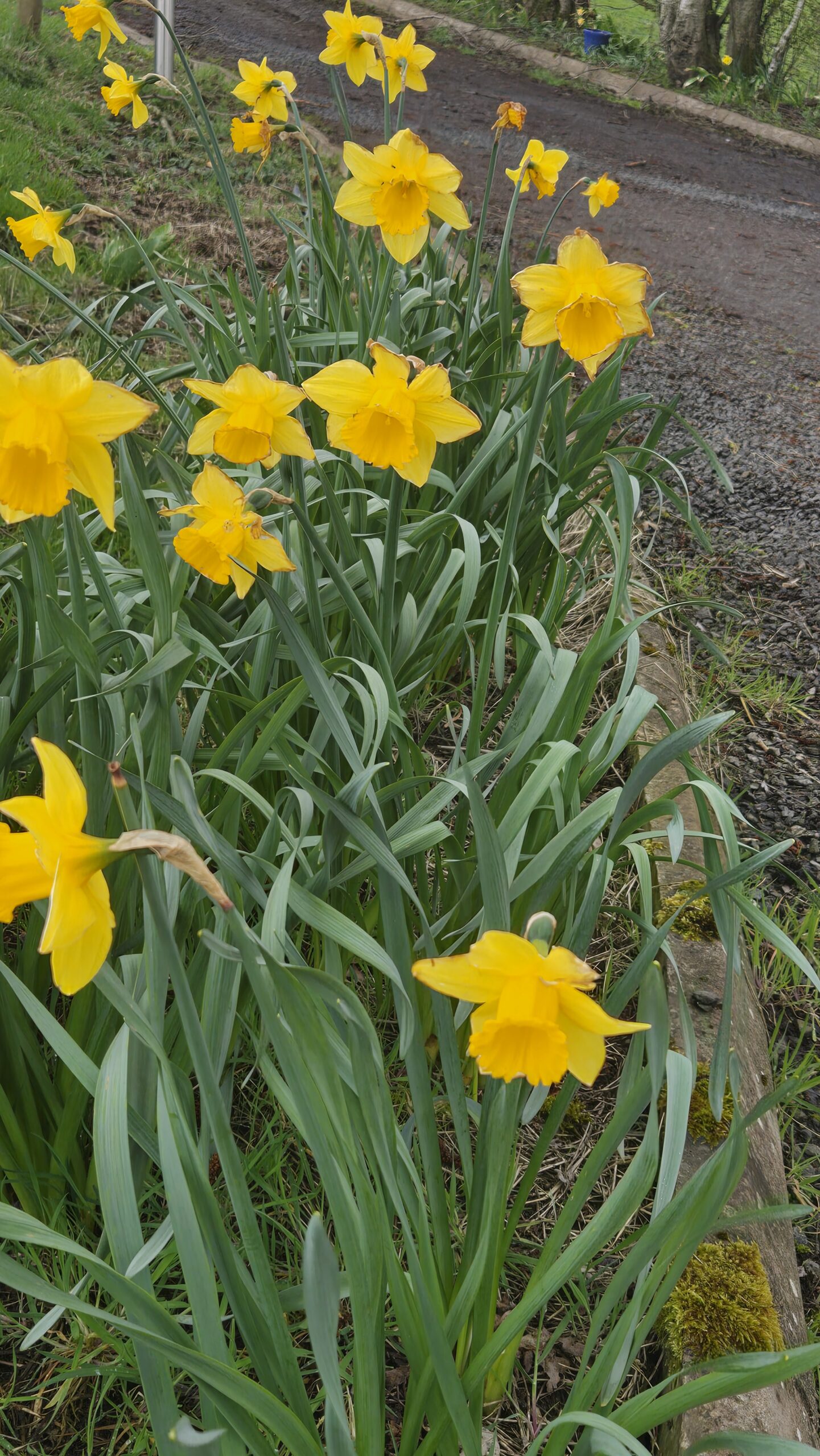
It is hailing outside. Not drizzling. Not “a bit damp.” Hailing. In April. In Northern Ireland.
And somewhere at the bottom of the garden, approximately 50,000 bees who did not ask for any of this are sitting in their box, perfectly warm, perfectly fine, completely unbothered by the weather in the way that only bees and golden retrievers manage to be.
We, on the other hand, are staring out the window.
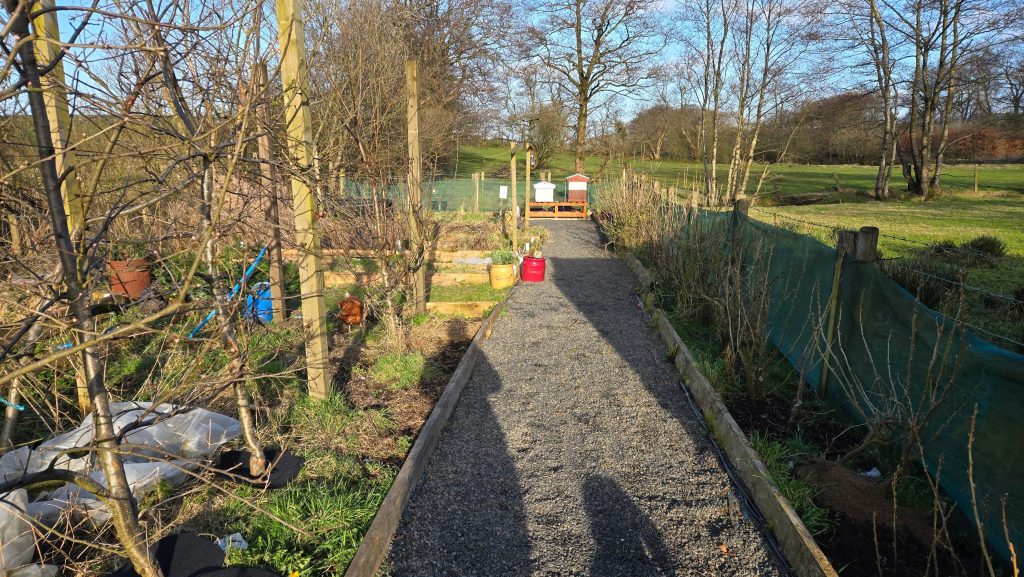
We want to get in there. We are absolutely desperate to get in there. Spring is technically here, we have a list of things to check longer than Bee Girl’s Christmas list, and every beekeeping account we follow online seems to be posting photos of beautiful frames in glorious sunshine and writing things like “eight frames of brood, supers going on this weekend!”
Meanwhile, it is hailing.
So today we are not opening the hive. And it is not because we are being lazy. It is because opening a hive in these conditions is genuinely not a good idea, and we thought it was worth explaining why, mostly because we had to explain it to ourselves first.
What Temperature Are We Actually Waiting For?
This is where it gets a tiny bit confusing, because everyone online seems to have a slightly different number.
The National Bee Unit says colonies should not be inspected at temperatures lower than 10 degrees, and can only be opened briefly between 10 and 14 degrees. For a proper first spring inspection, the accepted guidance is above 14 degrees Celsius, on a warm sunny day with low wind, around midday when the bees are most active.
We are at 8 degrees with hailstones. So. No.
The reason the number matters is not about us being comfortable in our bee suits. It is about what is happening inside the hive when you open it in the cold.
The Brood Situation
Here is the thing about brood. The eggs, larvae, and developing bees in those wax cells need to be kept at around 35 degrees Celsius. The adult bees generate that heat themselves, as a colony, by clustering together and vibrating their wing muscles. They are essentially a living, breathing heated blanket wrapped around the next generation.
When you pry open a hive in cold weather, you break the propolis seals the bees have spent weeks carefully building. In cold weather that propolis is brittle, and the bees cannot easily repair those breaks. A new persistent draft can be a serious problem for a spring colony that is only just getting going.
And if the brood chills, even briefly, the loss of those developing bees can fatally weaken the colony, preventing it from building up its population in time for the season.
Now, experienced beekeepers will tell you that a quick look on a borderline day, if you are efficient, is probably fine. Chilled brood is most likely to happen in spring when late frosts force the bees to cluster and abandon the edges of the brood nest, rather than from a careful inspection by a beekeeper who knows what they are doing.
We are beginners. We are not quick yet. We are the beekeeping equivalent of someone who has just passed their driving test being handed the keys to a lorry in a blizzard. This is not the moment for borderline calls.
The Social Media Problem
We want to be honest with you about something. Those posts from beekeepers showing eight frames of brood in April? They might be in Kent. Or France. Or somewhere with an entirely different climate to a hillside in Northern Ireland in an April hailstorm.
It must be particularly confusing for beekeepers starting their first spring, seeing posts about supers going on without any reference to local conditions or even location. Your neighbours’ bees and your bees are living in completely different microclimates even if you can see each other’s gardens. Comparing your April to someone else’s April on the internet is a recipe for making bad decisions about a living colony.
My granny had a saying for this, though she applied it to winter woolies rather than beehives. “Ne’er cast a clout till May is out.”
A clout, in old English, is an item of clothing. Something you throw on quickly. A scarf, a shawl, an extra layer. And “May” most likely means the May flower, the hawthorn blossom, which only opens when the last of the cold is genuinely done.
The clever thing about reading the hawthorn rather than the calendar is that the tree blooms earlier in southeast England than it does up here. It is not looking at what the beekeeping accounts in Surrey are posting. It is reading your actual local climate and reporting back honestly.
Our hawthorn is not out yet. Neither is the hive.

What the Trees Know
While we are on the subject of old country wisdom, my family had another one. Oak before ash, in for a splash. Ash before oak, in for a soak.
Dating back to the 16th century in the British Isles, it was traditionally used to predict whether the summer would be wet or dry based on which tree came into leaf first in spring. Oak timing is mainly driven by temperature, while ash responds more to daylight hours. So if spring arrives early and warm, oak tends to come first. If cold conditions persist into April, ash tends to have the advantage.
Which is a very polite scientific way of saying: if your spring is still cold and grey in April, the ash might be winning. And you might want to keep your coat on a bit longer.
And your beesuit.
Here is the bit that caught our attention though. Apparently for every one degree rise in spring temperature, oak gains a four day head start over ash. Which means the old rhyme is becoming less reliable as springs get warmer, and the fact that it is becoming less reliable is itself telling you something about how much the climate has shifted even in a single generation.
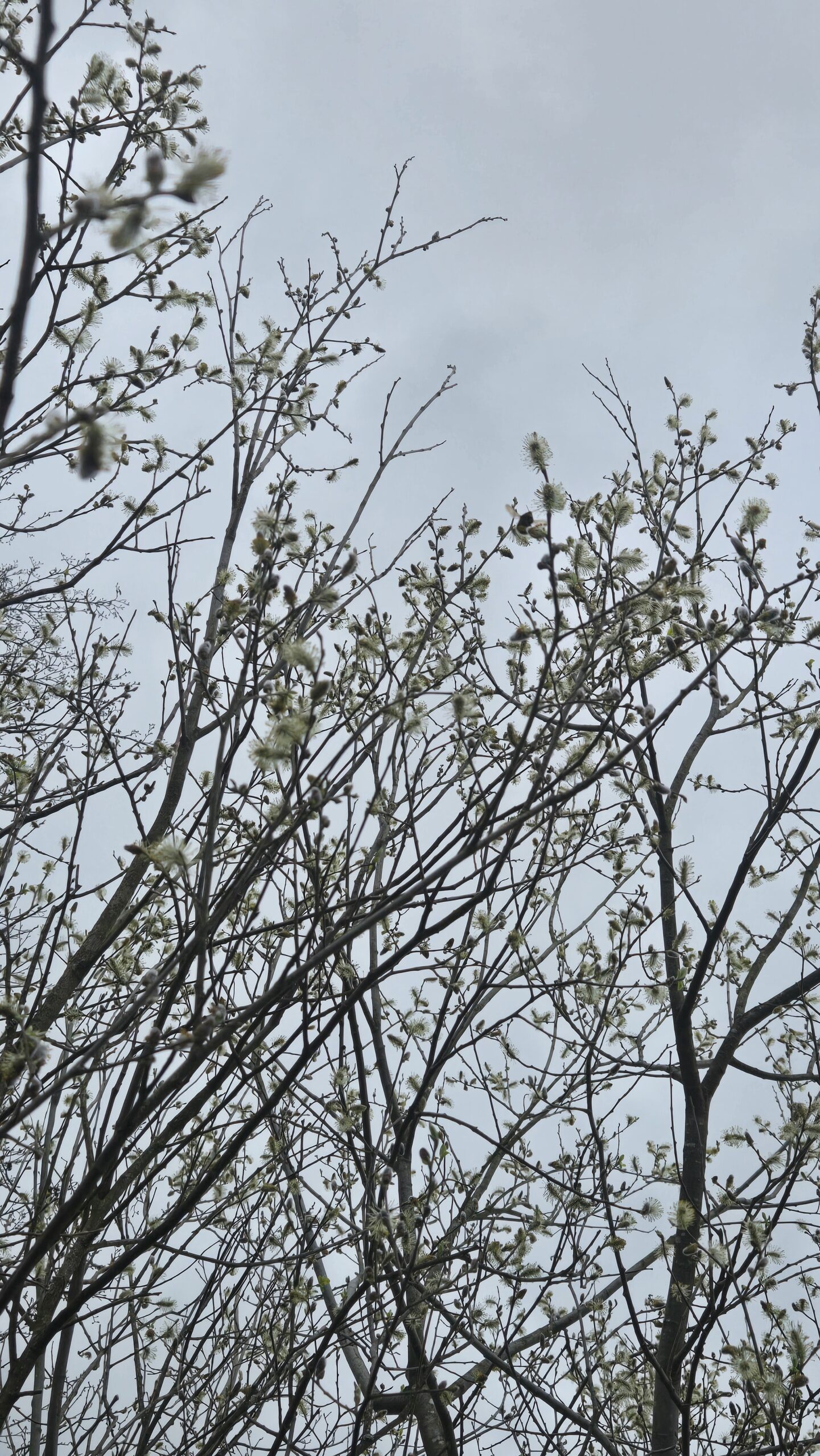
We have not checked our trees yet. We will report back.
What We ARE Doing Instead
We are not completely ignoring the hive. There is quite a lot you can do without lifting the lid.
We have been watching the entrance on the warmer days this week. There has been activity. Bees coming and going, a few carrying pollen in, which is a genuinely exciting sign. Pollen coming in means there is brood inside to feed. The colony is alive and busy and doing exactly what it should be doing.
We also finally took the mouse guard off. The risk of uninvited furry lodgers has passed now that the weather is warming and the colony is building up, and the bees need a clear run in and out as the numbers grow. One job ticked off. We are choosing to feel very good about this.
And while we are on the subject of things we are quietly proud of: the lemonade bottle.
Our hive faces east, which is great for catching the morning sun and warming the colony up early. What it is less great for is the driving rain that comes in sideways from the west and straight through the ventilation vents. Mid winter we lifted the roof and found the top board was soaking wet. Not ideal.
The solution was the bottom of a plastic lemonade bottle, cut open at the base and fitted over the entrance. Rain cannot drive in sideways. Air can still get in from below. The bees are completely unbothered by it and have been flying in and out around it all winter without a second thought.
Cost: nothing. Time to make: about four minutes. Beekeeper satisfaction: extremely high. We are not taking questions.
When WILL We Go In?
We are watching the forecast. We need a dry day, ideally some sunshine, above 14 degrees, low wind, and a window of at least an hour around midday. When that combination appears, we will be in that garden before the weather changes its mind.
And then we will have approximately a hundred things to check, a queen to find and finally mark, and the whole spring season to document properly.
Until then, we are doing what the bees are doing. And what the hawthorn is doing. And what my granny always did.
Waiting it out. Watching for the signs. Trusting that the season will come when it is ready, and not a moment before.
(The weather app, however, is getting refreshed approximately every twenty minutes. We will not say which one of us is doing that.)
The Good, the Bad, and the Sticky
The Good: Bees are flying on the warmer days and pollen is going in. Something is very much alive in there and we cannot wait to find out exactly what.
The Bad: April hailstorms in Northern Ireland are not a surprise but they are still personally offensive when you are desperate to open a hive.
The Sticky: The mouse guard is off. The hawthorn is not out yet. We are, as my granny would say, keeping our clouts firmly on.
Mum and Bee Girl x
Related: what a full hive inspection looks like and the weekend beekeeper’s dilemma.