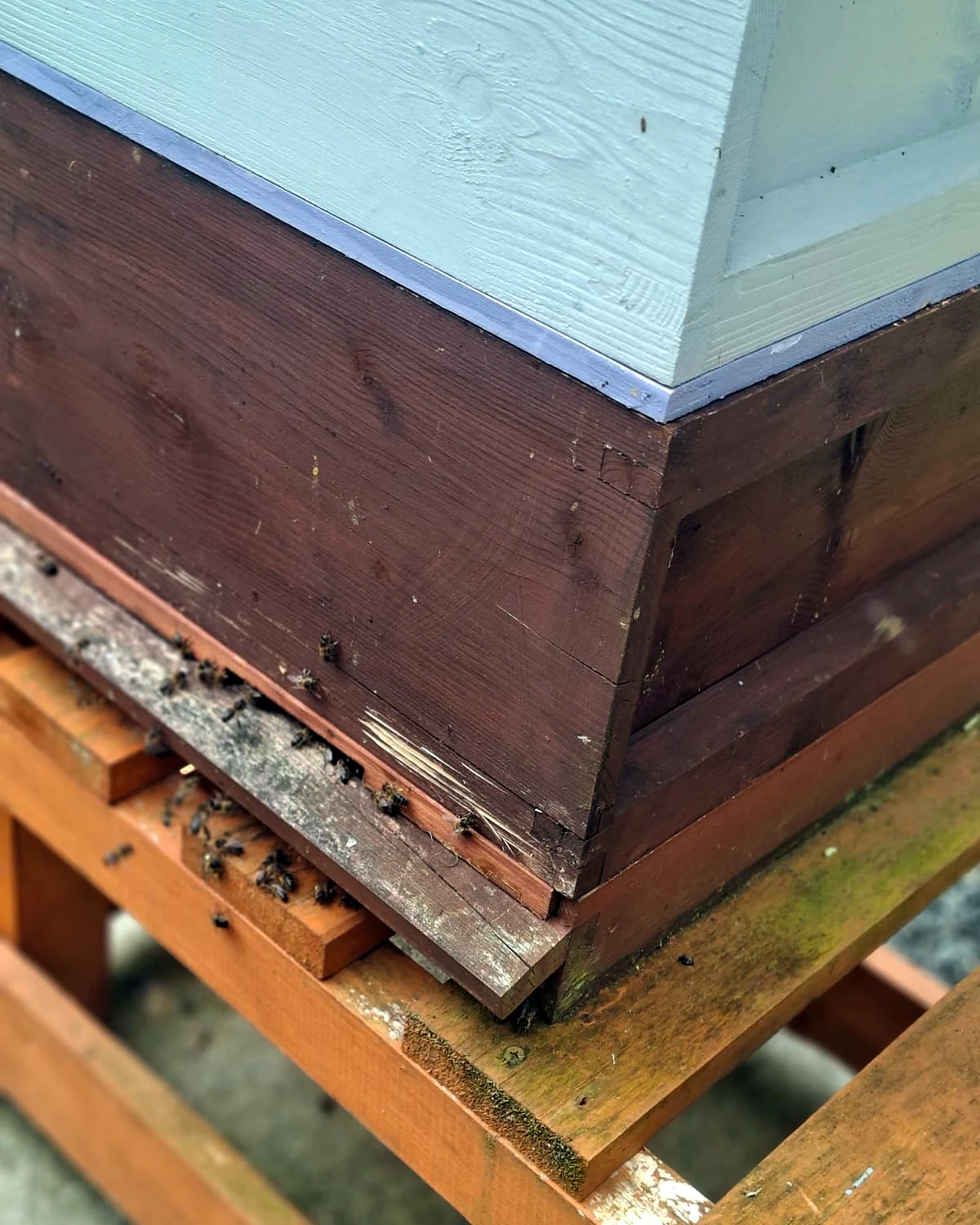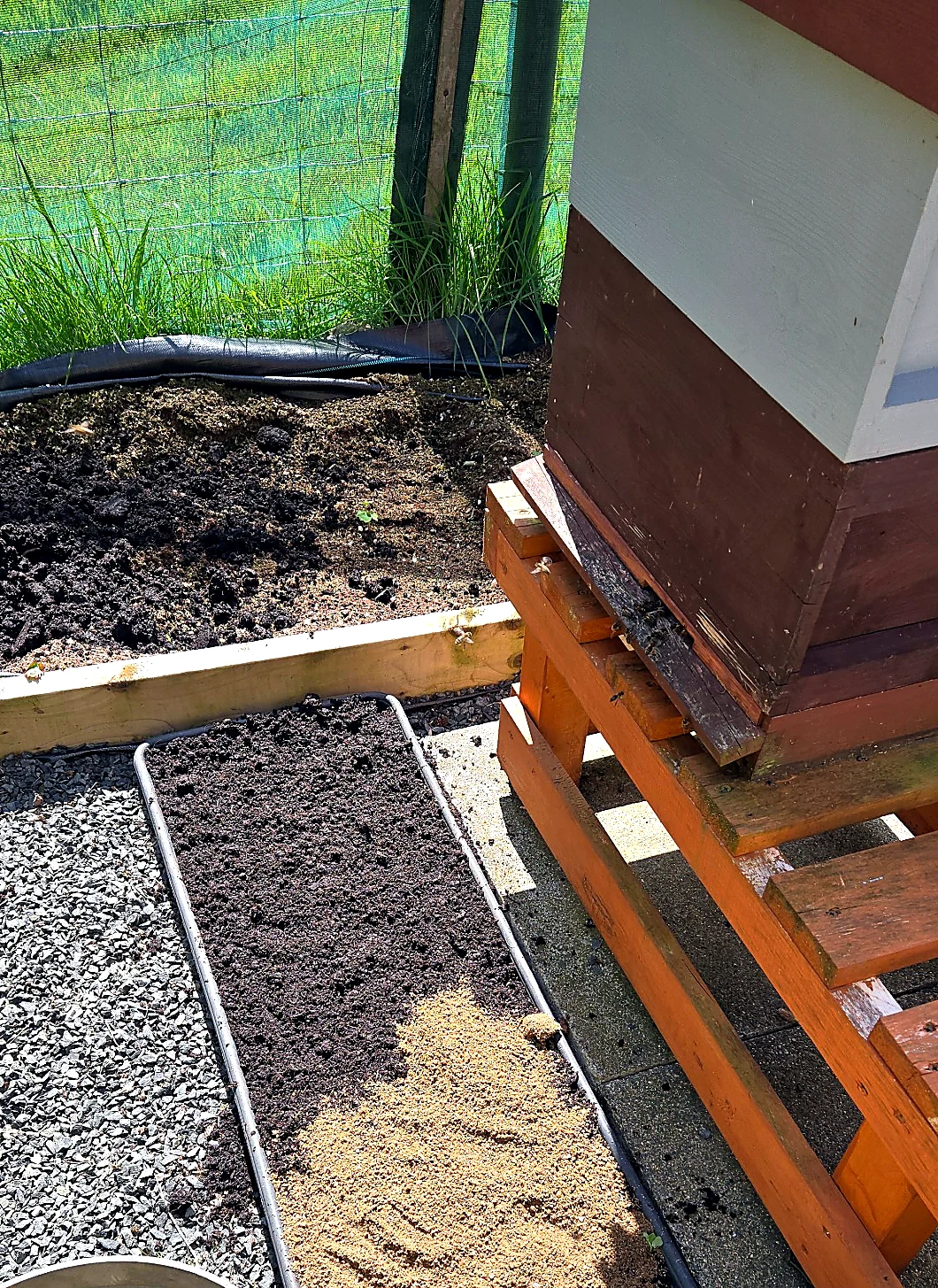
The weather these past few weeks has been miserable. Showers, thunder, cold snaps dropping into single digits when May should be settling into the teens. And like a lot of beekeepers I know, weekends are realistically my only window to get into the hive properly. The girls don’t care about my Monday to Friday. The weather doesn’t either.
So today I had a decision to make, and it wasn’t an ideal one.
Swarming season is upon us. The colony came through winter strong, the double brood box is packed, the bees are flying even in 9 to 10 degrees which says a lot about good native stock. A proper inspection was overdue. But the forecast was thundery showers and the ambient temperature when I lifted the roof was sitting around 9, dropping toward 10 at best. That is not inspection weather.
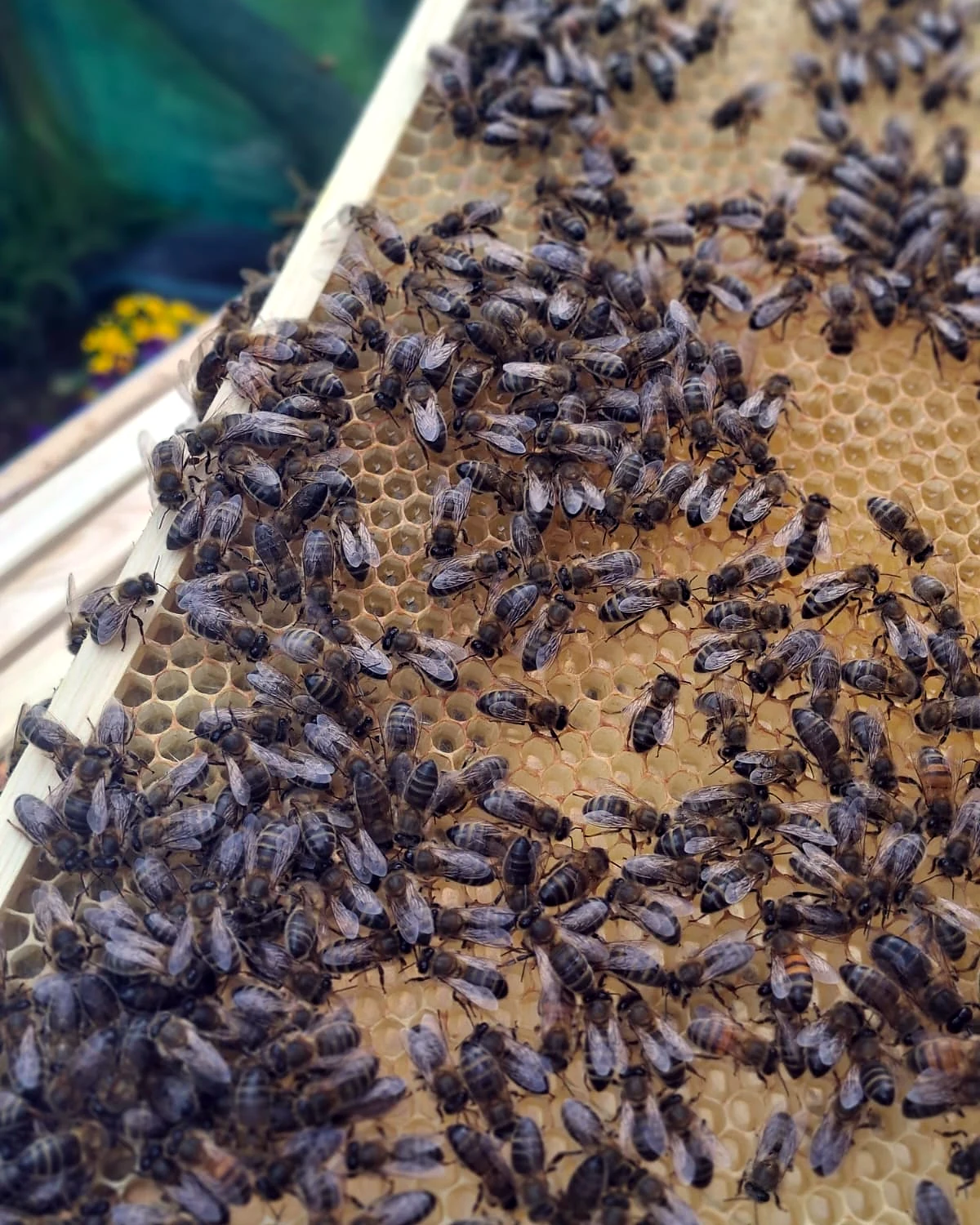
Here is the problem. Brood needs to be kept at around 35 degrees by the nurse bees. When you lift a frame out at 10 degrees ambient, that frame is losing heat fast. Capped brood is a bit more forgiving, but eggs and young larvae and developing pupae can be chilled in minutes. Chilled brood damage does not always show up straight away. You might see deformed wings at emergence, shortened worker lifespans, or pupae that never make it out of the cell at all. By the time you notice, the damage was done weeks earlier on a cold inspection day.
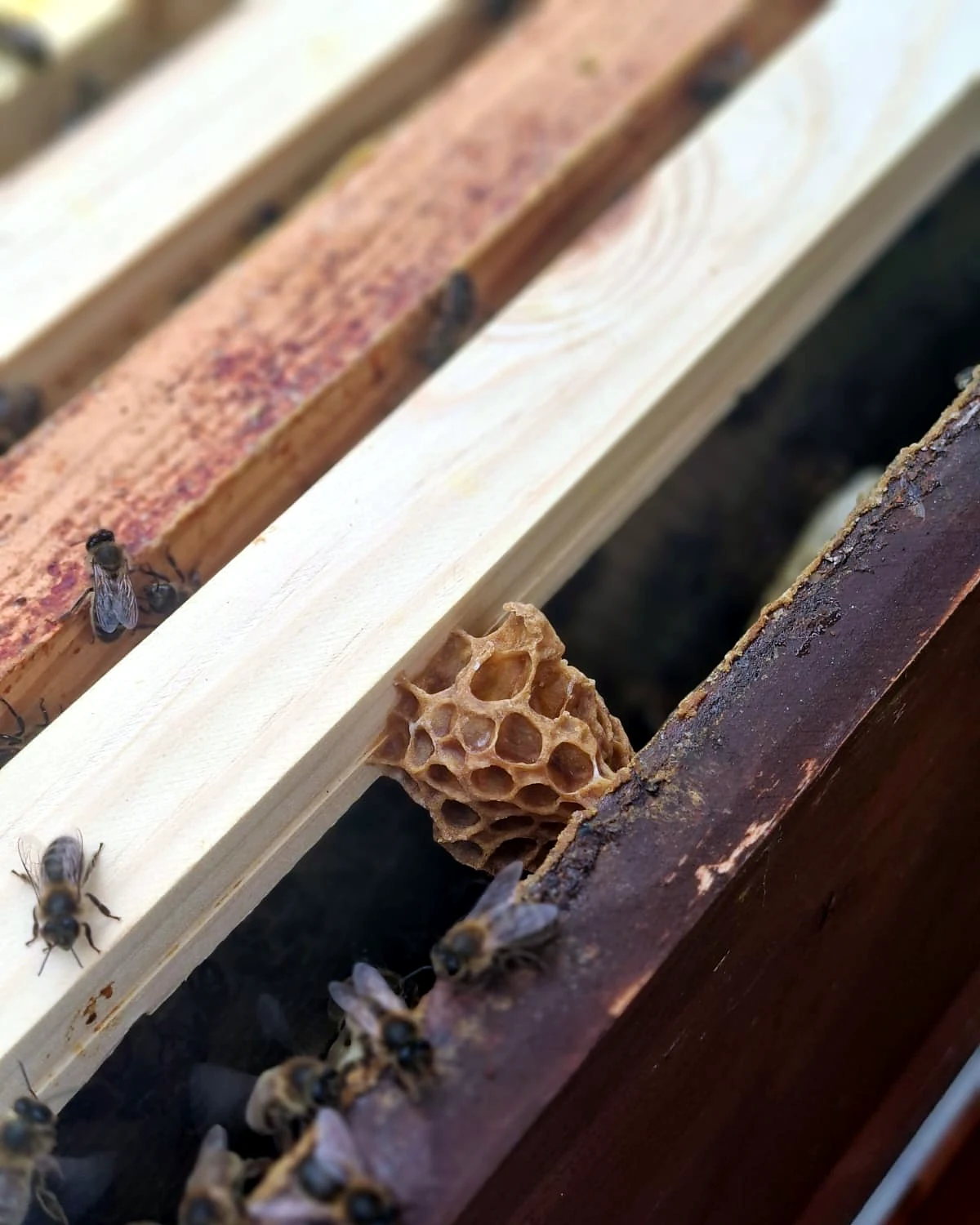
So a full inspection was off the table. But doing nothing was not really an option either, not in swarm season with a colony this strong.
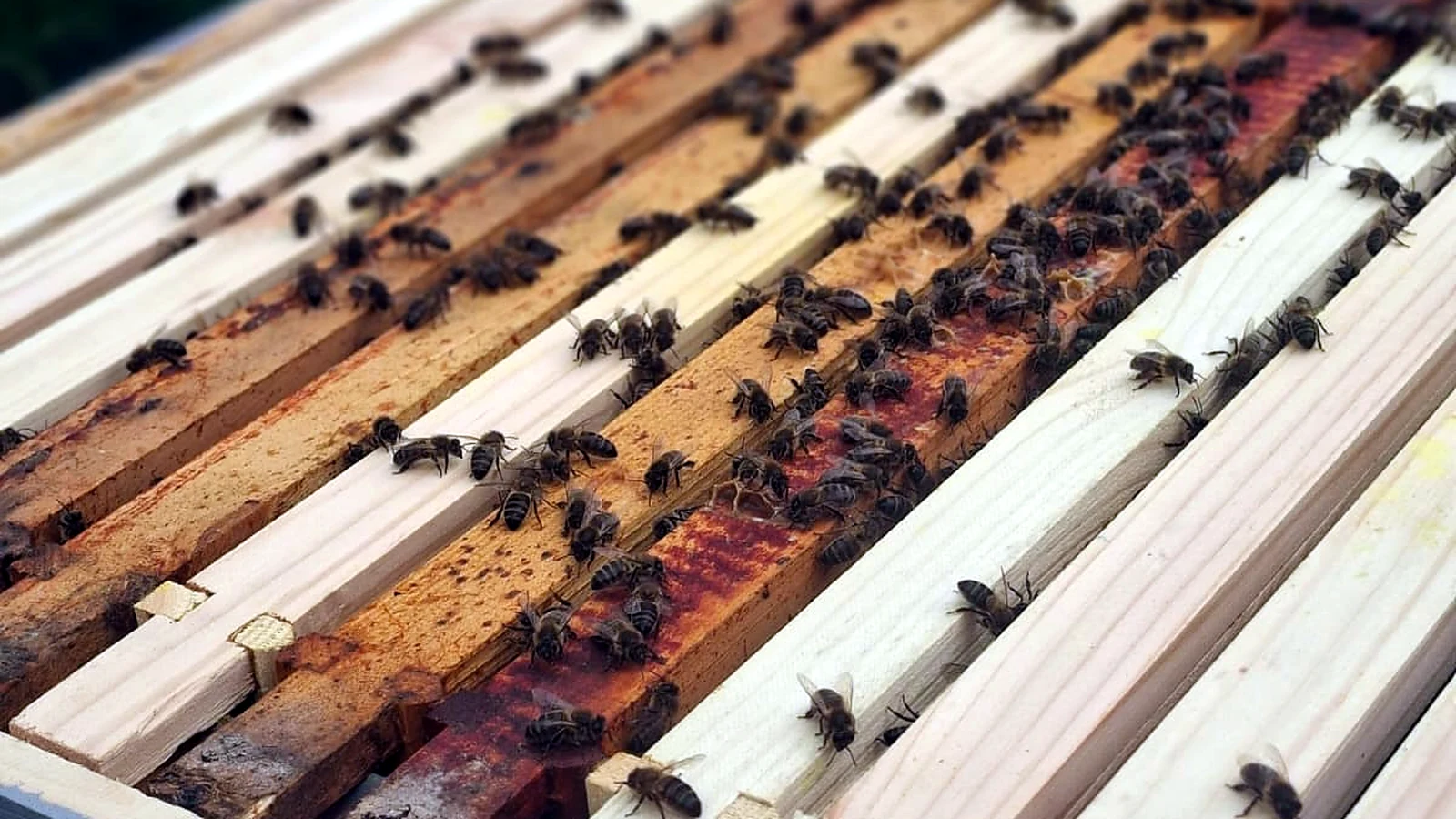
What I did was a quick lid look. Roof off, crownboard off, a careful peer down between the top bars. No frames pulled. I could see the bees were well populated across the top, calm, with a few mongrels among the AMM types which is the honest reality of beekeeping anywhere there are imported bees in the area. I could see two or three undrawn frames on the outside positions, which tells me they have got space to expand. No congestion, no obvious swarm signals from what I could see.
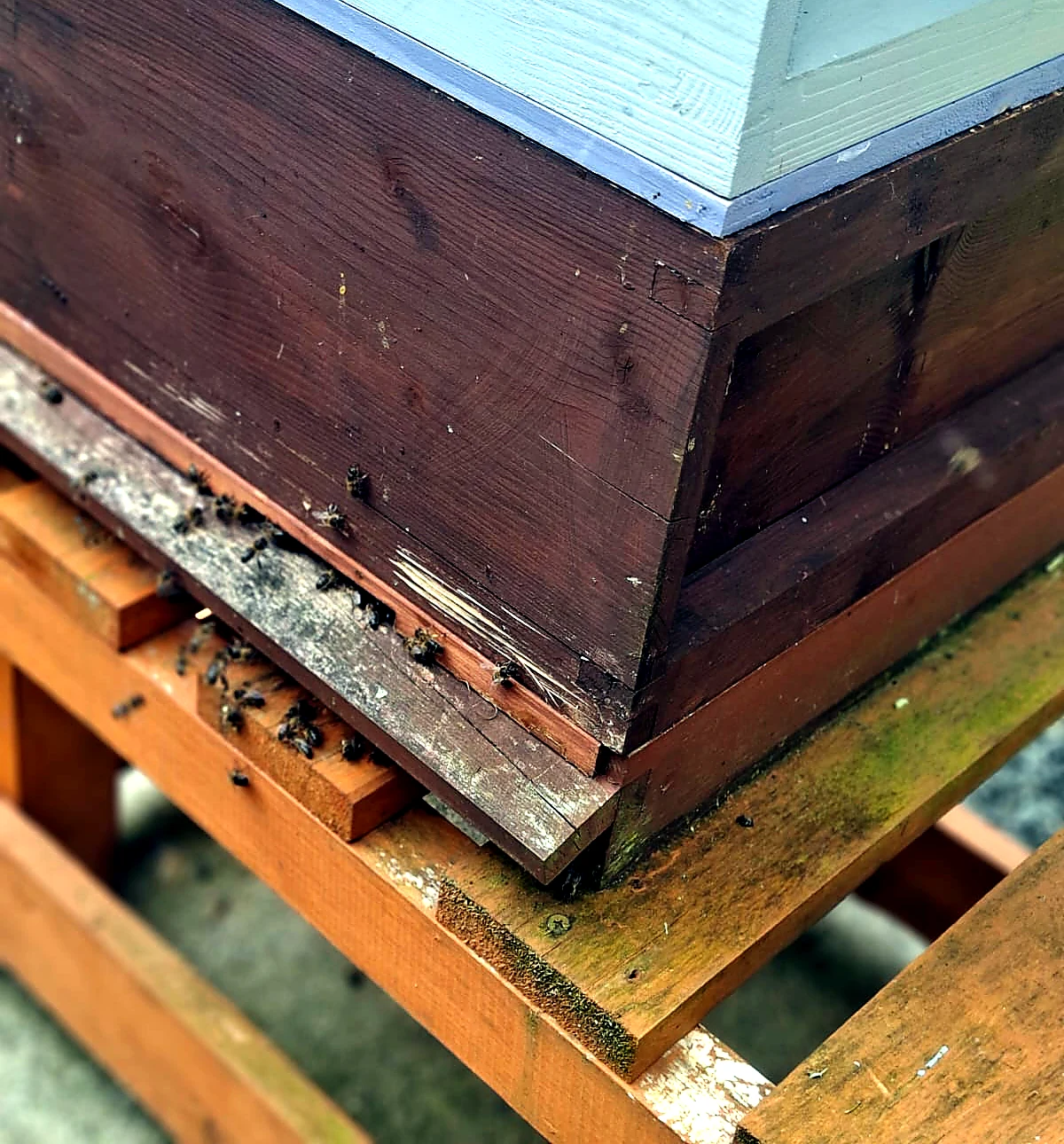
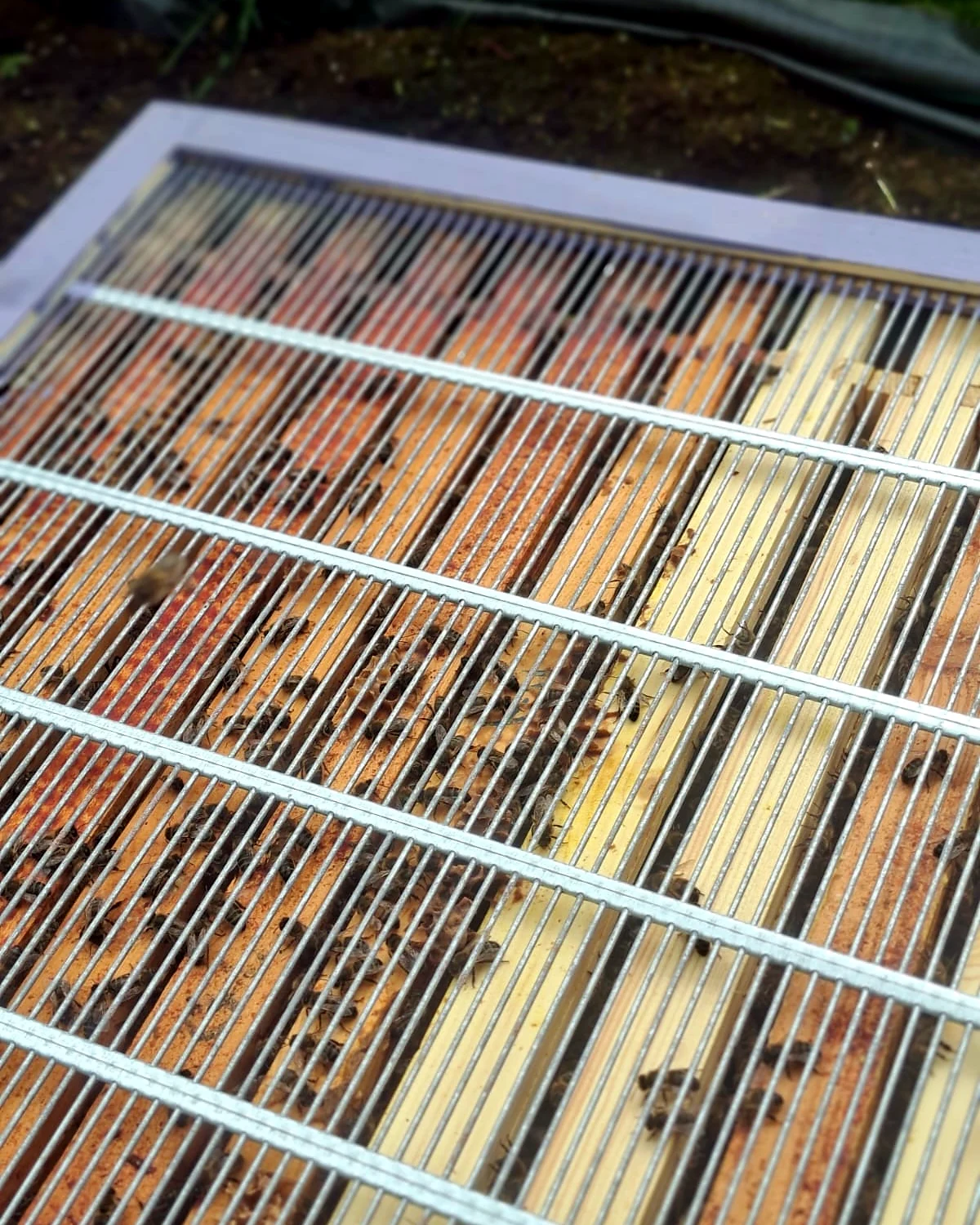
Then I put the queen excluder in between the two brood boxes.
This is a trick worth knowing if you have not used it before. When you cannot find your queen in a strong colony, an excluder between the boxes locks her on one side or the other. In three or four days time, you check both boxes for fresh eggs. The box with eggs is the box with the queen. It is a way of letting time and the queen herself do the work of locating her, instead of trying to spot one unmarked bee among forty thousand on a day when conditions are not on your side.
I want to find her, mark her with the year colour, and plan a split. Not because I have seen queen cells today, but because a strong double brood colony in mid May with the population I am looking at is exactly the kind of colony that decides to swarm on its own timetable if you do not intervene on yours. Better to be ahead of them than chasing them.
Was today perfect beekeeping? No. A proper inspection on a 16 degree dry day with a light breeze, frames out, every frame examined, brood pattern checked, that is the textbook. But the textbook does not factor in working a Monday to Friday job and watching the only available weekend window deliver thunder and showers.
Here is what I think the lesson is for anyone newer to this and feeling the same pressure. Closing the lid is also a decision. Choosing not to inspect because conditions are wrong is not failure. It is good beekeeping. The bees are better off with a brief disturbance and an excluder placed thoughtfully than with a full inspection that chills their brood. Sometimes the right call is the smaller intervention.
The forecast is showing a better window mid week. I will probably not be able to take advantage of it because work, but the weekend should be drier and warmer. That is when the proper inspection happens, when I find her, when we plan the split.
In the meantime the excluder is doing its quiet work. The colony is queenright, well fed, well populated, and has space. They do not need me fussing today. They need me to make a good decision and let them get on with it.
And if they decide to swarm on me anyway? Well, that is beekeeping. I will just have to hope they move next door.
The hawthorn is in heavy bud along the hedges by the way. My husband always says that means a cold winter coming. I always say he says that every year. Maybe one of these years I will have enough data to settle the argument.
Related: why we sometimes keep the lid on and what a full hive inspection looks like. See also a quick inspection before a storm.
Mum & Bee Girl x