
The Buzzword | Learning Together | March 2026
There is a moment in every beekeeper’s education when they discover that something they thought was their own idea already has a name, a method, and about seventy years of history behind it. This post is about one of those moments.
After adding our second brood box this spring, I found myself reading about a technique called the Bailey Comb Change. Some of what we had done overlapped with it. Some of it did not. And the history behind the method turned out to be one of the most genuinely fascinating rabbit holes I have fallen down since we started keeping bees.
So here it is. The Bailey Comb Change, explained properly, with the science and the story behind it.
The Man Behind the Method
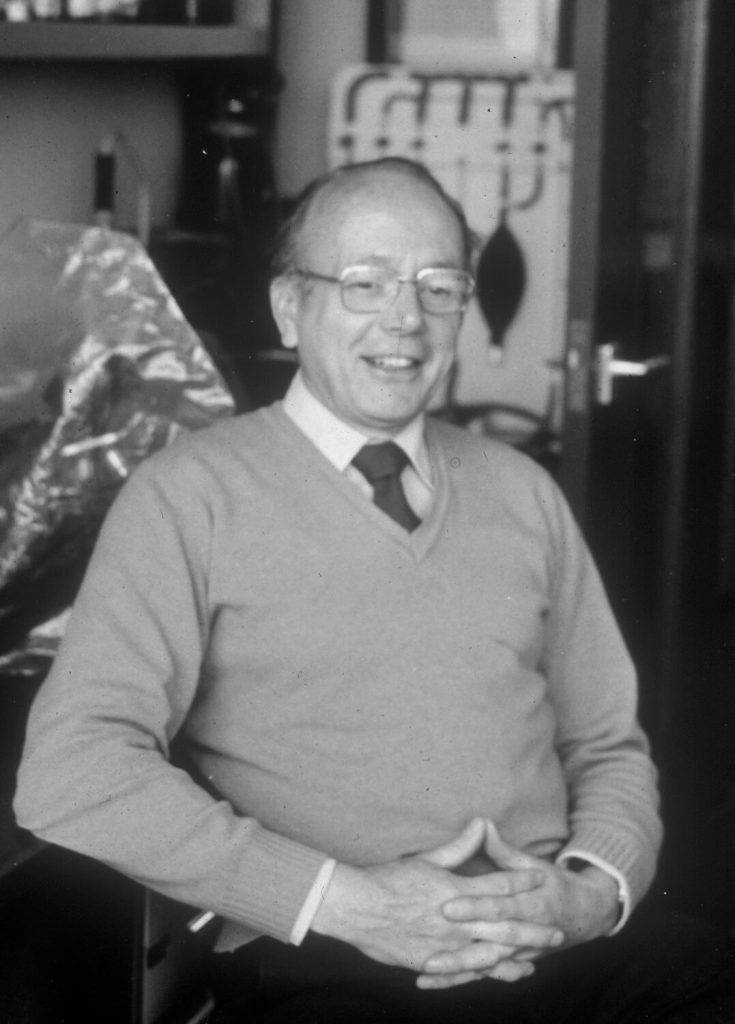
The method is named after Dr. Leslie Bailey, known to his colleagues as Bill, who was born in 1922 in South Yorkshire and became one of the most consequential bee scientists of the twentieth century. His route to bees was not exactly straightforward.
Bailey won a place to study natural sciences at Queens’ College, Cambridge, but deferred his studies to volunteer for the Royal Naval Volunteer Reserve in 1939. He served as a Fleet Air Arm navigator and, by all accounts, his very first active mission reportedly included participating in the sinking of the German battleship Bismarck. After the war he completed his Cambridge degree, worked briefly as a hospital biochemist, and in 1951 joined the Bee Department at Rothamsted Experimental Station in Hertfordshire.
Here is the remarkable part. When Leslie Bailey arrived at Rothamsted, he had no prior experience with bees whatsoever. Not one hive, not one inspection. He came entirely fresh. And that absence of preconception turned out to be precisely what the field needed.
Bailey went on to transform bee pathology. In 1963 he isolated the first two viruses ever found in honey bees — chronic bee paralysis virus (CBPV) and acute bee paralysis virus (ABPV) — which were also the first non-occluded viruses isolated from any insect. He developed a culture medium for the European Foulbrood bacterium and later reclassified it into a new genus entirely. He famously debunked the longstanding myth that the devastating early-twentieth-century Isle of Wight disease was caused by tracheal mites, demonstrating it was far more likely a widespread viral epidemic.
His books, particularly Infectious Diseases of the Honey Bee (1963) and Honey Bee Pathology (first published 1981, revised 1991 with Brenda Ball), became the authoritative references in the field. Dr. Leslie Bailey died on 1 May 2017, aged 95. His practical legacy in the apiary is very much still with us.
Where the Comb Change Method Came From
The Bailey Comb Change grew directly from Bailey’s research into Nosema disease at Rothamsted during the 1950s. Nosema apis is a microsporidian fungal parasite that infects the gut lining of adult bees, reducing their ability to digest food and shortening their lives. It was a significant problem in British apiaries for much of the twentieth century.
What Bailey demonstrated was that Nosema spores, along with other pathogens including foulbrood bacteria and viruses, accumulate in old brood comb over time. The spores can persist in the wax and remain infective for years. Even when a colony appears to have recovered, the contaminated comb can reinfect subsequent generations of bees.
The logical solution was to replace the comb entirely. But how do you replace all the comb in a hive without destroying brood, stressing the colony, or losing the queen? Bailey devised a method that worked with the bees’ natural behaviour rather than against it, and it has been used by British and Irish beekeepers ever since.
How the Bailey Comb Change Works
The method exploits two natural behaviours. First, bees naturally move upward in a hive as the colony expands in spring. Second, all brood hatches within a predictable window — worker brood in 21 days, so waiting a little longer than that ensures the old box is completely clear.
Step One: Add the new box on top
In early spring, when the colony is expanding and there is good foraging weather, place a clean brood box filled with fresh foundation directly on top of the existing brood box. Feed the colony with syrup to encourage the bees to draw out the new foundation into comb. Leave the crown board in place between the two boxes with the hole open — this provides a thermal buffer while the colony adjusts, and the bees will move up naturally at their own pace.
Step Two: Move the queen up
Once the bees have begun working the new frames above — typically after one to two weeks — find the queen in the lower box and move her up into the new box. Place a queen excluder between the two boxes, above the old brood box and below the new one. This traps the queen in the fresh comb above, and she will begin laying there immediately.
Step Three: Wait for the brood to hatch
With the queen now laying in the new box above, the brood in the old box below will continue to develop and hatch, but no new eggs will be laid there. After at least 21 days from moving the queen — allowing time for all worker brood to emerge — the old box will be empty of brood. The bees will have moved up to join the queen in the new comb above.
Step Four: Remove the old box
Once the old box is clear of brood, remove it entirely. The frames should be destroyed or thoroughly sterilised rather than reused, since they contain the pathogens you were trying to eliminate. Remove the queen excluder at the same time. The colony is now established on entirely fresh comb with no disruption to the brood and no risk to the queen.
Three Methods Compared
British and Irish beekeeping practice recognises three main approaches to comb replacement, each suited to different circumstances.
Gradual frame replacement involves swapping out two or three of the oldest frames each year and replacing them with fresh foundation. Over two to three years the entire brood box is refreshed. This is the gentlest approach, causes minimal disruption, and is well within the capabilities of any beekeeper. The downside is that it takes time and relies on consistent record-keeping to track which frames have been replaced.
The Bailey Comb Change replaces all the comb over four to six weeks in spring. It is more thorough than gradual replacement and does not require finding and marking individual old frames. It is particularly useful for Nosema management or when moving into a new hive type. It does require finding the queen, which not every beginner is comfortable with yet, and it takes up more equipment temporarily.
The shook swarm is the most drastic option. The entire colony is shaken from the old comb into a new box of fresh foundation in a single session. All old comb is removed and destroyed immediately. It is the recommended approach for active European Foulbrood (EFB) disease because it provides immediate and complete separation from contaminated material. It is stressful for the colony and requires confident, experienced handling. The National Bee Unit recommends it specifically for EFB cases where rapid action is needed.
When to Consider a Bailey Comb Change
The National Bee Unit recommends replacing brood comb at least every three years as a matter of routine hygiene, regardless of whether disease is present. Old comb accumulates not only pathogens but also pesticide residues, cocoon material from successive brood cycles, and propolis. Cell diameter narrows slightly with each cycle as cocoon layers build up, which can affect the size of emerging bees over time.
A Bailey Comb Change is worth considering in any of these situations: if you suspect Nosema is reducing your colony’s performance; if your frames are three or more years old; if you are changing hive type and want to move the colony onto the new frame size gradually; or if you simply want a full refresh without the disruption of a shook swarm.
It is not the right approach for active American Foulbrood (AFB) or European Foulbrood (EFB), where the shook swarm or destruction of the colony may be required under statutory regulations. If you suspect either of these diseases, contact your local bee inspector immediately.
What This Means for Us at Bee Happy Honey
Our frames are young. We are in our second season and there is no urgency around comb replacement yet. What we did this spring in adding the second brood box with the crown board in place was not a Bailey Comb Change — we were simply giving a thriving colony more room with some thermal protection during a cold-snap-prone March. The two techniques share some visual similarities but the purpose is completely different.
But knowing the Bailey method exists, understanding why it was developed, and understanding how it sits alongside gradual replacement and the shook swarm means that when the time comes — probably year three or four — we will be able to make an informed choice rather than just doing what everyone else does because that is all we know.
That feels like exactly the kind of thing this blog is for.
Further Reading
National Bee Unit Fact Sheet 21: Replacing Old Brood Comb. Available at nationalbeeunit.com.
Bailey, L. and Ball, B.V. (1991) Honey Bee Pathology, 2nd edition. Academic Press.
E.H. Thorne beekeeping suppliers — practical guide to the Bailey Frame Change on their website.
Taylor & Francis Online: Leslie ‘Bill’ Bailey PhD ScD 1922–2017. Journal of Apicultural Research, 2017.
Mum & Bee Girl
beehappyhoney.uk
Related: what a hive inspection looks like and what we learned about chemical free beekeeping.